Christmas Cactus: Holiday Blooms
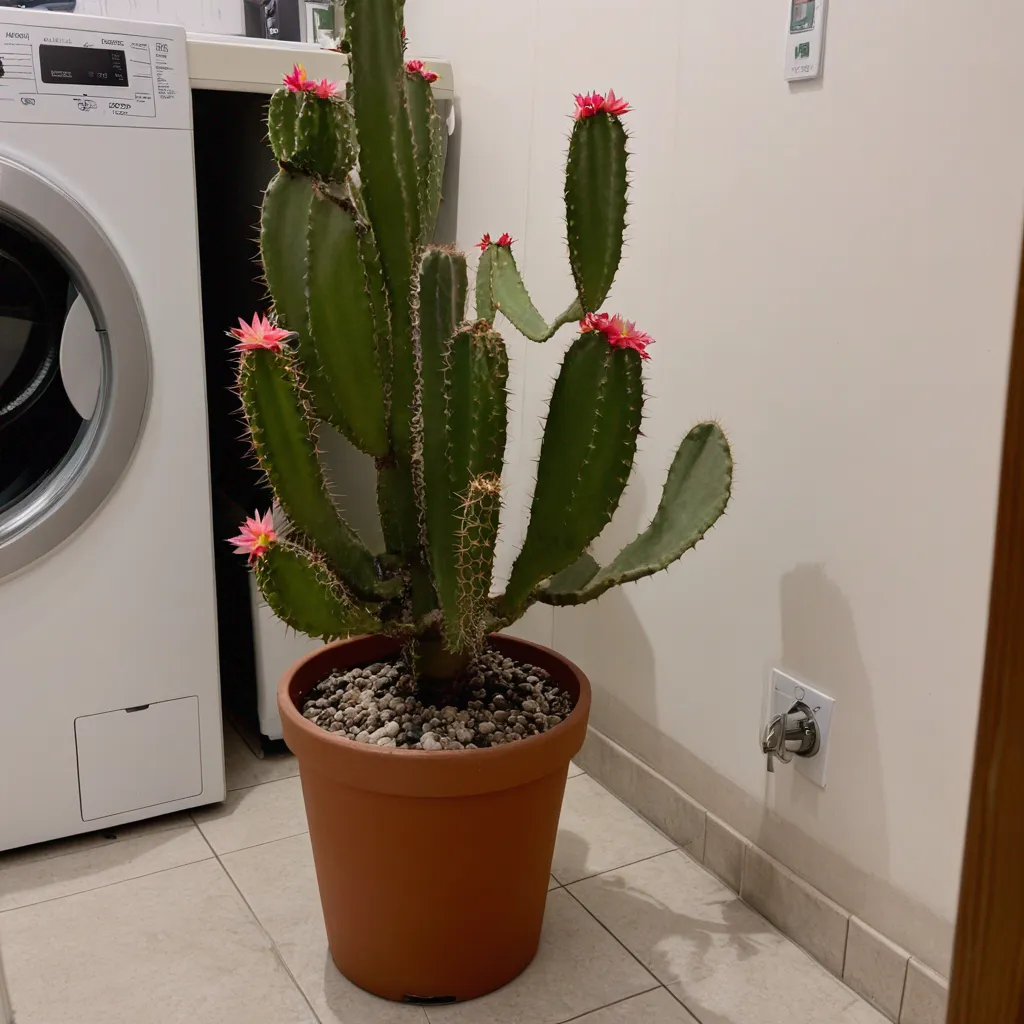
It was a late November grocery run when I spotted it: a small cactus covered in pink buds, sitting between the pumpkins and the poinsettias. I figured it would flower once and then just sit there looking like a weird succulent forever. I was wrong. Last December, that same $5 plant put out so many flowers that I texted a photo to my mom because I couldn’t believe it was real.
If you’ve ever wondered why your Christmas cactus refuses to bloom, or why it looks sadder than the one your grandmother has had since 1987, I’ve been there. I’ve also killed one by treating it like my other cacti (spoiler: bad idea). After a lot of trial and error, plus some obsessive reading through university extension guides, I figured out what actually works.
This isn’t a desert cactus that you ignore for months. It’s a tropical plant that happens to be called a cactus, and once you understand that, everything makes more sense.
Getting it to bloom in winter
Section titled “Getting it to bloom in winter”The trick to getting blooms is not some magic fertilizer. It’s about manipulating light and temperature, which sounds complicated but really just means putting your plant in a specific spot and leaving it alone for a while.
Christmas cacti are photoperiodic, meaning they respond to day length. In their native Brazilian rainforests, they grow as epiphytes on trees and start setting buds when the days get shorter. You need to recreate that signal in your home.
Starting in late September or early October, your plant needs about 12 to 14 hours of complete darkness each night. I keep mine in my bedroom where I close the curtains at night and don’t turn on the lights after about 7 PM. If your plant lives in a room where you’re up late watching TV or scrolling on your phone, the light exposure will confuse it. Even a little bit of light can interrupt the process.
Temperature matters too. The plant wants cooler nights during this time, ideally between 50 and 55 degrees Fahrenheit. I don’t have perfect control over this because I live in an apartment, but I keep mine near a window where it gets cooler at night. According to research from North Carolina State University Extension, the combination of long nights and cool temperatures is what triggers bud formation.
You need to keep this up for about six to eight weeks. I mark it on my calendar because I always think I’ll remember, and I never do. During this period, cut back on watering a bit. Don’t let it dry out completely, but let the soil get drier between waterings than you would in summer.
Once you see tiny buds forming at the tips of the leaves (they look like little pink or red bumps), you can move the plant back to normal conditions. But here’s the annoying part: don’t move it around after buds form. I learned this the hard way when I rotated mine to even out the growth, and half the buds dropped off. The plant is sensitive to changes in light direction once it’s committed to blooming.
If you want blooms for actual Christmas, start the dark period in early October. My plant usually blooms in late November or early December, which is close enough for me.
Watering more than a regular cactus
Section titled “Watering more than a regular cactus”This is where most people mess up, and I absolutely did at first. I saw “cactus” in the name and watered it once a month like my barrel cactus. It started looking shriveled and sad.
Christmas cacti are from the humid understory of Brazilian forests. They’re epiphytes, meaning they grow on trees, not in desert sand. Their roots are used to moisture and some air circulation, not long dry periods.
During the growing season (spring and summer), I water mine when the top inch of soil feels dry. I stick my finger in to check, which is not scientific but works. Depending on your home’s humidity and temperature, this usually means watering every week to ten days for me. In winter, when the plant isn’t actively growing, I stretch it to every two weeks or so.
The water itself matters. I use room temperature water because cold water can shock the roots. I also let my tap water sit out overnight before using it, which lets chlorine evaporate. I’m not sure this makes a huge difference, but I read about it in a study on houseplant care from the University of Georgia, and it can’t hurt.
Drainage is critical. These plants hate sitting in water. I have mine in a pot with drainage holes, and I always dump out the saucer after watering. The potting mix should be loose and chunky. I use a mix made for cacti and succulents, but I add extra perlite to make it even more porous. Some people mix in orchid bark, which makes sense given that Christmas cacti are epiphytes like many orchids.
If you’re seeing wrinkled segments or the plant looks deflated, it probably needs water. But if the segments are turning yellow or mushy, you’re overwatering. There’s a narrow window, which is annoying, but you get a feel for it after a while.
 Above: A closer look at this plant.
Why the leaves look limp/wrinkled
Section titled “Why the leaves look limp/wrinkled”I panicked the first time my Christmas cactus looked limp. The segments were thin and wrinkled instead of plump, and I was convinced I was watching it die slowly.
Usually, limp or wrinkled leaves mean the plant is thirsty. The segments should feel firm and slightly rigid. When they’re dehydrated, they get soft and develop these lengthwise wrinkles. If this is happening to your plant, water it thoroughly and it should plump back up within a day or two.
But here’s the confusing part: overwatering can cause similar symptoms. If the roots are rotting from too much water, they can’t absorb moisture, so the plant looks dehydrated even though the soil is wet. You have to check the soil before you water. If it’s already damp and the plant looks limp, you have a root problem, not a watering problem.
I had root rot once on a smaller plant that I didn’t repot soon enough. The soil had broken down into this dense, water-logged mess. I had to unpot the whole thing, trim off the mushy roots with clean scissors, and repot it in fresh soil. It survived, but it took months to recover.
Temperature stress can also cause limpness. If your plant is near a cold window in winter or a hot air vent, the segments might look sad. I moved mine away from the radiator after one winter when it looked perpetually wilted, and it perked up within a week.
Low humidity is another factor. These plants prefer humidity levels around 50 to 60 percent, which is higher than most homes in winter. I don’t run a humidifier specifically for my plants (though some people do), but I keep mine in the bathroom where it gets some humidity from showers. You can also set the pot on a tray of pebbles with water in it, making sure the pot sits on the pebbles and not in the water.
According to the University of Minnesota Extension, if the plant is severely dehydrated, it might take a few watering cycles to fully recover. Don’t panic and drown it. Just get back to a consistent schedule.
Identifying Holiday Cactus types
Section titled “Identifying Holiday Cactus types”I thought all holiday cacti were the same until I noticed that my friend’s Thanksgiving cactus looks different from mine. The leaf shapes are actually how you tell them apart, and once you know what to look for, it’s obvious.
Christmas cactus (Schlumbergera x buckleyi) has rounded leaf segments with smooth edges. The segments have gentle curves and no sharp points. The flowers usually dangle down and are more tubular.
Thanksgiving cactus (Schlumbergera truncata) has pointed projections along the edges of the segments. They look like little crab claws, which is why some people call it a crab cactus. The flowers are more angular and stick out at sharper angles.
Easter cactus (Hatiora gaertneri) has segments with rounded edges and small bristles. The flowers are star-shaped and more symmetrical than the other two. This one blooms in spring instead of winter.
The bloom timing also varies. Thanksgiving cactus usually flowers in late November, Christmas cactus in December, and Easter cactus in March or April. But honestly, I’ve seen all of them bloom at slightly different times depending on conditions, so the leaf shape is more reliable.
Most of what you buy in stores labeled as Christmas cactus is actually Thanksgiving cactus. I didn’t realize mine was a Thanksgiving cactus until I looked closely at the leaf edges. It doesn’t really matter for care purposes since they’re all treated the same way, but it’s nice to know what you actually have.
 Above: Getting started with care.
Repotting guide
Section titled “Repotting guide”Christmas cacti like being slightly root-bound, so you don’t need to repot often. I repot mine every two to three years, or when I see roots coming out of the drainage holes.
The best time to repot is in late winter or early spring, after the plant finishes blooming but before it starts putting out new growth. I tried repotting one in fall once, right before the bloom cycle, and it didn’t flower that year. Lesson learned.
Choose a pot that’s only one size larger than the current one. These plants don’t like too much space. I use terracotta pots because they’re porous and let the soil dry out more evenly, but plastic works too if you’re careful with watering.
For soil, use a mix that drains fast. I combine cactus mix with perlite, about two parts cactus mix to one part perlite. Some people add a bit of peat moss or coconut coir for moisture retention, but I haven’t found it necessary. The mix should be loose and airy.
When you unpot the plant, check the roots. Healthy roots are white or light tan and firm. If you see black, mushy roots, trim them off with clean scissors. Gently loosen the root ball if it’s tightly packed, but don’t go crazy with it.
Put some soil in the bottom of the new pot, set the plant in at the same depth it was growing before, and fill in around the sides with more soil. Don’t pack it down too hard. Water it lightly after repotting, just enough to settle the soil, and then wait about a week before watering again. This gives any damaged roots time to heal without sitting in wet soil.
I don’t fertilize right after repotting. The fresh soil has nutrients, and the plant needs time to adjust. I wait about a month, then start with a diluted liquid fertilizer.
During the growing season (spring and summer), I fertilize once a month with a balanced fertilizer diluted to half strength. I stop fertilizing in fall when I want the plant to set buds. According to Iowa State University Extension, too much nitrogen can promote leaf growth at the expense of flowers, so I use a fertilizer with equal NPK numbers, like 10-10-10 or 20-20-20.
After three years of keeping these plants, I’ve learned they’re more forgiving than I expected. Yes, you can mess up the bloom cycle or let one get too dry, but they recover. My grocery store plant now has segments cascading over the sides of its pot, and every winter it puts on a show. That’s worth the occasional panic over wrinkled leaves.
References
Section titled “References”North Carolina State University Extension. “Schlumbergera spp.” NC State Extension Publications.
University of Georgia Cooperative Extension. “Indoor Plant Care.” UGA Extension Publications.
University of Minnesota Extension. “Christmas Cactus Care and Culture.” University of Minnesota Extension Yard and Garden.
Iowa State University Extension and Outreach. “Holiday Cacti.” Horticulture and Home Pest News.