Rubber Plant Care: Growing a Ficus Elastica
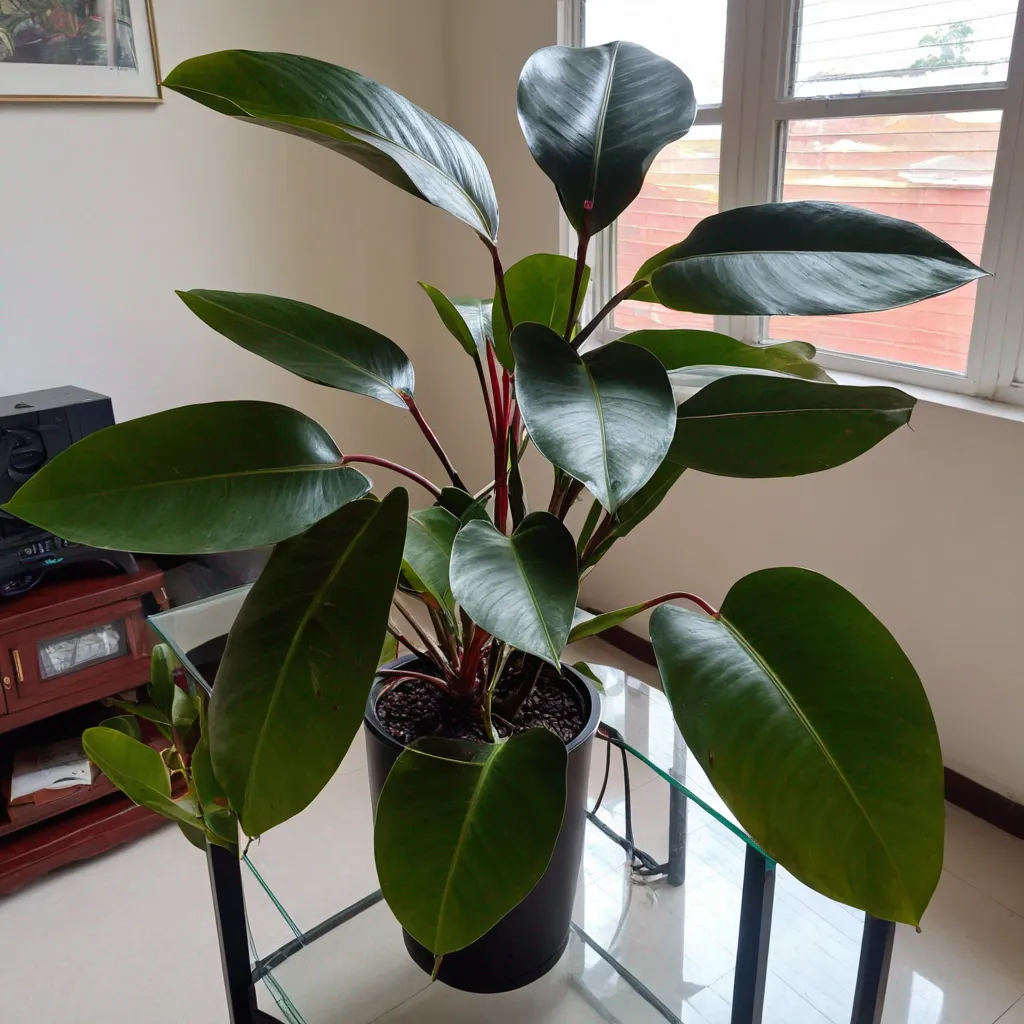
Three years ago, a small Ficus elastica sat on my kitchen table. Now it’s a six-foot monster blocking half my living room window. The nursery tag promised “low-maintenance,” and that’s partly true, but there were things I wish someone had told me before this plant took over my apartment.
If you are thinking about getting a Ficus elastica or you already have one that looks a bit sad, this is everything I have learned from keeping mine alive and reasonably happy. I have the dark burgundy variety (Ficus elastica ‘Burgundy’), and I have been eyeing the variegated ones at the plant shop for months now, but my apartment lighting situation has stopped me. More on that in a second.
Light needs for burgundy vs. variegated types
Section titled “Light needs for burgundy vs. variegated types”This is the part that trips people up, and it is not as simple as “bright indirect light” like every care tag says.
The dark burgundy or black varieties can handle less light than you think. Mine sits about six feet from an east-facing window, and it does fine. The leaves stay that deep wine color, and it puts out new growth every few months during spring and summer. I have read that these darker types have more chlorophyll packed into their leaves to compensate for the color, so they are better at photosynthesizing in lower light conditions. That does not mean you should stick it in a dark corner, but it is more forgiving than other houseplants I have killed in that same spot.
The variegated Rubber Plants are a different story. The ones with cream, white, or pink streaks (like ‘Tineke’ or ‘Ruby’) need more light because those lighter sections do not have chlorophyll. They cannot photosynthesize. I learned this the hard way when I tried to keep a small variegated cutting from a friend on my bookshelf. The new leaves came in almost completely green, which told me the plant was desperately trying to make more chlorophyll to survive. I moved it closer to the window, and the next leaf had better variegation, but honestly, my apartment is too dim for those types. The University of Florida’s Environmental Horticulture Department notes that variegated Ficus varieties require significantly more light to maintain their coloring.
If you have a south or west-facing window, the variegated ones will thank you. Just watch out for direct sun in the afternoon during summer. I have seen photos online of people whose Rubber Plants got sunburned, and the leaves get these brown crispy patches that never go away. You have to cut them off eventually.
One more thing about light: Rubber Plants are not great at adjusting to big changes. If you move yours from a dim spot to a bright one (or the other way around), it might drop a few lower leaves in protest. Mine did this when I rearranged my furniture last winter. It is normal, but it looks alarming when it happens.
Watering a Rubber Tree correctly
Section titled “Watering a Rubber Tree correctly”I used to overwater every plant I owned until I killed a pothos and decided to get serious about learning when to actually water things.
Rubber Plants like to dry out a bit between waterings. Not completely bone dry, but you do not want the soil staying damp all the time. I stick my finger about two inches down into the soil, and if it feels dry at that depth, I water. In summer, this is usually every seven to ten days. In winter, it stretches to every two weeks or longer because the plant is not actively growing and the soil dries slower.
When I water, I do it thoroughly. I take the whole plant to my bathtub (which is getting harder now that it is huge) and water until it runs out the drainage holes. Then I let it sit and drain completely before putting it back on its saucer. This is important because Rubber Plants hate sitting in water. Root rot is the fastest way to kill one, and I have come close once when I got lazy and just poured water into the pot without checking the saucer underneath. The roots started to smell swampy, and I had to repot it in fresh soil to save it.
If your leaves start turning yellow and dropping, you are probably overwatering. If they get brown and crispy at the edges, you are underwatering or the air is too dry. The tricky part is that both problems can cause leaf drop, so you have to look at the texture of the leaves before they fall to figure out which one it is.
Tap water has been fine for mine, but I know some people in areas with heavily chlorinated water prefer to let it sit out overnight before using it. I have not noticed a difference, but your water quality might be worse than mine.
 Above: A closer look at this plant.
Cleaning the glossy leaves
Section titled “Cleaning the glossy leaves”This sounds like extra work, and I thought so too at first, but it actually matters.
Rubber Plant leaves are big and glossy, and they collect dust like crazy. The dust blocks light from reaching the leaf surface, which means the plant cannot photosynthesize as well. I ignored this for the first six months I had mine, and I swear the growth slowed down. Once I started wiping the leaves every few weeks, it perked up.
I use a damp microfiber cloth and gently wipe each leaf, top and bottom. Some people use a mix of water and a tiny bit of dish soap if the leaves are really grimy, but plain water works for regular cleaning. There are leaf shine products sold at garden centers, but I have read mixed things about them. Some sources say they can clog the pores on the leaves (stomata), so I have never bothered.
The bottom of the leaves is just as important as the top. That is where pests like to hide. I have not dealt with pests on my Rubber Plant yet (knock on wood), but I check for spider mites and scale insects every time I clean. Spider mites leave tiny webs, and scale looks like small brown bumps stuck to the leaves or stems. Catching them early makes them way easier to deal with.
Cleaning the leaves also gives you a chance to inspect the plant and notice problems before they get bad. I have caught a few leaves starting to yellow this way and adjusted my watering.
Pruning to make it branch out
Section titled “Pruning to make it branch out”This was the biggest surprise for me. Rubber Plants naturally want to grow straight up in a single stem. Mine shot up to almost six feet tall before I realized it was just going to keep going like a weird tree trunk with leaves if I did not do something.
To make it branch out, you have to cut the main stem. I was terrified to do this the first time because it felt like I was going to kill the plant, but it worked. I used clean pruning shears and cut the stem about six inches below where I wanted it to branch. Within a few weeks, two new stems started growing from just below the cut. Now it looks fuller and more like an actual tree shape instead of a stick with leaves on top.
The plant bleeds white sap when you cut it, which is normal but can be irritating to your skin. I wear gloves now after I got some on my hands and they itched for hours. The sap is latex, which is where natural rubber comes from, and some people are allergic to it. Keep it away from pets too because it can make them sick if they chew on it. My cat tried once and never went near it again, but I still keep it in a room she does not hang out in much.
You can also prune to remove dead or damaged leaves. I cut the whole leaf stem off close to the main trunk. The Ohio State University Extension recommends making cuts at a slight angle to prevent water from sitting on the wound.
If you want a bushier plant, you can keep cutting it back every year or so. Some people get theirs to branch multiple times and end up with these thick, tree-like Rubber Plants that look amazing. Mine is still in the early stages of that process.
 Above: Getting started with care.
Repotting a large Rubber Plant
Section titled “Repotting a large Rubber Plant”I have repotted mine twice now, and the second time almost broke my back.
Rubber Plants do not need to be repotted often. Once every two or three years is usually enough. You will know it is time when roots start growing out of the drainage holes, or when water runs straight through the pot without soaking in because the roots have taken up all the space.
The first time I repotted, the plant was still manageable. I went up one pot size (from an eight-inch to a ten-inch pot), used a well-draining potting mix, and it was done in twenty minutes. The second time, the plant was massive and the pot was heavy even before adding soil. I had to get my partner to help me tip it out of the old pot, and we did the whole thing on a tarp in the living room because there was no way I was carrying it to the bathtub.
When you repot, try to disturb the roots as little as possible. I have read that Rubber Plants do not love having their roots messed with, and mine sulked for a few weeks after the second repotting. It dropped three leaves and I thought I had made a mistake, but it recovered once it adjusted.
Use a pot with drainage holes. I cannot stress this enough. I have seen people try to use decorative pots without holes, and it never ends well. You can put the nursery pot inside a decorative one if you want it to look nice, but the plant needs to drain.
For soil, I use a regular houseplant potting mix and add some perlite to make it drain faster. Rubber Plants do not like soggy soil, and the perlite keeps things airy. Some people add orchid bark too, but I have not tried that yet.
After repotting, I water it thoroughly and then leave it alone for a week or so. No fertilizer right away because the roots need time to settle in. I learned that one from a local gardening blog after I burned the roots of a different plant by fertilizing too soon after repotting.
If your Rubber Plant is getting too big to move, you can try top-dressing instead of full repotting. Scrape off the top couple inches of soil and replace it with fresh mix. This gives the plant some new nutrients without the hassle of taking it out of the pot. I have not done this yet, but I am planning to try it next year because I honestly do not want to repot this thing again anytime soon.
Rubber Plants are pretty forgiving once you figure out what they like. Mine has survived my learning curve, a few moves between apartments, and that one time I forgot to water it for three weeks. If you pay attention to the light, do not drown it, and give it a trim when it gets leggy, you will probably end up with a giant plant blocking your window too.
References
Section titled “References”University of Florida Environmental Horticulture Department. “Ficus elastica: Rubber Plant.” EDIS Publication.
Ohio State University Extension. “Houseplant Care: Ficus Species.”