Thrips: The Worst Pest
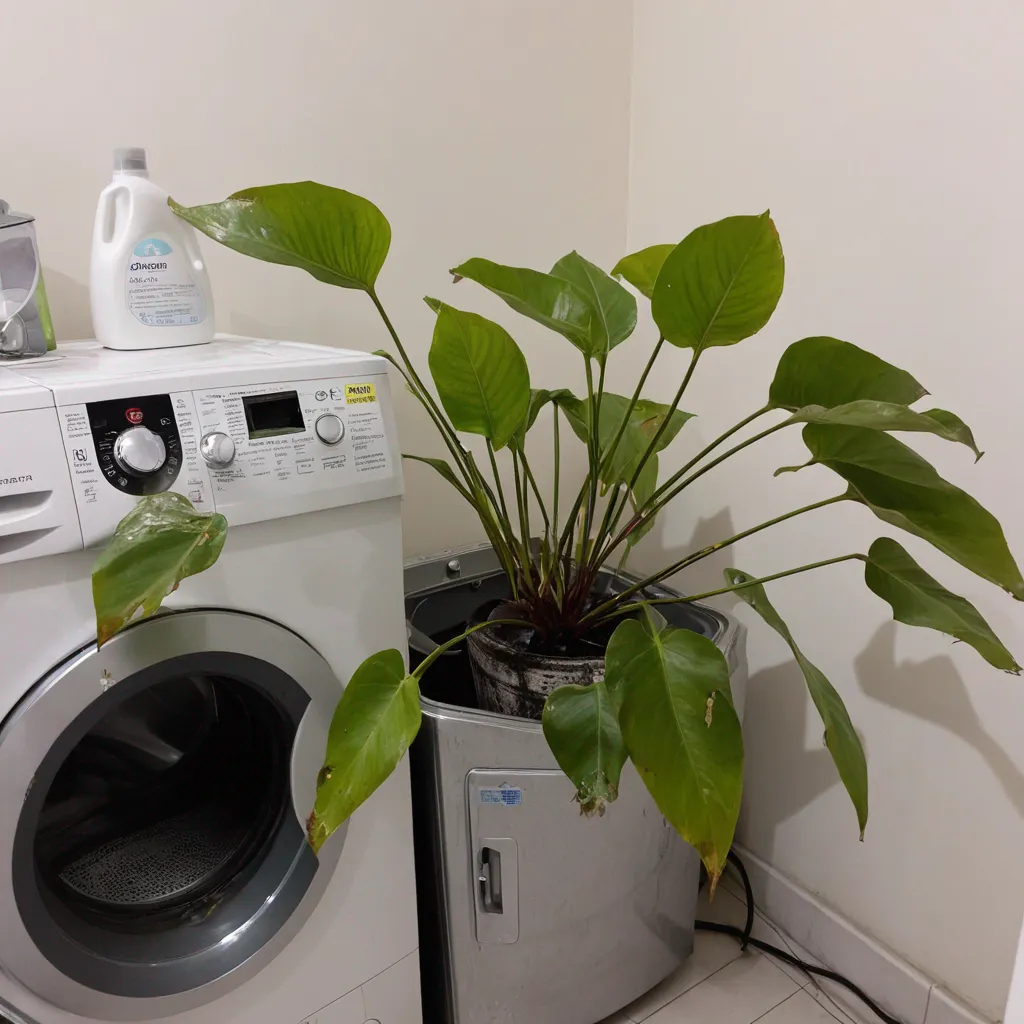
Let’s be honest: thrips are the one pest that makes even experienced plant people consider giving up on certain plants. Spider mites, fungus gnats, even mealybug invasions—none of them compare to the months-long battle thrips require.
The first time I had them, I didn’t even realize what was happening. I just thought my calathea was being dramatic (again). By the time I figured out what was going on, the infestation had spread to three other plants. I ended up throwing away two of them because I couldn’t handle the months-long battle anymore.
So yeah, this post comes from a place of frustration and hard-won experience. If you’re dealing with thrips right now, I’m sorry. But there is hope, even if it doesn’t feel like it.
Identifying silvery damage
Section titled “Identifying silvery damage”The tricky thing about thrips is that the damage looks weird and kind of vague at first. It’s not like spider mite webbing or the obvious cotton-ball appearance of mealybugs. With thrips, you get this silvery, scratched-up look on the leaves that makes you think maybe you bumped the plant into something.
The silvery patches happen because thrips have rasping mouthparts. They scrape away at the leaf surface and suck out the cell contents, which leaves behind these pale, almost metallic-looking scars. According to research from the University of California Agriculture and Natural Resources, this feeding damage appears as silvery stippling or streaks because the empty cells reflect light differently than healthy tissue.
On darker leaves, the damage shows up as bronze or tan patches instead of silver. I first noticed it on my stromanthe, where the beautiful dark green leaves started getting these weird pale streaks that I thought were a watering issue. Nope. Thrips.
Here’s what to look for: turn the leaves over and look closely at the undersides, especially along the veins and in the little crevices. Thrips are tiny (we’re talking 1 to 2 millimeters), so you might not see them right away. They look like little moving grains of rice or pepper, depending on whether you’ve got the adult or larval stage. The larvae are even smaller and kind of translucent or yellowish.
You might also see tiny black dots on the leaves. That’s thrip poop, which is somehow even grosser than it sounds. The scientific term is “frass,” but let’s call it what it is.
One thing that helped me finally spot them was using my phone camera. I zoomed in on a suspicious leaf and took a photo, then enlarged it. Suddenly I could see these little jerks crawling around. If your eyesight is anything like mine (not great up close), this trick is a lifesaver.
The damage usually starts at new growth because thrips love tender young leaves. So if your newest leaves are coming in deformed, silvery, or with brown edges, check for thrips. I ignored this sign on my alocasia for way too long, thinking it was just being fussy about humidity.
Systemic granules treatment
Section titled “Systemic granules treatment”Once you’ve confirmed you have thrips, you need to bring out the serious weapons. I’m not going to sugarcoat this: the wimpy “spray them with water” or “wipe with soap” methods do not work for thrips. I tried. Multiple times. All I got was wet plants and more thrips.
Systemic granules are the foundation of any thrips treatment plan. These are little pellets you sprinkle on the soil, and when you water, the active ingredient dissolves and gets absorbed by the plant’s roots. Then it moves throughout the whole plant, making the sap toxic to pests.
The most common active ingredient you’ll find is imidacloprid, which is a neonicotinoid insecticide. I use Bonide Systemic Houseplant Insect Control, which you can find at most garden centers. You just sprinkle the granules on top of the soil (following the package directions for amount based on pot size) and water normally.
Here’s the thing: systemics take time. The label says they start working within a week, but from my experience, you won’t see immediate results. The plant needs time to absorb the product and distribute it through its tissues. According to Penn State Extension, systemic insecticides can take one to two weeks to reach effective concentrations throughout the plant.
One application lasts about eight weeks, which is good because you’re going to be fighting this battle for a while. I typically do at least two rounds (so 16 weeks total) to make sure I’ve gotten all the thrips, including the ones that were still eggs during the first treatment.
A word of caution: if you have cats or dogs that like to nibble on your plants, you need to keep treated plants completely out of reach. Imidacloprid is toxic to pets. I had to move all my treated plants into my spare bedroom and keep the door closed for the entire treatment period because my cat thinks every plant is a salad bar.
Also, never use systemics on any plant you plan to eat. This is strictly for ornamental houseplants.
Some people worry about using systemic insecticides, and I get it. I prefer not to use chemicals when I can avoid them. But after losing plants and spending months trying gentler methods, I’ve accepted that sometimes you need the nuclear option. You have to decide what works for you.
 Above: A close up look at the symptoms.
Spinosad spray
Section titled “Spinosad spray”While the systemic granules work from the inside out, you also need something to attack the thrips on the surface. This is where spinosad comes in.
Spinosad is derived from a naturally occurring soil bacterium (Saccharopolyspora spinosa), which makes it feel slightly less intense than synthetic pesticides, even though it’s very effective. I use Captain Jack’s Deadbug Brew, which is the brand I see recommended most often in houseplant groups.
The key with spinosad is thorough coverage. You need to spray every single surface of every single leaf, top and bottom. I cannot stress this enough. If you miss spots, you miss thrips, and those survivors will just rebuild their population.
Here’s my spray routine: I take the plant to my bathtub (easier cleanup), mix the spinosad according to the bottle directions, and spray until the leaves are dripping. I mean really dripping. Then I get down at leaf level and spray the undersides, making sure to hit the stems and leaf joints where thrips like to hide.
According to the National Pesticide Information Center, spinosad works by affecting the insect’s nervous system, and it’s most effective when the thrips actually ingest it. So good coverage means more surface area for them to walk on and consume.
I repeat this every five to seven days. The reason for this frequency is the thrip life cycle. Spinosad doesn’t kill eggs, so you need to keep spraying to catch the new thrips as they hatch. The life cycle from egg to adult is roughly two to three weeks depending on temperature, so multiple treatments are necessary.
One annoying thing about spinosad: it smells weird. Not terrible, but kind of earthy and chemical at the same time. The smell fades as it dries, but I always open a window when I’m spraying.
Also, spinosad breaks down in light, so it’s most effective if you spray in the evening. That way it has all night to work before the sun hits it. I usually spray after dinner, let the plants sit in the tub overnight, and move them back to their spots in the morning.
Blue sticky traps
Section titled “Blue sticky traps”This might sound random, but blue sticky traps are specifically good for thrips. Most people are familiar with yellow sticky traps for fungus gnats, but thrips are apparently more attracted to blue.
I stuck a few blue traps in the pots of my infested plants and within 24 hours, they were covered in tiny thrips. It was gross but also satisfying to see I was catching them.
Here’s the thing though: sticky traps alone will not solve your problem. Research from the University of Florida IFAS Extension shows that while blue sticky traps are excellent for monitoring thrip populations, they’re not sufficient as a standalone control method. There are just too many thrips, and the traps can’t catch them fast enough.
But traps serve two important purposes. First, they help you monitor whether your treatment is working. If you keep seeing lots of thrips on fresh traps week after week, your current approach isn’t cutting it. Second, they do remove some of the adult thrips from the equation, which means fewer eggs being laid.
I replace my traps every week or two, depending on how disgusting they get. When you start seeing fewer and fewer thrips on new traps, that’s when you know you’re winning.
Position the traps close to the plant but not touching the leaves. I usually stick them right into the soil at the edge of the pot. You can also hang them if your plant has a lot of foliage and you can’t easily access the soil.
One thing I learned the hard way: keep the traps away from where you’ll be working with the plant. I’ve gotten my hair stuck to them more than once, and it’s not fun.
 Above: The tools you need to fix this.
Patience with treatment
Section titled “Patience with treatment”This is the hardest part, and I’m still not great at it. Thrips take forever to get rid of.
When I say forever, I mean months. My worst infestation took almost four months of consistent treatment before I felt confident they were really gone. Even then, I kept up monitoring with sticky traps for another month just to be sure.
The problem is the life cycle. According to Colorado State University Extension, thrips go through egg, larval, pupal, and adult stages, and the timeline varies with temperature. In the warmth of our homes, they can complete a generation in as little as two weeks. But the eggs are protected and the pupae often drop into the soil, so you’re fighting multiple life stages at once.
You have to stay consistent with your treatment schedule. I mark my calendar for spray days and granule application days because if I don’t, I forget or convince myself I can skip a week. Don’t skip. Every missed treatment gives the thrips a chance to bounce back.
There were so many times I thought I had finally won, only to see new silvery damage a week later. It’s demoralizing. I cried over a monstera once, which felt ridiculous, but I had put so much work into saving it.
Some plants aren’t worth the fight. I had a calathea ornata that was already struggling before the thrips showed up, and the infestation pushed it over the edge. I treated it for six weeks, but it just kept declining. Eventually I threw it away, and honestly, it was a relief. Sometimes you need to cut your losses.
Isolate your infested plants immediately. I cannot stress this enough. Thrips spread easily, and if you don’t quarantine, you’ll end up treating your entire collection. I learned this lesson the expensive way.
Keep monitoring even after you think they’re gone. I wait at least a month after I stop seeing thrips before I consider a plant truly clean. During that time, I keep sticky traps up and inspect new growth regularly.
And here’s a reality check: sometimes they come back. I had thrips reappear on a plant I thought I’d cleared eight months earlier. I still don’t know if I missed a few or if I brought them in on a new plant. Either way, I had to start the whole treatment process over.
The good news is that the second time around, I knew exactly what to do and jumped on it immediately. The infestation never got as bad, and I cleared it in about six weeks.
If you’re in the middle of fighting thrips right now, I see you. It sucks. But it is possible to win. Just not quickly.
References
Section titled “References”University of California Agriculture and Natural Resources. (n.d.). Thrips. UC IPM: UC Management Guidelines for Ornamentals and Turf.
Penn State Extension. (2023). Houseplant Insect Control. Penn State University Department of Entomology.
National Pesticide Information Center. (2022). Spinosad General Fact Sheet. Oregon State University.
University of Florida IFAS Extension. (n.d.). Thrips Management on Ornamental Plants. UF Department of Entomology and Nematology.
Colorado State University Extension. (2023). Insect Development and Life Cycles. CSU Extension Fact Sheet No. 5.001.