Cat Peed in Plant
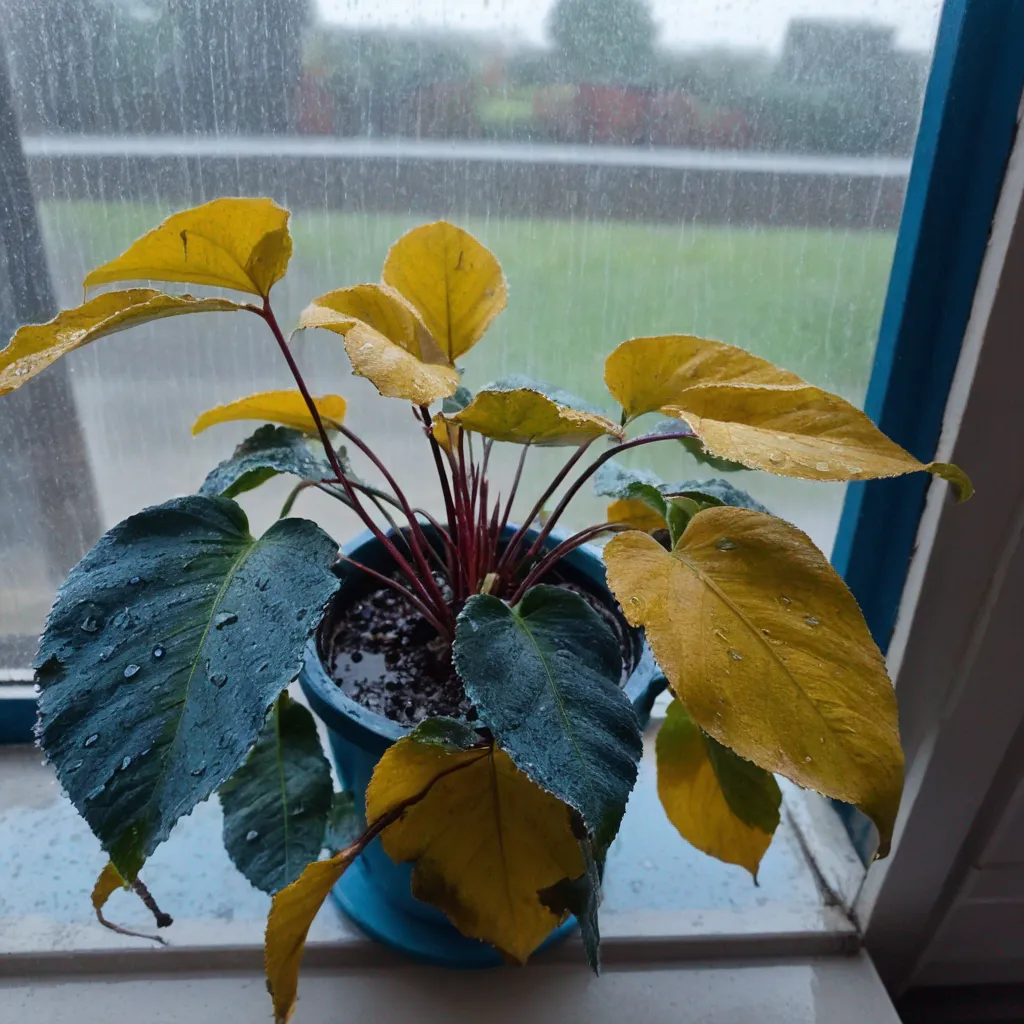
Cats have a mysterious logic. You buy them a hundred-dollar litter robot, and they decide your prize Monstera pot is the only suitable bathroom in the house. The panic sets in immediately—not just for the mess, but because cat urine is essentially concentrated ammonia that can burn your plant’s roots in hours. If you’ve caught your feline friend in the act, you need to move fast.
The good news is that most plants can survive this if you act quickly. Cat urine is basically liquid fertilizer on steroids, which sounds helpful until you realize it’s WAY too concentrated and acidic for your plant to handle. The ammonia and salts in cat pee can burn roots and completely mess up your soil chemistry. But you can fix this.
Let me walk you through exactly what I did when Miso decided my snake plant looked like a better bathroom option than her actual litter box.
Flushing the soil immediately
Section titled “Flushing the soil immediately”This is your first priority. Seriously, put down your phone after reading this section and go flush that soil right now.
When I caught Miso in the act, my first instinct was to just wipe off the leaves and hope for the best. Don’t do that. The urine soaks down into the soil immediately, and that’s where the real damage happens. According to research from Oregon State University Extension, the high nitrogen content in urine combined with the salts can cause chemical burns to plant roots within hours.
Here’s what you need to do. Take your plant to a sink, bathtub, or outside if the pot is too heavy to move easily. I usually use my bathtub because my fiddle leaf fig weighs about as much as a small child. Run room temperature water through the soil slowly but thoroughly. Not a light sprinkle. I mean really drench it. You want water flowing out of the drainage holes for at least five minutes straight.
The goal is to dilute and wash away as much of the urine as possible before it has time to concentrate in the root zone. Think of it like rinsing out a stained shirt. You wouldn’t just dab at it with a damp cloth and call it good, right? You need to flush out the contamination.
If your plant doesn’t have drainage holes (which is a whole other problem we won’t get into right now), this gets trickier. You’ll need to tip the pot carefully and pour out as much water as possible between flushes. Do this outside or in a bathtub where you can make a mess. I’ve learned this the hard way after flooding my bathroom floor.
One important thing I learned from the University of California Agriculture and Natural Resources: don’t use cold water. Room temperature or slightly warm water helps the salts dissolve better and won’t shock the roots. I keep a watering can filled in my bathroom specifically for emergencies like this.
After flushing, let the pot drain completely. I usually leave mine in the tub for 30 minutes to an hour. You don’t want your plant sitting in a saucer full of contaminated runoff water.
Removing the smell
Section titled “Removing the smell”Now let’s talk about the smell, because if you don’t deal with this, your cat will absolutely pee there again. Cats are creatures of habit, and once they mark a spot, they think it belongs to them.
I’ve tried a bunch of different methods, and here’s what actually works. After flushing the soil, I mix up a solution of white vinegar and water (about one part vinegar to three parts water) and lightly spray the top layer of soil and the outside of the pot. Vinegar neutralizes the ammonia smell that attracts cats back to the same spot.
Don’t soak the soil with this mixture, though. Just a light misting on the surface. I learned this after accidentally making my soil too acidic and watching my peace lily throw a fit for three weeks. A few spritzes is enough.
If any urine got on the leaves (which happens more often than you’d think), wipe them down gently with a damp cloth. I add a tiny drop of dish soap to the water sometimes, but honestly, plain water works fine. The goal is just to remove the residue and smell.
For pots that are porous like terracotta, the smell can soak into the material itself. I once had to throw out a beautiful terracotta pot because no matter what I did, it still smelled like cat pee two months later. If you want to try saving it, scrub the outside with that vinegar solution and an old toothbrush, then let it dry completely in the sun. UV light helps break down the odor compounds.
Some people swear by enzyme cleaners made for pet stains. I’ve used Nature’s Miracle on the area around the plant (like if your cat peed on the floor nearby too), and it does work well. Just keep it away from the soil and roots. Those enzymes are designed to break down organic matter, and you don’t want them going after your plant’s roots.
One trick that’s helped me: after cleaning, I put citrus peels on top of the soil for a few days. Cats hate citrus. I save my orange and lemon peels specifically for this. It’s not a permanent solution, but it buys you time while the vinegar smell fades.
 Above: A close up look at the problem.
Repotting if needed
Section titled “Repotting if needed”Okay, so you’ve flushed the soil and dealt with the smell. Now you need to decide if your plant needs a complete repot or if you can let it recover as is.
I don’t repot immediately every single time. If I caught it right away and flushed thoroughly, I usually wait a few days to see how the plant responds. But there are situations where you really do need to repot.
If the soil still smells strongly after flushing, that’s a sign the urine has saturated too deeply. I had this happen with a small succulent where the cat peed directly into the center of the pot. No amount of flushing helped because the soil volume was so small compared to the amount of urine. I had to repot that same day.
Here’s how I do it. I remove the plant from its pot as gently as possible and shake off as much of the contaminated soil as I can. For plants with delicate roots, I rinse the root ball under lukewarm running water to get the old soil off. I know some people say never to disturb roots, but in this case, leaving urine-soaked soil clinging to them is worse than the temporary stress of rinsing.
Check the roots while you’re at it. Healthy roots should be white or light tan and firm. If they’re brown, mushy, or smell rotten, trim off the damaged parts with clean scissors. I keep a pair of scissors just for plants in my kitchen drawer.
Use completely fresh potting mix. Don’t try to reuse any of the old soil, even the stuff that looks clean. It’s not worth the risk. I prefer a well-draining mix for most of my plants. The University of Minnesota Extension recommends a mix that contains perlite or vermiculite to help with drainage, which is extra important after a urine incident because you don’t want any lingering salts accumulating in soggy soil.
When you repot, don’t go up a size unless your plant actually needed repotting anyway. Use the same size pot or even slightly smaller if you had to trim a lot of roots. A too-large pot holds too much moisture, and your plant is already stressed enough.
After repotting, water lightly and put the plant somewhere with indirect light while it recovers. I usually quarantine my traumatized plants on top of my dresser where the cat can’t reach them for at least a week.
Deterring the cat
Section titled “Deterring the cat”Let’s be real. The plant is only half the problem. You need to figure out why your cat decided your houseplant was a toilet in the first place.
The most common reason is litter box issues. I’m not a cat behaviorist, but I’ve lived with cats my entire adult life, and they’re picky about their bathrooms. Is the litter box clean? Cats won’t use a dirty box. Miso will literally pee anywhere else if I forget to scoop for more than a day. Do you have enough boxes? The rule I’ve always heard is one box per cat plus one extra.
Sometimes cats pee in plants because the soil looks and feels like litter to them. This is especially true if you use a coarse, sandy mix or if the pot is wide and accessible. I had to move all my low, wide pots up onto plant stands after Miso discovered my snake plant.
Physical barriers work surprisingly well. I put decorative rocks or pinecones on top of the soil in my larger pots. It makes the surface less appealing and less accessible for digging. Some people use chicken wire cut to fit the pot, but that looks terrible in my opinion. I’d rather have pretty rocks.
Double-sided tape around the rim of the pot can help too. Cats hate the sticky feeling on their paws. I’ve also used aluminum foil as a temporary deterrent because cats don’t like walking on it. It’s ugly, but it works while you’re training them to stay away.
Location matters. If your plant is in a quiet, private corner, your cat might see it as a perfect hidden bathroom spot. I moved my pothos from the corner of my bedroom to the middle of a shelf in my living room, and the problem stopped immediately.
There are also commercial cat deterrent sprays, but read the ingredients carefully. Some contain chemicals that aren’t great for plants. I’ve had better luck with natural options like diluted citrus oil spray around (not on) the plant.
If your cat keeps doing this despite your best efforts, talk to your vet. Sometimes inappropriate urination is a sign of a urinary tract infection or other health issue. Miso had a UTI once, and she was peeing everywhere until we got her treated.
 Above: The tools you need to fix this.
Signs of root burn
Section titled “Signs of root burn”Even if you’ve done everything right, you need to watch your plant closely for the next few weeks. Root burn from urine doesn’t always show up immediately. Sometimes it takes days for the damage to become visible.
The first sign I usually notice is wilting even when the soil is moist. This happens because damaged roots can’t absorb water properly. If your plant looks droopy a day or two after the incident despite the soil being damp, that’s a red flag.
Leaf discoloration is another big indicator. With my snake plant, the tips started turning brown and crispy about four days after Miso’s bathroom adventure. On other plants, I’ve seen yellowing leaves that drop off quickly. According to a study published in the Journal of Environmental Horticulture, high salt concentrations in soil cause leaf margin burn because the plant can’t regulate water uptake properly.
Check for stunted growth too. If your plant was putting out new leaves regularly and suddenly stops, the roots might be struggling. New growth is usually the first thing a stressed plant will sacrifice to conserve energy.
The nuclear option is to unpot your plant and look at the roots directly. I don’t do this unless I’m seeing multiple symptoms because it adds more stress. But if you do check, you’re looking for brown, black, or slimy roots. Healthy roots should still be firm and light-colored. If most of the root system looks damaged, you might need to consider propagating healthy parts of the plant and starting over.
Sometimes despite your best efforts, the plant doesn’t make it. I lost a small fern this way because I didn’t flush the soil fast enough. It happens. Don’t beat yourself up about it. Plants are replaceable. Just learn from it and maybe invest in some taller plant stands.
The good news is that many common houseplants are pretty resilient. I’ve saved pothos, snake plants, spider plants, and even a finicky calathea from cat pee incidents. The key is acting fast and then being patient while the plant recovers.
Give it a few weeks of normal care (no fertilizer during recovery, though, since there’s already too much nitrogen in there). Watch for new growth as a sign that your plant is bouncing back. And maybe, just maybe, clean that litter box a bit more often. I’m talking to myself here too.
References
Section titled “References”Oregon State University Extension Service. “Houseplant Care.” Oregon State University.
University of California Agriculture and Natural Resources. “Safe and Effective Use of Pesticides.” UC ANR Publication 3324.
University of Minnesota Extension. “Houseplants: Letting them rest or not.” University of Minnesota.
Bing, D.J., et al. “Salt Damage to Landscape Plants.” Journal of Environmental Horticulture, vol. 18, no. 4, 2000, pp. 226-229.