Why Is My Succulent Stretching?
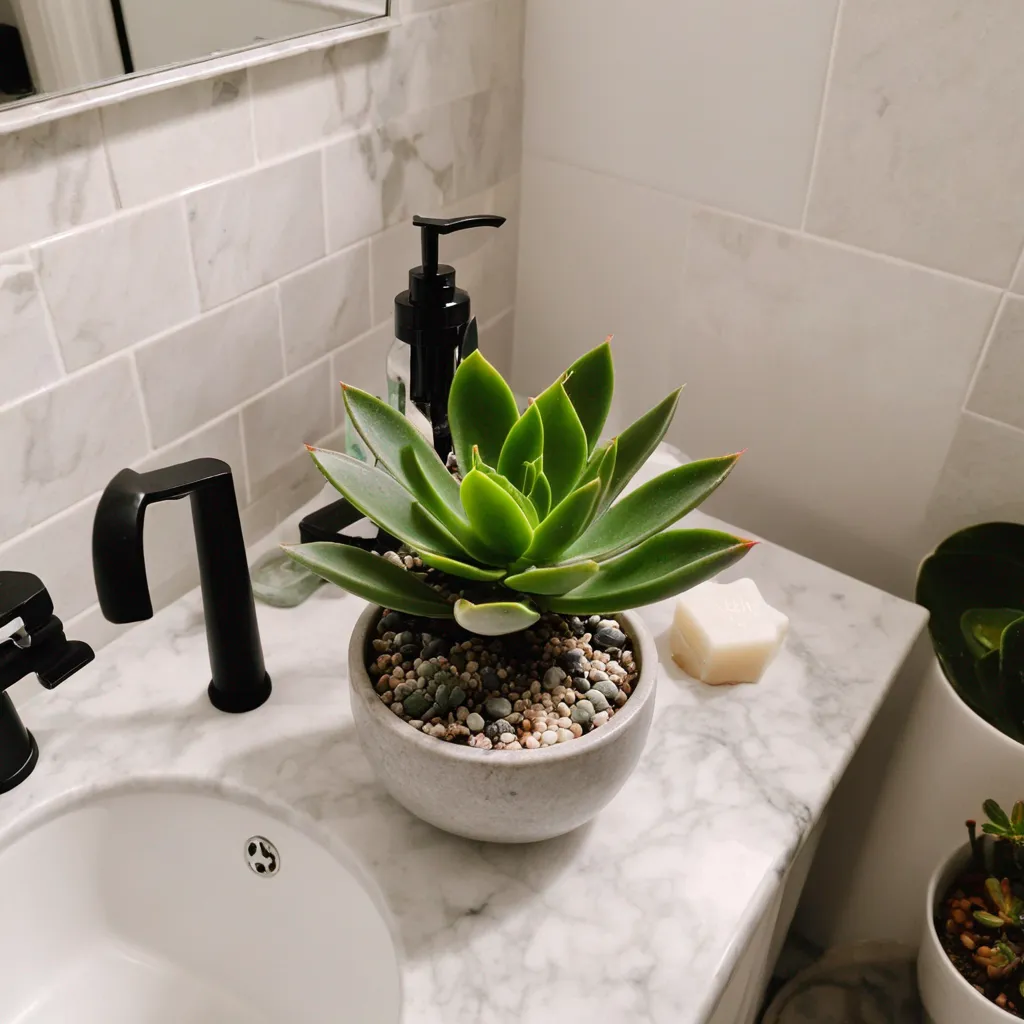
You bought a tight, compact succulent rosette, placed it on your shelf, and a month later it looks like it’s trying to escape its pot. The stem is elongated, the leaves are spaced far apart, and the whole plant is leaning aggressively in one direction.
This isn’t just a growth spurt—it’s etiolation, the botanical term for a plant stretching desperately for light. While you can’t shrink that stretched stem back down, you can fix the underlying issue and even “reset” the plant to look compact again. If your succulent is getting tall and leggy, don’t worry; it’s a common issue with a straightforward fix.
Etiolation: Searching for light
Section titled “Etiolation: Searching for light”Etiolation is what happens when a plant doesn’t get enough light. The stem elongates, the spaces between leaves (called internodes) get longer, and the whole plant starts to look leggy instead of compact. In nature, this would help the plant reach up and out of shade. In your living room, it just makes your succulent look sad.
I learned this the hard way with my Echeveria. I had it on a bookshelf about six feet from a north-facing window. I thought that was fine because the room felt bright to me. But here’s the thing: what feels bright to human eyes is not the same as what a succulent needs. Most succulents evolved in places with intense, direct sunlight. They want way more light than I was giving mine.
When a succulent etiolates, you’ll notice the new growth looks different from the old growth. The bottom part of the plant (the older section) will still be compact and tight, but the top (newer growth) stretches out. The leaves also tend to face downward or curve down instead of sitting flat or angling upward. My Echeveria went from this perfect, symmetrical rosette to something that looked like it was melting.
According to research from the University of Maryland Extension, succulents generally need at least six hours of bright light per day, and many prefer more. If you’re keeping them indoors, that usually means a south-facing window (in the Northern Hemisphere) or supplemental grow lights. I moved mine to a south-facing windowsill, and the new growth started coming in much tighter within a couple of weeks.
One thing to watch: if you suddenly move an etiolated succulent into direct sun, it can get sunburned. Yes, even sun-loving plants can burn if they’re not acclimated. I made this mistake with a jade plant. I took it from a dim corner and put it right in a west-facing window in summer. The leaves got brown, crispy patches. Not cute. You need to transition slowly. Start with a few hours of direct light and increase gradually over a week or two.
How to behead and fix a leggy plant
Section titled “How to behead and fix a leggy plant”Once your succulent has stretched, the damage is done. That elongated stem isn’t going to shrink back down. But you can fix it by beheading the plant. This sounds brutal, but it’s actually a common propagation technique, and succulents handle it surprisingly well.
Here’s how I did it with my Echeveria. I used a clean, sharp knife (I sterilized it with rubbing alcohol first to avoid introducing bacteria). I cut the rosette off, leaving about an inch or two of stem attached to the head. Then I let the cut end dry out for a few days. This is called callusing, and it’s important. If you stick a fresh cut directly into soil, it can rot.
After the cut end formed a callus (it looked dry and slightly hardened), I stuck it in dry succulent soil. I didn’t water it right away. I waited about a week, then started giving it small amounts of water. Within a few weeks, it started growing roots. I could tell because the rosette felt more stable in the soil and wasn’t wobbling around anymore.
The leftover stem (the part still in the original pot) also started putting out new growth. Little baby rosettes appeared along the stem where the old leaves used to be. This is normal. Many succulents will produce pups when you cut the top off. I ended up with three new rosettes from that one stem. It felt like free plants.
You can also propagate the individual leaves if you want to maximize your succulent collection. I pulled off some of the lower leaves from the beheaded rosette, let them dry for a day, and laid them on top of dry soil. Some of them sprouted tiny new plants from the base. Not all of them worked (maybe 60% success rate for me), but the ones that did gave me even more little succulents.
The North Carolina State University Extension notes that propagation success depends on the species and the health of the plant. Some succulents propagate more easily than others. Echeveria, Sedum, and Crassula tend to be pretty reliable. Haworthia can be trickier.
 Above: A close up look at the symptoms.
Why leaves are popping off
Section titled “Why leaves are popping off”If your succulent is losing leaves while it’s stretching, that’s a different issue layered on top of etiolation. Leaves can fall off for a few reasons, and it’s important to figure out which one you’re dealing with.
Sometimes leaves drop because the plant is stressed from lack of light. When a succulent isn’t getting enough energy from photosynthesis, it might shed older leaves to conserve resources. This happened with my Graptoveria. As it stretched, the bottom leaves started turning yellow and falling off with almost no effort. I could barely touch them and they’d detach.
But leaves can also fall off from overwatering. This is where things get confusing, because the symptoms overlap. An overwatered succulent might also have leaves that fall off easily, but they’ll usually feel soft, mushy, or translucent. Underwatered leaves feel dry and papery. I’ve dealt with both, and the texture is the giveaway.
If you’re seeing leaves drop while the plant stretches, check the leaves themselves. Are they firm and just yellowing at the base? Probably light stress. Are they squishy or turning translucent? You might be watering too much. Are they shriveled and thin? You might not be watering enough (though this is less common with succulents indoors).
One thing I didn’t know when I started growing succulents: it’s normal for the very bottom leaves to die off over time. This is called reabsorption. The plant pulls nutrients from the old leaves to fuel new growth. If you’re losing one or two bottom leaves every few months and the plant otherwise looks healthy, that’s not a problem. But if you’re losing multiple leaves quickly, something is wrong.
Signs of stem rot
Section titled “Signs of stem rot”Stem rot is the nightmare scenario. This is what happens when your succulent’s stem starts to decay, usually from too much moisture combined with poor air circulation or contaminated soil. I’ve lost plants to stem rot, and it’s heartbreaking because by the time you notice, it’s often too late to save the whole plant.
The first sign is usually discoloration. The stem might turn brown or black, starting at the base and moving upward. It might also feel soft or mushy when you gently squeeze it. Healthy succulent stems are firm. If you press on the stem and it gives way or feels squishy, that’s rot.
Sometimes you’ll see the rot before you feel it. A dark, wet-looking patch on the stem is a red flag. I had a String of Pearls that developed a dark spot on one of the runners. Within days, that whole strand had turned to mush. I cut it off immediately to stop it from spreading to the rest of the plant.
If you catch rot early, you can sometimes save the plant by cutting above the rotted section. I did this with a Crassula that started rotting at the base after I left it in a saucer of water for too long (I was trying to bottom-water it and forgot about it overnight). I cut the stem about an inch above the brown part, let it callus, and re-rooted it. It survived.
But if the rot has spread through most of the stem, you’re probably out of luck. I tried to save a badly rotted Sedum once and it just kept rotting no matter how much I cut. Eventually I gave up and composted it.
The University of California Agriculture and Natural Resources recommends removing any rotted tissue completely and treating the cut with a fungicide if you have it (I’ve used cinnamon powder in a pinch, which has antifungal properties). After cutting, let the plant dry out for several days before even thinking about putting it back in soil.
Prevention is easier than treatment. Make sure your succulent soil drains well (I use a mix of potting soil, perlite, and coarse sand), and don’t let the plant sit in water. If you’re using a pot with a drainage hole, let the excess water drain out completely after watering.
 Above: The tools you need to fix this.
Watering vs. Light issues
Section titled “Watering vs. Light issues”Here’s where people get really confused, including me when I first started. Both overwatering and lack of light can make a succulent look weird, but the solutions are totally different. If you treat a light-starved succulent by cutting back on water, you’re not fixing the actual problem.
A stretching succulent is almost always a light issue. The plant is trying to grow toward more light, so it gets tall and leggy. Watering less won’t make it stop stretching. In fact, if you cut back on water while the plant is already stressed from low light, you’re just adding another stressor.
On the other hand, a succulent with mushy leaves, yellowing that starts from the inside of the leaf, or soft spots is probably getting too much water. Overwatered succulents don’t usually stretch (unless they’re also in low light, which compounds the problem). They get swollen, translucent leaves or they start rotting from the base up.
I’ve found the best approach is to fix the light first. Move the plant to a brighter spot or add a grow light. Then adjust watering based on how fast the soil dries out. In higher light, succulents use more water and the soil dries faster, so you might actually need to water more frequently than you did in low light. This was counterintuitive to me at first, but it makes sense when you think about it. More light means more photosynthesis means more growth means more water usage.
The Colorado State University Extension suggests checking soil moisture before watering. Stick your finger about an inch into the soil. If it’s dry, water thoroughly until water runs out the drainage hole. If it’s still damp, wait. I use this method and I’ve had way fewer problems since I stopped watering on a fixed schedule.
Another tip: watch the leaves. Succulent leaves are like little water storage tanks. When they start to look slightly wrinkled or less plump, that’s when the plant could use water. If the leaves are full and firm, you can wait. I learned this from watching my Echeveria. The leaves would get a tiny bit soft right before it needed water, and that became my cue.
If your succulent is both stretching and showing signs of overwatering, you’ve got a combo problem. Fix the light situation first, then let the soil dry out completely before you water again. You might need to repot into fresh, dry soil if the current soil is staying wet for more than a week or two.
At the end of the day, most succulent problems come down to light and water. Get those two things right, and your plants will be compact, colorful, and healthy. Get them wrong, and you end up with stretched-out stems and a collection of leaves scattered around the pot. I’ve been on both sides, and trust me, it’s worth the effort to figure out what your specific plant needs in your specific space.
References
Section titled “References”University of Maryland Extension. “Growing Succulents Indoors.” University of Maryland Extension Home and Garden Information Center.
North Carolina State University Extension. “Succulent Propagation.” NC State Extension Gardener Plant Toolbox.
University of California Agriculture and Natural Resources. “Succulent Care and Common Problems.” UC Master Gardener Program.
Colorado State University Extension. “Watering Established Plants.” Colorado State University Extension.