Peace Lily Care: The Drama Queen
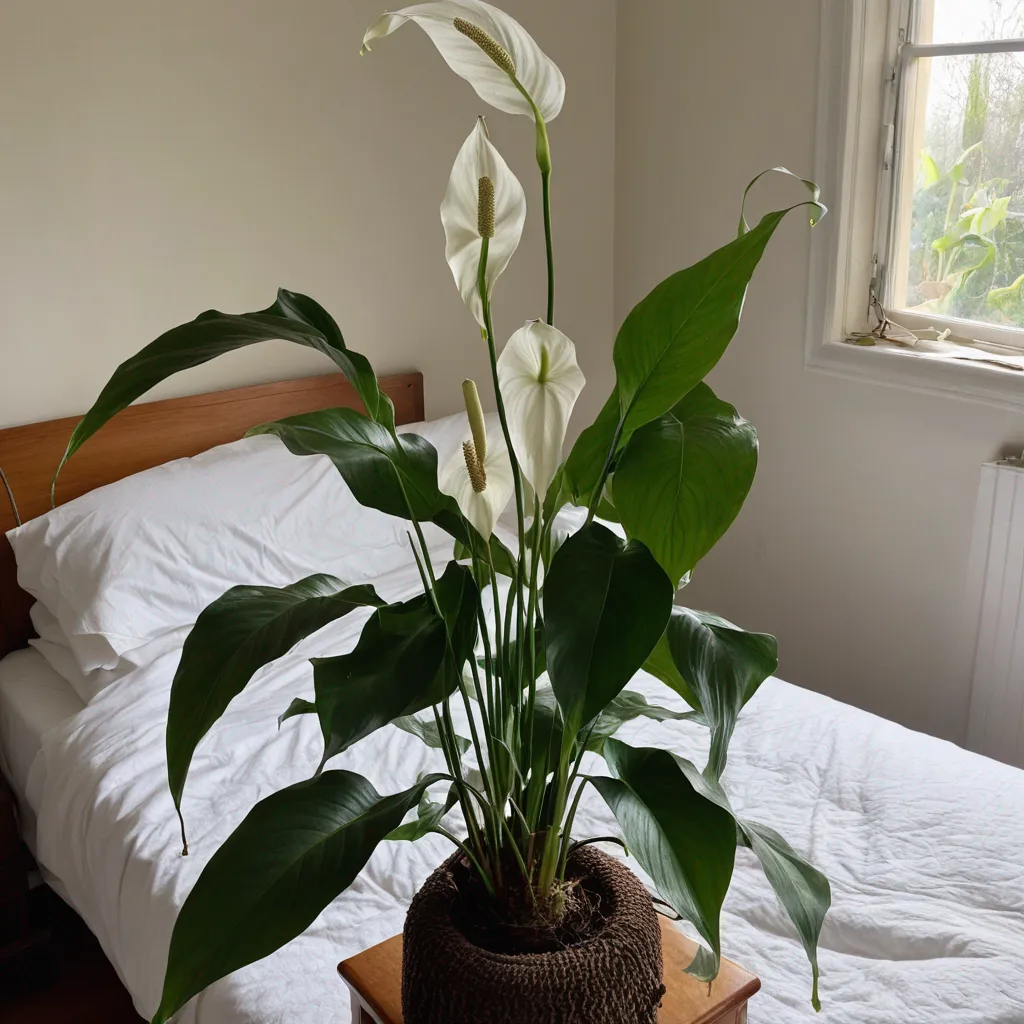
I call my Peace Lily “Sarah Bernhardt” because she faints at the slightest inconvenience. Miss one watering? She collapses across the windowsill like she’s been poisoned. Give her a drink, and within two hours, she’s perky again, leaves standing at attention like nothing happened.
If you own a Peace Lily (Spathiphyllum), you know exactly what I’m talking about. These plants are the ultimate drama queens of the houseplant world. But here’s the thing: once you understand their theatrics, they’re actually pretty easy to keep alive. I’ve had mine for three years now, and we’ve reached an understanding. She tells me exactly when she needs water by flopping over, and I forgive her for being so melodramatic about it.
Let me walk you through the most common Peace Lily situations I’ve dealt with, plus what I’ve learned from research when my own experience fell short.
Why it droops when it’s thirsty
Section titled “Why it droops when it’s thirsty”The drooping is honestly the most useful thing about Peace Lilies. Most plants slowly decline when they need water. They get a little sad, leaves maybe curl slightly, and you have to pay close attention to notice. Not the Peace Lily. She will throw herself on the floor and refuse to get up.
This dramatic wilting happens because Peace Lilies have thin leaf tissue without much structural support. When the cells lose water pressure (what scientists call turgor pressure), the whole leaf just gives up. According to research from the University of Vermont Extension, this wilting is actually a survival mechanism. By drooping, the plant reduces its surface area exposed to light and air, which slows down water loss through the leaves.
Here’s what I’ve learned about the drooping cycle: when you see your Peace Lily wilting, don’t panic. Check the soil first. Stick your finger about two inches down. If it’s bone dry, you’ve found your problem. If it’s still damp, you might have a different issue (root rot, temperature shock, or in my case once, I’d accidentally bumped the pot and loosened the root ball).
For watering, I take mine to the sink and water thoroughly until water runs out the drainage holes. Then I let it drain completely before putting it back in its decorative pot. The plant usually perks up within a few hours. In summer, mine droops about once a week. In winter, I can stretch it to ten days or so.
One thing I wish someone had told me earlier: the drooping gets more frequent as the plant gets root-bound. My Peace Lily started flopping every three days at one point, and I thought I was doing something wrong. Turns out she just needed a bigger pot (more on that later). If your peace lily is consistently drooping even after watering, check out why is my peace lily drooping.
The Missouri Botanical Garden notes that while Peace Lilies are forgiving about occasional wilting, repeated severe stress can damage the plant long-term. I try not to let mine get to the full-collapse stage anymore. I’ve started checking the soil every few days instead of waiting for the drama.
Surviving in low light corners
Section titled “Surviving in low light corners”I bought my Peace Lily specifically because my apartment has exactly one window that gets decent light, and it was already occupied by my fiddle leaf fig. The Peace Lily got relegated to a corner about eight feet from a north-facing window. I figured if it died, at least I tried.
Three years later, it’s still alive. It hasn’t bloomed much in that spot (maybe twice), but the foliage looks healthy and green. Peace Lilies have a reputation as low-light champions, and in my experience, that reputation is deserved.
Here’s the reality though: Peace Lilies don’t actually love low light. They tolerate it. In nature, according to research published in the journal HortScience, Spathiphyllum species grow on the floor of tropical rainforests where they receive dappled, filtered light. They’ve evolved to make the most of whatever light filters through the canopy above.
What this means for your home is that Peace Lilies can survive in low light, but they won’t thrive. In my dim corner, my plant grows slowly and rarely flowers. When I moved it to a brighter spot (still no direct sun, just closer to the window) for a few months last year, it put out three flowers in quick succession and the leaves got noticeably larger.
The University of Florida IFAS Extension recommends placing Peace Lilies in medium to low indirect light. They specifically warn against direct sunlight, which I can confirm will scorch the leaves. I learned this the hard way when I put mine outside for “fresh air” one summer afternoon. Two hours later, the leaves had brown, crispy patches.
If your Peace Lily isn’t blooming and you want it to, try moving it somewhere brighter. Not into a sunbeam, but closer to a window. The foliage might lighten slightly in color (mine went from deep forest green to a lighter green), but the plant will be happier overall.
For truly dark spaces, I have to be honest: I haven’t tried keeping a Peace Lily more than ten feet from a window. Research suggests they can survive in office lighting conditions, but growth will be minimal. If you’re in a basement apartment or windowless office, you might need to supplement with a grow light. I haven’t done this myself, so I can’t give you specific advice from experience.
 Above: A closer look at this plant.
Why the white flowers turn green
Section titled “Why the white flowers turn green”This confused me so much the first time it happened. My Peace Lily bloomed (exciting!), and the flower was beautiful and white for maybe two weeks. Then it started turning green. I thought it was dying or diseased. I almost cut it off.
Turns out, this is completely normal. What we call the “flower” on a Peace Lily is actually a modified leaf called a spathe. The real flowers are those tiny bumps on the spike (spadix) in the center. According to the North Carolina State University Extension, the white spathe is designed to attract pollinators. Once pollination occurs (or would occur in nature), the spathe turns green and begins photosynthesizing like a regular leaf.
In your home, where pollination isn’t happening, the spathe still turns green after a few weeks. It’s following its genetic programming. The green spathe will stick around for a while, sometimes months. Eventually, it’ll turn brown and crispy, and that’s when you can cut it off.
I usually remove the whole flower stem once the spathe turns fully green. I know it’s still technically functioning, but I think the plant looks cleaner without the green spathes. I cut the stem as close to the base as possible using clean scissors.
Some people ask if you can keep the spathe white longer. The short answer is no, not really. The color change is hormonal and internal to the plant. Better light might keep flowers coming more frequently, but each individual spathe will still turn green on its own schedule.
One interesting thing I noticed: flowers that appear in spring tend to stay white longer than flowers that appear in fall or winter. I don’t know if this is related to light levels or temperature or just random chance with my particular plant, but it’s a pattern I’ve seen three years running.
Repotting a root-bound Peace Lily
Section titled “Repotting a root-bound Peace Lily”I was terrified to repot my Peace Lily the first time. I’d killed plants before by repotting at the wrong time or damaging roots, and I didn’t want to mess up a plant that was doing so well.
But I had to do something. The plant was wilting every two days despite regular watering, and when I pulled it out of the pot (gently), the roots were circling around and around in a solid mass. Barely any soil left, just roots.
Here’s how I handled it: I waited until spring when the plant was actively growing. The University of Minnesota Extension recommends repotting in spring or early summer, which gives the plant time to establish before winter dormancy.
I chose a pot only one or two inches larger in diameter than the old pot. This was hard because I wanted to give the plant tons of space, but research consistently shows that too-large pots hold too much water and increase the risk of root rot. For my Peace Lily that was in a six-inch pot, I moved up to an eight-inch pot.
For soil, I used regular potting mix. Nothing fancy. Peace Lilies aren’t picky about soil as long as it drains well. I made sure my new pot had drainage holes (this seems obvious, but I’ve made that mistake before with other plants).
The actual repotting process was straightforward. I watered the plant the day before to make it easier to slide out. I loosened the root ball gently with my fingers, trying to untangle some of the circling roots. I didn’t worry too much about breaking a few small roots. Then I placed it in the new pot with fresh soil around the sides, firming it gently.
After repotting, I watered thoroughly and kept the plant in its usual spot. It wilted slightly for about two days (drama queen, remember?), then recovered. Within a month, I noticed it was going longer between waterings, which told me the roots were spreading into the new soil.
I haven’t fertilized heavily after repotting. The fresh potting soil has nutrients, and according to the Cornell Cooperative Extension, recently repotted plants don’t need additional fertilizer for several months.
 Above: Getting started with care.
Best fertilizer for blooms
Section titled “Best fertilizer for blooms”I’m going to be honest: I’m lazy about fertilizing. For the first two years I owned my Peace Lily, I never fertilized it at all. It survived just fine, though it only bloomed sporadically.
Last spring, I decided to try fertilizing to see if I could get more flowers. I did some research because I didn’t want to burn the roots or cause problems.
The consensus from multiple university extension sources is that Peace Lilies don’t need heavy feeding. They’re not gluttons like tomatoes or roses. The University of Georgia Extension recommends a balanced, water-soluble fertilizer (something like 20-20-20) diluted to half the recommended strength.
I use a basic liquid houseplant fertilizer (nothing special, just what I picked up at the hardware store) diluted to half strength. I apply it about once every six to eight weeks during spring and summer. In fall and winter, I don’t fertilize at all because the plant isn’t actively growing.
Here’s what I’ve noticed: the fertilizing hasn’t dramatically increased blooming. I get maybe one or two more flowers per year than I did without fertilizer. But the leaves look healthier and darker green, and the plant seems to recover from my occasional neglect more quickly.
Some sources suggest using a fertilizer with higher phosphorus (the middle number) to encourage blooming. I haven’t tried this myself because I’d have to buy a separate fertilizer just for one plant, and that feels excessive for my casual approach.
One warning from my research: don’t over-fertilize. The North Carolina Extension warns that too much fertilizer causes salt buildup in the soil, which damages roots and causes brown leaf tips. I’ve seen this on my plant when I got enthusiastic and fertilized at full strength. The tips of several leaves turned brown and crispy. I flushed the soil with plain water (letting water run through for several minutes) and went back to half-strength fertilizer, and the problem stopped spreading.
If you’re not seeing blooms and you want them, focus on light first and fertilizer second. In my experience and from what I’ve read, Peace Lilies bloom more in response to better light conditions than to fertilizer. My plant bloomed twice in its dark corner with no fertilizer, then bloomed five times when I moved it to a brighter spot, even before I started fertilizing.
The honest truth is that some Peace Lilies just don’t bloom much indoors, and that’s okay. The foliage is attractive on its own. Mine is currently in a non-blooming phase (hasn’t flowered in four months), and I’m not worried about it. She’s still doing her dramatic wilting routine to tell me when she needs water, and that’s entertainment enough.
References
Section titled “References”Cornell Cooperative Extension. “Growing Guide: Spathiphyllum (Peace Lily).” Cornell University.
Missouri Botanical Garden. “Spathiphyllum Plant Care.” Missouri Botanical Garden Plant Finder.
North Carolina State University Extension. “Peace Lily (Spathiphyllum).” NC State Extension Gardener Plant Toolbox.
Pennisi, B. and McConnell, D. “Growth Response of Spathiphyllum to Light Intensity.” HortScience, vol. 36, no. 5, 2001.
University of Florida IFAS Extension. “Spathiphyllum Production Guide.” Environmental Horticulture Department.
University of Georgia Extension. “Growing Indoor Plants with Success.” UGA Cooperative Extension.
University of Minnesota Extension. “Houseplants: Repotting.” University of Minnesota Extension Garden.
University of Vermont Extension. “Peace Lily Care and Culture.” Department of Plant and Soil Science.