Why Is My Peace Lily Drooping?
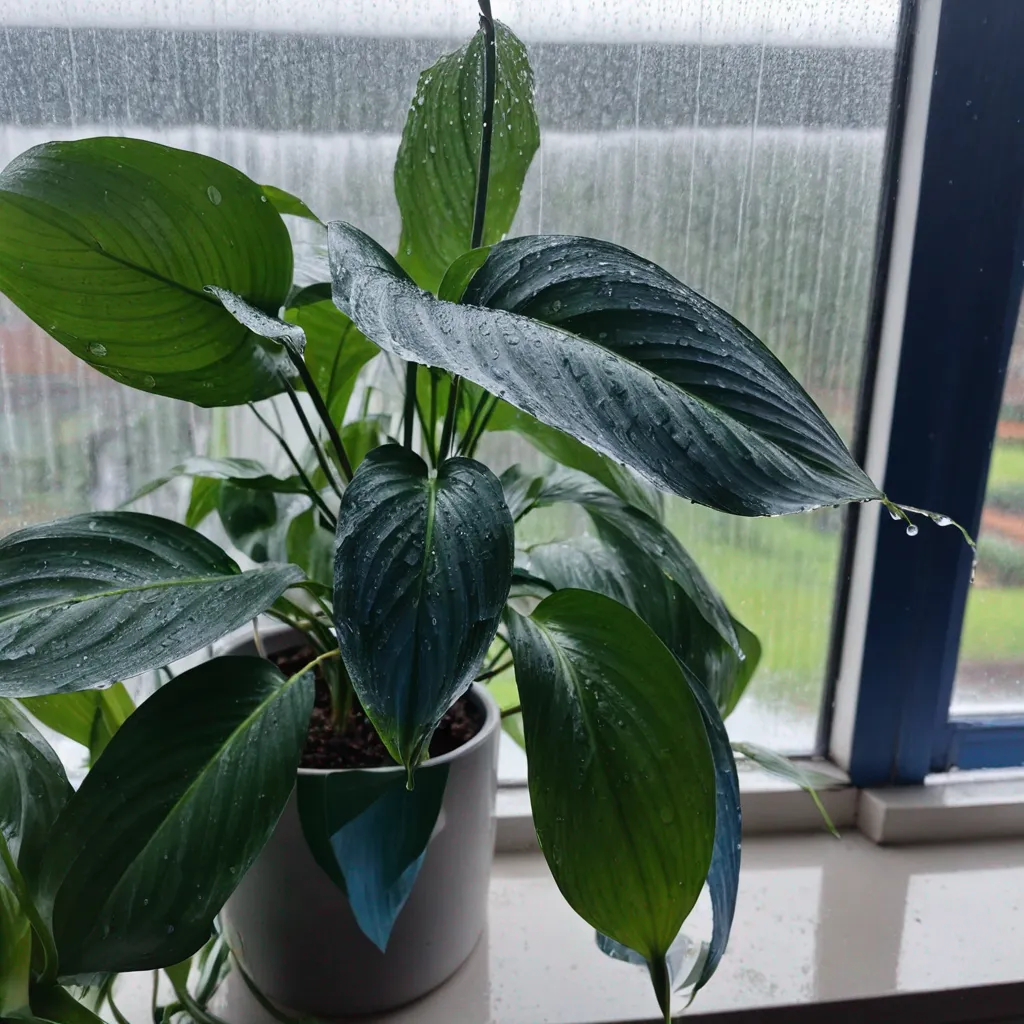
Peace lilies are the drama queens of the plant world. One moment they look lush and vibrant, and the next they are laying completely flat on the counter as if they’ve given up on life entirely. It’s an alarming sight, but it’s also usually a solvable one.
The tricky part is that a drooping peace lily can often signal two completely opposite problems: it’s either desperately thirsty or it’s drowning. Figuring out which one is the culprit is the key to nursing it back to health. When your peace lily droops, it’s begging for attention—you just need to know how to interpret the signal.
Distinguishing thirst from root rot
Section titled “Distinguishing thirst from root rot”This is where most people (including past me) mess up. A droopy peace lily can mean two opposite problems: not enough water or way too much. They look almost identical at first glance, which is incredibly annoying.
When my first peace lily drooped, I watered it immediately. Big mistake. It got worse. Turns out, I’d been overwatering for weeks, and the roots were rotting. The droop was a symptom of dying roots, not thirst.
Here’s how to tell the difference. Lift the pot. I’m serious, just pick it up. A thirsty peace lily sits in bone-dry, lightweight soil. You can feel the difference. If the pot is heavy and the soil feels wet or even just damp, do not water it. That’s root rot territory.
Next, check the leaves themselves. Thirsty peace lily leaves droop evenly across the whole plant. They look wilted but still green and relatively perky at the tips. The moment you water a truly thirsty peace lily, it perks up within hours. I’ve had mine go from completely flat to standing upright in about four hours after watering. It’s wild.
Root rot droop is different. The leaves don’t just wilt, they start turning yellow at the base. They feel mushy or soft when you touch them near the stem. The whole plant looks sad in a way that’s hard to describe, like it’s melting instead of just flopping over. And watering doesn’t fix it. If anything, it makes the situation worse.
If you suspect root rot, you need to check the roots. Pull the plant out of its pot (I usually do this over a towel on the kitchen counter). Healthy peace lily roots are white or light tan and firm. Rotting roots are brown, black, or gray, and they feel slimy. Sometimes they smell like decay. According to research from North Carolina State University Extension, root rot in houseplants is almost always caused by overwatering combined with poor drainage, and peace lilies are particularly vulnerable because people assume they need constant moisture.
To fix root rot, you have to cut away all the mushy roots with clean scissors. I rinse the remaining healthy roots under lukewarm water, then repot the plant in fresh, dry potting mix. Don’t water it right away. Wait two or three days to let the cut roots heal. This feels counterintuitive, but it works.
For a thirsty peace lily, the fix is simple: water it thoroughly until water runs out the drainage holes, then let it drain completely. Never let it sit in standing water. I killed my second peace lily that way.
Yellow leaves after watering
Section titled “Yellow leaves after watering”You water your peace lily because it’s drooping, and then a few days later, the leaves turn yellow. This happened to me last spring, and I thought I was losing my mind.
Yellow leaves after watering usually mean one of two things: overwatering damage or a drainage problem. Sometimes it’s both.
Peace lilies like their soil to dry out a bit between waterings. I know everyone says to keep them “evenly moist,” but in practice, that’s vague and unhelpful. What works for me is waiting until the top two inches of soil are dry. I stick my finger in the pot to check. If it feels damp, I wait another day or two.
When you overwater repeatedly, the roots can’t breathe. They start to fail even if they’re not fully rotting yet. The plant can’t move nutrients properly, so the older leaves turn yellow and drop off. According to the University of Georgia Extension, peace lilies are native to tropical forest floors where they get consistent moisture but also excellent drainage from the loose leaf litter. Our potting soil in ceramic pots doesn’t drain the same way.
If you’re getting yellow leaves after every watering, check your soil mix. Is it heavy and dense? Does water sit on the surface before soaking in? You might need to repot with a lighter mix. I use standard potting soil mixed with about 20% perlite. It’s not an exact science. Just grab a handful of perlite and work it into the soil. This helps water drain faster and gets air to the roots.
Also, check for a drainage hole. I bought a peace lily in a decorative pot once, and it didn’t have drainage. I didn’t realize for a month. Water was pooling at the bottom, and I couldn’t see it. The lower leaves turned yellow one by one. Now I always use a pot with holes, or I keep the plant in a plastic nursery pot and set that inside a decorative one.
One more thing: yellow leaves can also mean your plant is sitting in cold drafts or near a heat vent. Peace lilies hate temperature swings. Mine sits away from the window in winter because the cold glass causes problems.
 Above: A close up look at the symptoms.
Brown tips on the leaves
Section titled “Brown tips on the leaves”Brown tips are so common that I almost think they’re just part of owning a peace lily. I’ve never had one that didn’t develop at least a few crispy tips.
The main cause is low humidity. Peace lilies come from humid environments, and our homes, especially in winter, are dry. Like really dry. I live in an apartment with radiator heat, and my humidity drops to 25% in January. Peace lilies want something closer to 50% or 60%.
I tried misting my peace lily every day for a while because that’s what the internet told me to do. It didn’t help. Misting gives a brief humidity boost that lasts maybe 20 minutes. It’s not enough. What actually works is grouping plants together (they create a little humid microclimate) or using a humidifier. I bought a small one for $30, and I run it near my plants in winter. The brown tips slowed way down.
Another cause of brown tips is tap water quality. This one surprised me. My city adds fluoride and chlorine to the water, and peace lilies are sensitive to both. The chemicals build up in the leaf tips and cause browning. Research from the University of Florida IFAS Extension confirms that peace lilies are particularly sensitive to fluoride, which accumulates in the tips of the leaves and causes necrosis.
I started filling a pitcher with tap water and letting it sit out overnight before watering. The chlorine evaporates. Fluoride doesn’t, though, so if your water is heavily fluorinated, you might need to use filtered or distilled water. I switched to filtered water, and the new growth on my peace lily hasn’t developed brown tips. The old leaves still have them, but that’s fine. I just trim them off with scissors.
You can also get brown tips from fertilizer burn. I did this once by following the directions on a fertilizer bottle. Turns out, peace lilies don’t need much food. I fertilize maybe once every two or three months during spring and summer with a diluted liquid fertilizer (half strength), and I don’t fertilize at all in winter. That’s it. More than that, and you get salt buildup in the soil, which burns the tips.
If you see a white crust on top of your soil, that’s salt buildup. Flush it out by running water through the pot for a few minutes, letting it drain completely.
Why it stopped blooming
Section titled “Why it stopped blooming”Peace lilies bloom when they feel like it, which is not very often if we’re being honest. Mine bloomed twice in the first year I had it, then nothing for eight months. I thought I’d broken it somehow.
Turns out, peace lilies need the right conditions to bloom, and “right conditions” is kind of specific. They need bright indirect light. Not low light, despite what people say. According to Iowa State University Extension, peace lilies will survive in low light but won’t bloom unless they get enough brightness to trigger flowering.
I moved mine from a dim corner to a spot about six feet from an east-facing window, and it bloomed again within two months. The light thing matters more than I expected. If your peace lily is in a dark room, it’s probably not going to bloom. It’ll stay alive, but that’s it.
Age also matters. Young peace lilies don’t bloom much. They need to be mature, which usually means at least a year old and well-established. If you just bought your plant, give it time.
The white “flowers” (technically spathes) also need a rest period between blooms. My peace lily seems to bloom in spring and sometimes again in late summer, then takes a break. I’ve stopped expecting constant flowers. When they come, it’s a nice surprise.
One thing that doesn’t help: stress. If your peace lily is struggling with watering issues, bad light, or temperature problems, it’s focused on survival, not blooming. Get the basics right first.
 Above: The tools you need to fix this.
Reviving a completely flat plant
Section titled “Reviving a completely flat plant”I’ve done this twice now, and both times I thought the plant was dead. If your peace lily is laying completely flat on the counter or floor, don’t throw it out yet.
First, check if it’s just thirsty. Feel the soil. If it’s dry, water it deeply and wait. I’ve had peace lilies go from flat to upright in three to four hours after a good watering. It’s dramatic but normal. They collapse when they’re thirsty and bounce back fast.
If the soil is wet and the plant is still flat, you’ve got a bigger problem. This is likely root rot or severe root damage. You need to unpot the plant and look at the roots. Cut away anything that’s brown, black, or mushy. If there are still some white or tan firm roots left, the plant has a chance.
Repot it in fresh, dry soil. Cut back any leaves that are yellow or completely dead. I know it feels harsh, but those leaves are just draining energy from the plant. You want the remaining roots to focus on new growth, not trying to support dying foliage.
Don’t water right away. Let the plant sit in the new dry soil for a couple of days so the cut roots can heal. Then water lightly, not thoroughly. You’re trying to encourage new root growth without drowning the damaged root system.
Put the plant somewhere with bright indirect light and stable temperatures. No drafts, no heat vents, no direct sun. Just a calm, bright spot. Then wait. This is the hard part. It can take weeks to see improvement.
I had a peace lily that looked completely dead for almost a month after I repotted it. No new growth, just sitting there. Then one day, I saw a tiny new leaf unfurling from the center. It took another two months for the plant to look normal again, but it survived.
Not all plants make it. If you check the roots and everything is mush with nothing healthy left, the plant is gone. I’ve had that happen too. But if there’s any healthy root tissue at all, it’s worth trying to save it.
References
Section titled “References”North Carolina State University Extension. “Root Rot of Houseplants.” NC State Extension Publications.
University of Georgia Extension. “Growing Indoor Plants with Success.” UGA Extension Publications.
University of Florida IFAS Extension. “Foliage Plant Research: Fluoride Toxicity.” Environmental Horticulture Department.
Iowa State University Extension and Outreach. “Peace Lily: A Great Indoor Plant.” Horticulture and Home Pest News.