The 'Trash' Plant
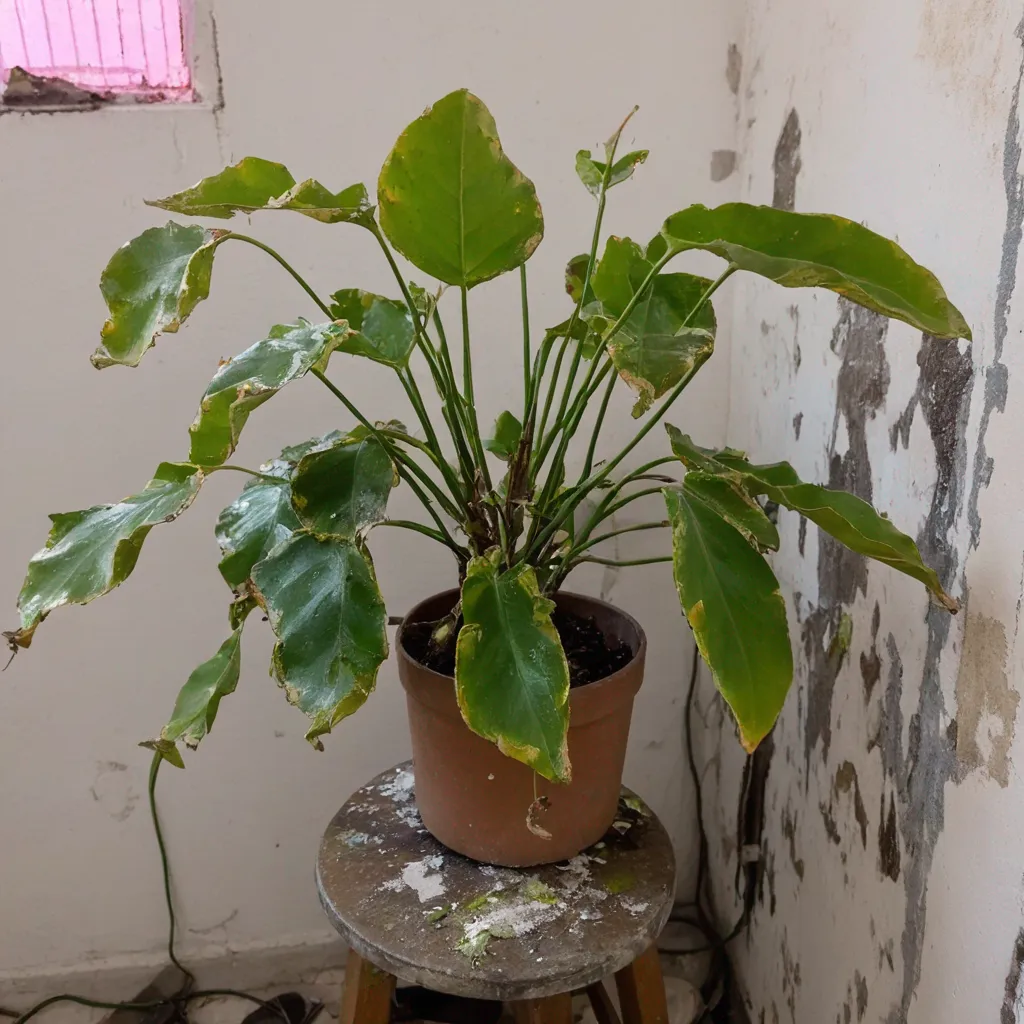
There is a strange guilt associated with throwing away a houseplant. We treat them like pets, convinced that with just a little more love (or water, or light), they will bounce back. But some plants are simply past the point of no return. Learning to recognize when a plant is truly dead—and giving yourself permission to bin it—is a crucial part of the hobby. I held onto a dead Fiddle Leaf Fig stick for months before finally accepting that I wasn’t running a plant hospital, but a morgue.
Here’s what nobody tells you when you start keeping plants: some of them are going to die. And when they do, you need to know when to stop trying to save them and just let go. I’m not talking about a plant with one yellow leaf. I’m talking about the plant that’s truly gone, the one you’ve been staring at for weeks hoping for a miracle that isn’t coming.
This post is about that plant. The one you need to throw away.
When to give up on a plant
Section titled “When to give up on a plant”I’ve learned this the hard way. There’s a difference between a struggling plant and a dead one, but when you’re emotionally invested (and let’s be honest, we all get attached), it’s hard to see clearly.
First, do the stem test. Scratch a tiny bit of the stem near the base with your fingernail. If you see green underneath, there’s still life. If it’s brown and dry all the way through, that part is dead. Work your way up the plant. Sometimes you’ll find that the bottom is gone but the top still has some life in it. You can try to propagate those living parts if you want, but be realistic about your success rate.
I had a pothos that got root rot last year. I kept telling myself it would bounce back. I moved it to a brighter spot, changed the watering schedule, even repotted it. But every new leaf came out smaller and more yellow than the last. The stems felt mushy at the base. I should have given up after the first month, but I didn’t. I wasted three months on a plant that was already gone.
Here’s my honest checklist for when it’s time to call it. If your plant has lost more than 80% of its leaves and hasn’t shown new growth in over a month, it’s probably done. If the roots are black and smell like swamp water even after you’ve removed all the rotted parts, it’s done. If the stem is hollow or collapses when you touch it, definitely done.
But sometimes you have a plant that’s technically alive but so damaged that it will never look good again. I had a snake plant that got frozen when I left the window open during a cold snap. Technically, a few leaves survived, but they were scarred and bent. It wasn’t dead, but it looked terrible. I kept it for six months out of guilt before finally admitting that looking at its sad, damaged leaves every day wasn’t worth it. Sometimes the kindest thing is to start over.
The hard part is that we attach meaning to these plants. That succulent was a gift from your friend. That fern survived your move across the country. Throwing it away feels like giving up on something important. But keeping a dead plant doesn’t honor its memory. It just makes you feel bad every time you look at it.
Composting dead plants
Section titled “Composting dead plants”Once you’ve accepted that your plant is truly gone, you have options. If you have any kind of outdoor space or access to a compost bin, dead plant material is actually useful.
I started composting my dead plants two years ago when I killed an entire tray of seedlings (long story involving a vacation and a broken self-watering system). Instead of throwing them in the trash, I looked into composting, and it made me feel slightly less terrible about the whole thing.
Most dead plant material can go straight into compost. Leaves, stems, roots, even the soil if it’s not contaminated with pests or disease. The key word there is disease. If your plant died from fungal issues, bacterial rot, or any kind of infection, do not compost it unless you have a hot composting system that reaches high enough temperatures to kill pathogens. Most backyard compost bins don’t get hot enough. I learned this from a university extension office article, and it saved me from spreading disease to my other plants.
For diseased plants, the trash is actually the right choice. It’s not worth the risk of infecting your whole garden or your other houseplants. Same goes for plants that had serious pest infestations. Those spider mites can survive in ways you don’t expect.
If you don’t have a compost bin, check if your city has a yard waste program. A lot of cities collect organic waste separately now. I live in an apartment, so I don’t have my own compost, but my building has a shared bin for organics. Your plant matter is way better off breaking down into compost than sitting in a landfill wrapped in plastic.
For the soil, I reuse it if the plant died from neglect or environmental issues (like my frozen snake plant). I mix the old soil with new potting mix, about half and half, and use it for less sensitive plants. If the plant died from root rot or disease, the soil goes in the trash. It’s not worth the risk, and potting soil isn’t expensive enough to take chances.
One thing I always remove before composting: those little plastic tags that come with plants from the nursery. I’ve found those things in my compost pile months later, and they don’t break down. Pull them out along with any twist ties or stakes.
 Above: A close up look at the problem.
Sanitizing pots for reuse
Section titled “Sanitizing pots for reuse”I have a collection of empty pots in my closet that I swear I’m going to use someday. Every time a plant dies, I’m left with a pot, and throwing away a perfectly good pot feels wasteful. But you can’t just stick a new plant in a pot that housed a dead one without cleaning it first.
The problem is that pots hold onto residue. Mineral deposits from water, old root bits, sometimes mold or algae, and potentially disease organisms. I made the mistake early on of reusing a pot without cleaning it, and my new plant got root rot within weeks. I’m pretty sure I transferred the problem directly from the old plant.
Here’s my process now, and it takes maybe ten minutes per pot. First, I scrape out all the old soil and any visible root material. I use an old butter knife for this. Then I rinse the pot with water to get rid of loose debris.
For terracotta pots, which I love but which also get crusty with mineral buildup, I soak them in a mixture of one part white vinegar to four parts water for about 30 minutes. This breaks down the white crusty stuff. Then I scrub with a brush. An old toothbrush works great for the drainage hole.
For plastic and ceramic pots, I use a weak bleach solution. One part bleach to nine parts water. I let the pots soak for about ten minutes, then rinse them really thoroughly. The bleach kills pretty much everything, including disease organisms. The key is rinsing well afterward because bleach residue can harm your next plant.
I know some people skip this whole process, and maybe their plants are fine. But I’ve killed enough plants that I’m not taking chances anymore. The time I spend sanitizing pots is nothing compared to the time I wasted trying to save plants that were doomed from the start.
After cleaning, I let the pots dry completely before storing them. Storing them wet can lead to mold, especially if you stack them like I do. I learned this when I opened my pot closet and found fuzzy growth on several pots that I’d put away damp.
Learning from mistakes
Section titled “Learning from mistakes”Every plant I’ve killed has taught me something, even if the lesson was just “don’t buy that plant again.”
The fiddle leaf fig I mentioned at the start taught me about my light conditions. I thought my apartment had bright indirect light because it felt bright to me. Turns out, what feels bright to human eyes and what counts as bright for a fiddle leaf fig are very different things. I downloaded a light meter app (the free kind), and it showed me that most of my apartment sits at around 200 to 400 foot-candles. Fiddle leaf figs want more like 400 to 800. No wonder it died.
Now I know my space. I stick to pothos, snake plants, and other low-light tolerant plants. I haven’t bought another fiddle leaf fig because my apartment hasn’t changed. That feels like progress.
The root rot pothos taught me about watering. I was watering on a schedule (every Sunday) instead of checking if the plant actually needed it. Pothos can go a while without water, especially in winter when growth slows down. I was drowning it with good intentions. Now I stick my finger in the soil before watering. If it’s damp, I wait. This seems obvious in retrospect, but it wasn’t obvious to me at the time.
I keep a simple log now, just notes on my phone. When a plant dies, I write down what I think went wrong. Sometimes it’s obvious (knocked over by the cat, RIP that succulent). Sometimes I have to guess. But the pattern recognition helps. When I noticed that I’d killed three different ferns in a row, all from the same spot in my bathroom, I realized that the bathroom doesn’t actually stay humid like I thought. The vent fan dries it out fast. No more ferns in the bathroom.
The hardest lesson is accepting that some plant deaths aren’t your fault. I bought a monstera from a big box store last year that died within two months despite perfect care. When I finally pulled it out to throw it away, the roots were already rotted at the store. It was doomed before I brought it home. I’m more careful now about inspecting plants before I buy them, but sometimes you just get unlucky.
I also learned that I have limits. I can’t keep calatheas alive. I’ve tried four times. They want consistent humidity and moisture, and I travel too much. I forget to water at the worst times. Instead of trying again, I’ve just accepted that calatheas aren’t for me right now. Maybe someday when my life is more stable, I’ll try again. Or maybe I won’t, and that’s fine too.
 Above: The tools you need to fix this.
Letting go guilt-free
Section titled “Letting go guilt-free”This is the section I needed someone to write for me three years ago when I was keeping that dead fiddle leaf fig on my shelf like some kind of memorial.
Plants are living things, but they’re also just plants. You’re not a bad person for killing a plant. You’re not even a bad plant parent. Sometimes the conditions aren’t right, sometimes you make a mistake, sometimes the plant was already struggling when you got it. It happens to everyone.
I follow several plant bloggers who’ve been doing this for decades, and they still kill plants. I’ve read university extension articles written by actual horticulturists that include tips on dealing with plant death. If the professionals kill plants, you’re definitely allowed to kill plants.
The guilt often comes from the money. Houseplants can be expensive, especially the trendy ones. When you kill a plant you paid $40 for, it stings. I get it. But think about other hobbies. People who cook try recipes that fail. People who paint create art they end up throwing away. The money you spent on that plant wasn’t wasted if you learned something from it, even if the lesson was just “I don’t have enough light for that.”
Sometimes the guilt is about the plant itself, like you failed in your duty to keep it alive. But you didn’t kidnap the plant. You bought it or received it as a gift with good intentions. You tried. If it didn’t work out, you’re allowed to move on.
Here’s what helps me: I take a photo of the plant before I throw it away. Just a quick phone picture. It feels like acknowledgment. Then I make a note about what I think happened. Then I put it in the compost or trash, and I clean the pot. The whole ritual takes five minutes, but it gives me closure.
And then I move on. Sometimes I buy a replacement plant, something similar but maybe an easier variety. Sometimes I buy something completely different. Sometimes I don’t buy anything for a while and just take care of the plants that are doing well.
The point is that keeping plants should make you happy. If a dead plant is taking up space and making you feel bad every time you see it, it’s not serving any purpose. Throw it away. Clean the pot. Try again if you want, or try something else. You’re allowed to start over.
I still kill plants sometimes. Just last month I overwatered a jade plant (I know, they’re supposed to be easy). But now when it happens, I don’t spiral into guilt. I figure out what went wrong, I throw away the plant, and I move forward. That’s all any of us can do.
References
Section titled “References”“Composting at Home,” Cornell Waste Management Institute, Cornell University
“Sanitizing Pots and Garden Tools,” University of Minnesota Extension
“Indoor Plant Light Requirements,” Purdue University Department of Horticulture
“Common Houseplant Problems,” Iowa State University Extension and Outreach