Tradescantia (Wandering Dude) Care
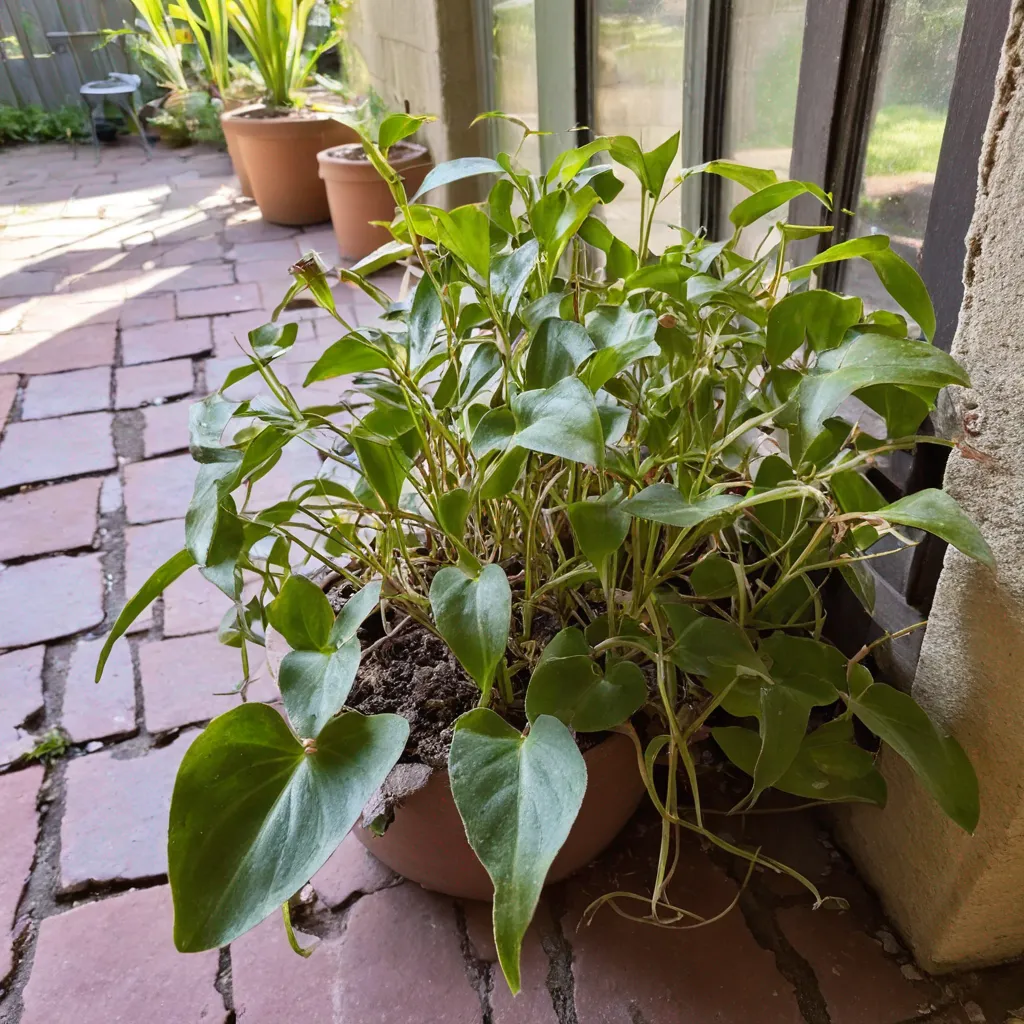
My first Tradescantia zebrina started as a impulsive buy because it was cheap and purple. I figured even I couldn’t kill it. Turns out I was half right. The plant didn’t die, but it looked terrible for months. Long, scraggly stems with leaves only at the very tips, like some kind of sad botanical octopus. I kept thinking it would fill in on its own. It didn’t.
If you’re here because your Wandering Dude looks more like a wandering disaster, I get it. These plants are supposed to be foolproof, but nobody tells you they need actual care (and frequent haircuts) to look decent. After killing my first attempt at fullness and doing way too much reading, I finally have a plant that looks like the ones in photos. Here’s what I learned.
Why the stems get leggy and bald
Section titled “Why the stems get leggy and bald”This was my biggest frustration. I’d see these gorgeous, full trailing plants online, and mine looked like it was rationing leaves. The stems would grow long and thin, with all the foliage bunched at the ends. The older parts near the soil became completely bare.
The main culprit is light. Tradescantias stretch toward light sources when they aren’t getting enough. This is called etiolation, and it’s the plant’s way of trying to find better conditions. The problem is that once a stem gets leggy, it stays that way. Those bare sections won’t suddenly sprout new leaves. According to research from the University of Vermont Extension, inadequate light is the primary cause of legginess in most houseplants, including Tradescantia species.
I had mine about six feet from a north-facing window. That seemed fine because the leaves weren’t burning or anything, but it wasn’t enough to keep the growth compact. When I moved it closer to an east-facing window, the new growth came in much tighter and fuller, but the old stems were still naked and weird looking.
Here’s the thing nobody mentions upfront: even with perfect light, Tradescantias naturally focus their energy on the growing tips. The oldest leaves at the base will eventually yellow and drop off. This is normal aging. But when you combine natural aging with low light, you get those terrible long bald stems.
Temperature plays a smaller role too. If your plant is too warm, especially without enough light, it grows faster but weaker. My apartment gets pretty hot in summer, and I noticed the legginess got worse during those months even though the light hadn’t changed.
The fix isn’t just moving the plant. You also have to deal with what’s already there, which brings me to the next section.
Propagating directly in soil
Section titled “Propagating directly in soil”Most guides tell you to propagate Tradescantia in water first, then move it to soil. I did this for ages because that’s what the internet said to do. Then I got lazy one day and just stuck cuttings directly into the pot with the mother plant. They rooted fine. Actually, they rooted better than my water propagations because I didn’t have to deal with the transition shock.
Here’s my process now. When the plant gets too leggy, I take scissors and cut the stems back to where the plant still looks full. Usually this means cutting off 4 to 6 inches from each growing tip. I know it feels brutal, but you’re going to use those cuttings anyway.
Each cutting should have at least two or three nodes. Nodes are those little bumps on the stem where leaves attach. This is where roots will form. I strip off the bottom leaves so I have a bare stem to push into the soil. If you leave leaves buried, they’ll just rot.
I use the same pot as the mother plant if there’s room, or a new pot if I’m starting fresh. The soil should be slightly damp, not soaking wet. I make a hole with my finger or a pencil, stick the cutting in about an inch deep, and firm the soil around it. Then I place several cuttings in the same pot, spaced maybe an inch apart. This creates instant fullness instead of waiting for one stem to branch out.
The success rate for direct soil propagation is high if you keep the soil consistently moist for the first two weeks. Not soggy, just don’t let it dry out completely. I check every couple days by sticking my finger in. After about two weeks, I tug very gently on a cutting. If it resists, it has rooted. If it slides right out, give it more time.
One study published in the Journal of Environmental Horticulture found that Tradescantia cuttings root readily in various media without rooting hormone, which matches what I’ve experienced. I’ve never used rooting hormone and rarely have failures.
The advantage of soil propagation is that you skip the step where water roots have to adapt to soil. Water roots and soil roots are slightly different in structure, and sometimes plants sulk during the transition. Going straight to soil eliminates that problem.
 Above: A closer look at this plant.
Watering to prevent crispy leaves
Section titled “Watering to prevent crispy leaves”I used to underwater my Tradescantia because I was paranoid about root rot. The tips of the leaves would turn brown and crispy, and I’d convince myself it was normal. It’s not normal. It means the plant is thirsty.
Tradescantias like consistent moisture. They’re not succulents. In their natural habitat in South America, according to the Missouri Botanical Garden, they grow in relatively moist conditions under tree canopies. They can tolerate brief dry periods, but they don’t thrive in them.
The trick is figuring out what “consistent moisture” means in your specific home. For me, in a terracotta pot near a bright window, that means watering about every five days in summer and every seven to nine days in winter. Your schedule will be different depending on your pot type, soil mix, humidity, and light.
I water when the top inch of soil feels dry. I stick my finger in up to the first knuckle. If it feels even slightly damp, I wait. If it’s dry, I water thoroughly until water runs out the drainage holes. Then I dump the excess from the saucer after about 15 minutes.
The brown crispy tips happen when the soil dries out too much between waterings. The plant pulls moisture from the leaf tips first because they’re farthest from the roots. Once the tips go crispy, they stay that way. You can trim them off with scissors if it bothers you, but the real fix is adjusting your watering schedule.
On the flip side, if you water too frequently and the soil stays soggy, you’ll get yellow leaves and mushy stems. Root rot sets in fast with Tradescantias. They need that dry period between waterings so the roots can breathe. It’s a balance.
Humidity helps too. I don’t mist my plants because I think it’s mostly useless, but I do keep my Tradescantia in the bathroom where it gets ambient humidity from showers. If your air is very dry, especially in winter with heating running, the leaf tips are more likely to crisp up even with proper watering. A pebble tray or a humidifier nearby can help, though I haven’t bothered with either.
Light needs for purple color
Section titled “Light needs for purple color”This is where I really messed up at first. I bought a Tradescantia zebrina specifically because I loved the deep purple undersides and the silvery stripes on top. After a few weeks in my care, it faded to mostly green with just hints of purple. I thought maybe I got a dud.
Nope. It was the light again.
The purple pigmentation in Tradescantia leaves comes from anthocyanins, which the plant produces in response to bright light. It’s actually a protective mechanism. According to research from NC State Extension, many purple-leaved plants lose their color in low light conditions because they don’t need that protection.
When I moved mine to a spot with more light, the new leaves came in much more vibrant. The old green leaves stayed green, but everything growing after the move had that rich purple I wanted. It took about a month to really see the difference because plants don’t change overnight.
Bright indirect light is the sweet spot. I have mine about two feet from an east-facing window where it gets gentle morning sun and bright indirect light the rest of the day. Some people say Tradescantias can handle direct sun, and maybe some can, but mine got bleached and crispy when I tried that. The leaves turned pale and the tips burned.
If you only have low light, you can still grow a Tradescantia. It just won’t be as colorful. The green varieties like Tradescantia fluminensis handle lower light better than the purple types, from what I’ve seen in online plant groups. But none of them will look their best without decent light.
Artificial grow lights work too. I used one during a particularly dark winter, and the plant maintained its color. You need a full-spectrum LED placed fairly close, maybe 12 to 18 inches away, for at least 10 to 12 hours a day. I found this setup tedious to maintain, so I just moved the plant to a better window, but it’s an option if you don’t have good natural light.
 Above: Getting started with care.
Pinching back for bushiness
Section titled “Pinching back for bushiness”This is the secret that finally made my plant look good. You have to pinch it back regularly. Like, every few weeks during the growing season.
Pinching means removing the growing tip of a stem. You can use your fingernails or scissors. I just pinch right above a node, taking off the top inch or so. This forces the plant to branch out at that point instead of continuing to grow longer. Each pinched stem will usually produce two new stems, which makes the plant fuller over time.
I ignored this advice for way too long because I liked watching the vines get longer. That’s the opposite of what you want if you’re going for a full, bushy look. Long vines are fine if you’re growing it in a hanging basket and want maximum trailing length, but for a pot on a shelf, you want density.
I pinch my Tradescantia every time a stem gets about four to six inches long. This keeps it compact and encourages branching close to the base. The cuttings from pinching can be propagated right back into the same pot, which adds even more fullness.
If you’ve been growing your plant for a while without pinching and it’s already super leggy, you’ll need to be more aggressive. Cut it back hard, propagate the cuttings, and start fresh with regular pinching. This feels scary but it works. Tradescantias grow fast. You won’t be waiting long for new growth.
The best time to pinch is during active growth, which is spring and summer for most of us. I barely touch mine in winter because it’s not growing much anyway. Pinching dormant stems doesn’t accomplish anything.
One thing I’ve noticed from experience and from reading discussions on hobbyist forums is that different Tradescantia varieties have different growth habits. Some naturally branch more than others. My zebrina seems to need more frequent pinching than my friend’s pale pink variety, which bushes up on its own. But all of them benefit from at least occasional pinching.
I wish someone had told me from day one that Tradescantias need regular grooming. They’re not a “set it and forget it” plant. But once you get into a rhythm with the pinching and the light and the watering, they’re pretty rewarding. Mine grows so fast that I’m constantly giving away cuttings, and it still looks full.
References
Section titled “References”Journal of Environmental Horticulture. Studies on propagation techniques for ornamental houseplants.
Missouri Botanical Garden. Tradescantia species information and native habitat data.
NC State Extension. Plant pigmentation and light requirements for colored foliage.
University of Vermont Extension. Houseplant care guides, etiolation and light requirements.