Scale Insects: Removal Guide
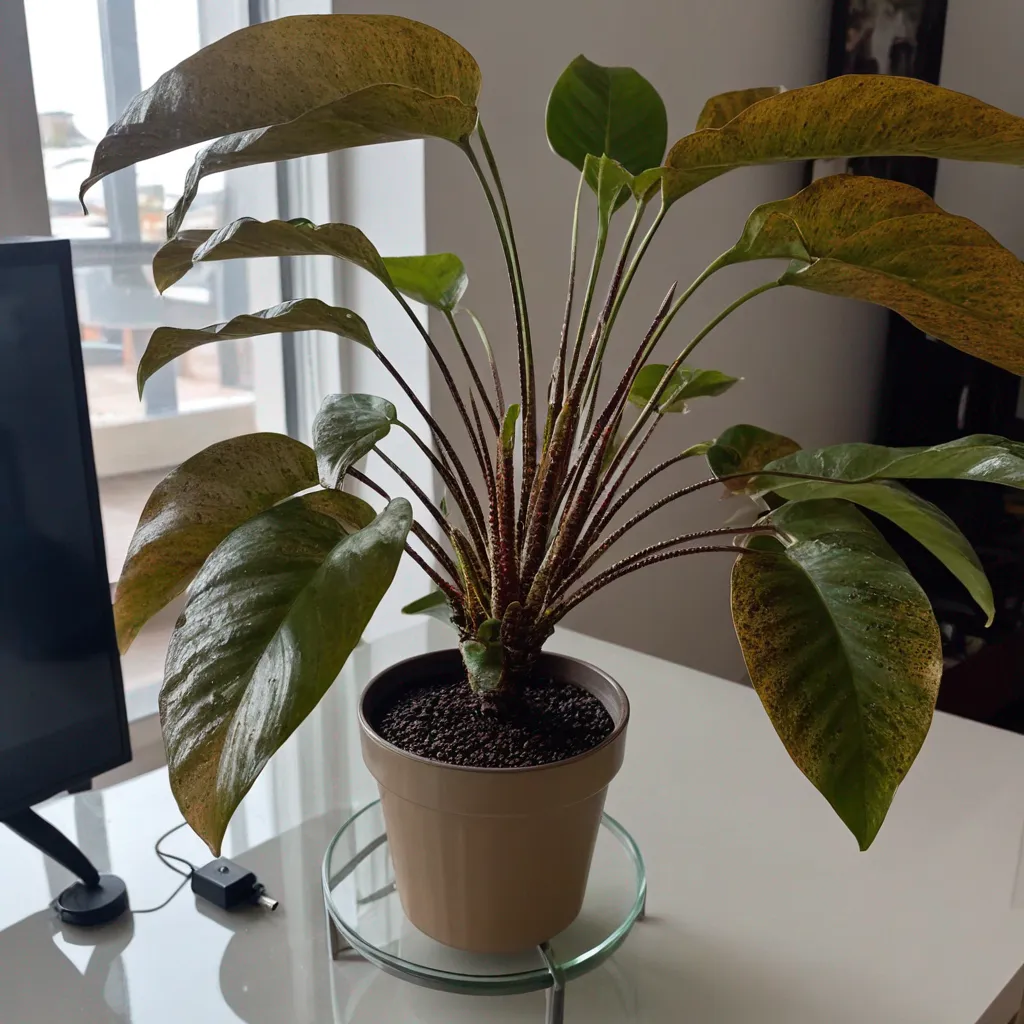
I found scale insects on my fiddle leaf fig last month, and I’ll be honest, at first I thought it was some kind of weird plant disease. These little brown bumps don’t look like bugs at all. They just sit there, stuck to the stems like tiny helmets, not moving. But once I realized what they were, I went into full panic mode because scale can seriously weaken a plant if you ignore them.
The good news is that you can get rid of scale insects. It takes patience and some elbow grease, but it’s totally doable. I’m going to walk you through exactly what I did, plus what I learned from researching how to handle these pests properly.
Identifying brown bumps
Section titled “Identifying brown bumps”The first time you see scale insects, you might not even realize they’re alive. They look like little brown or tan bumps stuck to the stems and leaves of your plant. Some are round, some are more oval, and they range from about the size of a pinhead to maybe three or four millimeters across. They don’t move like other bugs do. They just camp out in one spot, sucking sap from your plant.
I noticed mine when I was wiping down my fiddle leaf fig’s leaves. I felt these rough spots on the stems and petioles (the little stalks that connect the leaves to the main stem). When I looked closer, I saw these brown bumps that wouldn’t come off with a gentle wipe. That’s when I started googling.
There are two main types you’ll run into as a houseplant owner. Soft scale insects have a waxy coating but they’re a bit softer if you press on them. Armored scale have a hard shell that protects them, and they’re tougher to squish. Both types are bad news for your plant because they’re basically vampires, draining the sap and weakening your plant over time.
You might also notice other signs beyond the bumps themselves. Check for sticky residue on the leaves or on the surface below your plant. This is honeydew, which is a polite word for scale insect poop. It’s sugary and gross, and it can attract ants or lead to sooty mold (a black fungal growth). If your plant’s leaves are turning yellow or dropping off, and you see these bumps, you’ve probably got a scale problem.
Look closely at the undersides of leaves too, especially along the veins and near the stem. Scale insects love to hide in these protected spots. I found a whole cluster of them tucked under a leaf on my fig that I almost missed. Use your phone’s flashlight if you need to, it really helps you see into the shadowy parts of the plant.
According to research from the University of California’s Integrated Pest Management program, scale insects reproduce quickly, and females can lay hundreds of eggs under their protective shell. So even if you only see a few adults, there might be babies (called crawlers) getting ready to hatch.
Scraping them off manually
Section titled “Scraping them off manually”This is the part that feels satisfying but also a little gross. Once you’ve confirmed you have scale, the first step is to physically remove as many as you can. I know it sounds tedious, but it really does make a difference, especially if the infestation isn’t too widespread yet.
I used my fingernail at first, just gently scraping the bumps off the stem. They come off pretty easily if you get under the edge and flick them. Some people use an old toothbrush or a soft brush for this. I tried both, and honestly, my fingernail worked better for precision work, but the toothbrush was useful for areas with multiple scales close together.
For stubborn ones that really stick, I used a wooden toothpick. You have to be gentle so you don’t damage the plant tissue underneath, but the pointed end lets you get right under the scale and pop it off. I kept a small bowl of soapy water next to me and dropped each scale into it as I removed them. This kills them and keeps them from crawling back onto the plant.
Wear gloves if this grosses you out. I didn’t the first time, and I kept thinking about bug guts under my nails for the rest of the day. Also, do this over a towel or some newspaper because the scales will fall, and you don’t want them landing in the soil of another plant.
Pay extra attention to the joints where leaves meet stems, and anywhere the stem branches off. Scale insects love these spots because they’re protected. I found it helpful to work methodically, starting at the top of the plant and working my way down, checking every single stem and leaf.
You won’t get them all this way. The tiny crawlers are almost invisible, and eggs are protected under the adult’s shell. But removing the adults reduces the population immediately and makes the next steps more effective. The University of Maryland Extension notes that manual removal is one of the most important steps in controlling scale, especially for houseplants where you can realistically inspect every part of the plant.
 Above: A close up look at the symptoms.
Rubbing alcohol treatment
Section titled “Rubbing alcohol treatment”After I scraped off all the visible scale, I went in with rubbing alcohol. This is my favorite method because it works fast and you can see the results immediately. The alcohol dissolves the waxy coating that protects scale insects and kills them on contact.
I used regular 70% isopropyl rubbing alcohol, the kind you can buy at any drugstore. Some people dilute it with water, but I used it straight for the first treatment because I wanted to hit these bugs hard. I dipped a cotton swab in the alcohol and dabbed it directly onto every scale insect I could see, including the tiny ones I missed during the manual removal.
The alcohol evaporates quickly, so you don’t have to worry about it sitting on your plant and causing damage. But I did test it on one leaf first, just to make sure my particular plant could handle it. I’ve heard that some plants with very delicate or fuzzy leaves can get damaged by alcohol, though I haven’t had that problem with any of mine.
For larger infestations, you can spray the alcohol directly onto the plant. I put some in a small spray bottle and misted the stems and undersides of leaves. Make sure you get good coverage, especially in those hiding spots where scale like to cluster. I let it sit for a few minutes, then wiped the plant down with a damp cloth to remove any dead insects and residue.
I repeated this treatment every three to four days for about two weeks. This timing is important because you need to catch the crawlers as they hatch, before they settle down and form their protective shell. According to information from Iowa State University Extension, the crawler stage is when scale insects are most vulnerable, so repeated treatments are more effective than one heavy application.
One warning: don’t do this in bright sunlight or right before you put your plant in direct sun. The alcohol can cause burn spots if the plant is exposed to intense light while it’s still wet. I treated my plants in the evening, which gave them overnight to dry before morning sun hit them.
Horticultural oil
Section titled “Horticultural oil”While rubbing alcohol worked great for spot treatments, I wanted something that would give me longer-term control and smother any eggs or crawlers I couldn’t see. That’s where horticultural oil comes in.
Horticultural oil is basically a refined petroleum oil or plant-based oil that coats insects and suffocates them. It also helps prevent new infestations by creating a barrier on the plant. You can buy it at garden centers, usually labeled as “horticultural oil” or “insecticidal soap oil.” I used one called Neem oil, which is a type of horticultural oil that comes from the neem tree.
The key with any oil spray is to follow the dilution instructions exactly. I mixed mine according to the bottle directions (usually a couple tablespoons per quart of water), added it to a spray bottle, and shook it well before each use. Oil and water don’t naturally mix, so you need to shake it up every time you spray.
I thoroughly sprayed the entire plant, making sure to coat the tops and bottoms of leaves, all the stems, and even the soil surface. The oil needs to make contact with the insects to work, so good coverage is critical. I did this outside on my balcony because it’s messy and I didn’t want oil all over my floor.
Let the plant dry in a shaded spot before bringing it back inside. Don’t use horticultural oil when temperatures are above 90 degrees or when it’s extremely humid, as this can stress the plant. I learned from the University of California that oils can damage plants if applied in the wrong conditions, so I made sure to treat my plants on a mild day.
I repeated the oil treatment once a week for three weeks. This helped catch any new crawlers that hatched and gave me ongoing protection. Some people alternate between alcohol treatments and oil treatments, which is probably the most thorough approach.
One thing I noticed: the oil made my plant’s leaves really shiny and nice looking, which was a bonus. But it also attracted some dust, so I had to wipe the leaves down after a week or so.
 Above: The tools you need to fix this.
Checking stems carefully
Section titled “Checking stems carefully”Even after you think you’ve won the battle, you need to keep checking your plant. Scale insects are sneaky, and it’s easy to miss a few, especially the eggs or newly hatched crawlers. I inspect my plants every few days now, and I’ll probably keep doing this for at least a couple months.
I make it part of my regular plant care routine. When I water, I take an extra minute to look at the stems, the undersides of leaves, and anywhere I found scale before. New bumps can appear quickly if you missed even a few eggs, so catching them early makes all the difference.
The stems are especially important because that’s where scale tends to gather first. Run your fingers gently along each stem and feel for any rough spots or bumps. Your sense of touch can catch things your eyes miss, especially if the scale are still small. I found three tiny ones this way last week that I never would have seen otherwise.
Don’t forget to check any new growth. Young stems and fresh leaves are prime real estate for scale insects because the tissue is tender and easy to feed on. I found a small cluster on a new branch of my pothos that must have just hatched, and I’m glad I caught them before they matured.
Also, quarantine any plant that’s had scale. I keep my treated plants separated from my other houseplants for at least a month after the last sign of scale. It’s a pain because I have limited space, but it’s better than dealing with an infestation spreading to every plant I own. I learned this the hard way when scale jumped from my fiddle leaf fig to a nearby snake plant.
According to the Missouri Botanical Garden, scale insects can be persistent, and it can take several weeks or even months of monitoring to make sure they’re really gone. The crawlers are mobile and can spread to nearby plants, so vigilance is key.
If you see any signs of scale coming back, start the treatment process over immediately. Don’t wait. A few bumps can turn into a major problem faster than you’d think.
I also make a point to inspect any new plants I bring home before they go anywhere near my existing collection. I’ve started putting new plants in quarantine for at least two weeks, checking them carefully for pests. It feels paranoid, but scale insects are so common on nursery plants that it’s worth the extra caution.
Dealing with scale has taught me to pay way more attention to my plants. I used to just water and walk away, but now I actually look at them, touch the leaves, check the stems. It’s made me a better plant owner, honestly, even if the learning curve involved some gross bug removal.
References
Section titled “References”University of California Statewide Integrated Pest Management Program. “Scales.” UC IPM Online. http://ipm.ucanr.edu/PMG/PESTNOTES/pn7408.html
University of Maryland Extension. “Scale Insects on Indoor Plants.” Home and Garden Information Center.
Iowa State University Extension and Outreach. “Scale Insects.” Horticulture and Home Pest News.
Missouri Botanical Garden. “Scale Insects.” Gardening Help.