Closed Terrarium Guide
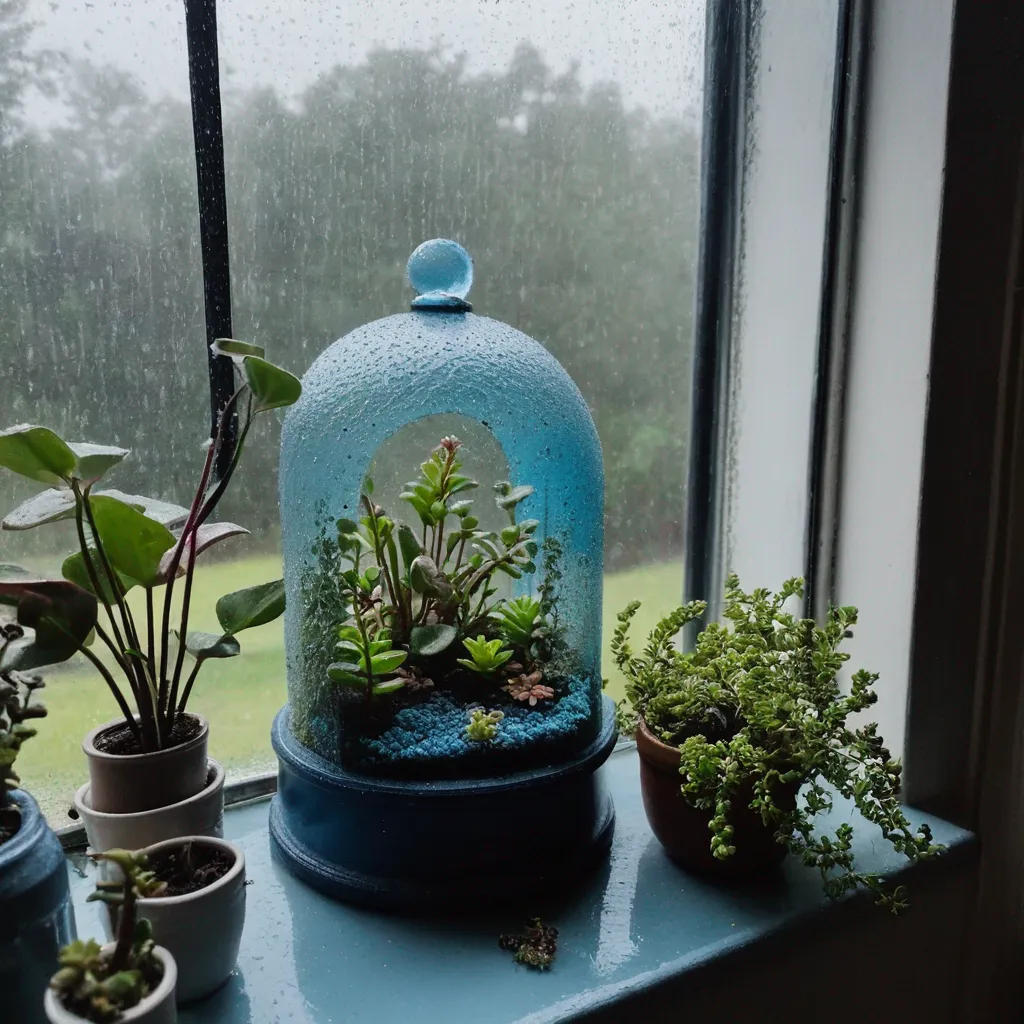
I built my first closed terrarium three years ago after watching a YouTube video at 2 a.m. when I couldn’t sleep. I thought it would be easy. Just throw some dirt and plants in a jar, seal it up, and walk away, right? Wrong. My first attempt turned into a science experiment gone bad. The glass fogged up so much I couldn’t see inside, and when I finally opened it after two weeks, it smelled like a swamp.
But I learned from that disaster, and now I have four closed terrariums in my apartment that have been thriving for over a year. One of them sits on my desk, and I honestly forget it’s there sometimes because it just does its thing without me. That’s the magic of a well-built closed terrarium.
If you’re thinking about making one, I want to save you from the mistakes I made. This isn’t rocket science, but there are a few things you need to get right from the start.
Understanding the layers
Section titled “Understanding the layers”When I made my first terrarium, I just dumped potting soil into a jar and stuck some plants in it. That was mistake number one. The layers in a terrarium aren’t just for looks (though they do look cool through the glass). Each layer has a job to do, and skipping one can mess up the whole system.
Start with a drainage layer at the bottom. I use small pebbles or aquarium gravel, about one to two inches deep depending on the size of your container. This layer catches excess water so your plants aren’t sitting in it. In a regular pot, water drains out the bottom. In a closed terrarium, it has nowhere to go, so you need this space to hold it.
Some people use lava rock or even clay pebbles (the kind you find at hydroponic stores). I like regular aquarium gravel because it’s cheap and I can get it at any pet store. Just rinse it first. The dust from unwashed gravel will cloud up your terrarium, and you’ll be staring at murky glass for weeks.
Next comes the separation layer. I use sphagnum moss for this. You can buy it dried at any garden center. Soak it in water, squeeze it out, and lay it over your drainage layer like a blanket. This stops your soil from washing down into the gravel every time you water. I learned this the hard way when my carefully arranged layers turned into a muddy mess after the first watering.
Some guides online say you can skip the moss and use a piece of screen or fabric. I tried that once with a piece of old t-shirt, and it worked fine, so use what you have. The North Carolina State Extension actually mentions that any barrier works as long as water can pass through but soil can’t (North Carolina State University Extension).
Then comes the substrate layer. This is where your plants will actually live. For closed terrariums, I mix regular potting soil with some sand or perlite, maybe 70% soil to 30% sand. You want it to drain well because a closed terrarium holds onto moisture like crazy. Straight potting soil stays too wet and can lead to rot.
Make this layer at least two to three inches deep. If you’re planting something with longer roots, go deeper. I made a terrarium once with only an inch of soil because I wanted to see all the layers through the glass, and my fern just gave up after a month. Roots need room.
The top layer is optional, but I almost always add it. A thin layer of sand or small decorative stones looks clean and helps prevent algae from growing on the soil surface. Plus, it hides the dirt if you’re giving this as a gift or putting it somewhere people will see it up close.
Best plants for terrariums
Section titled “Best plants for terrariums”You can’t just stick any plant in a closed terrarium. I tried putting a succulent in one once because I thought it looked cute, and it rotted within three weeks. Succulents hate humidity, and a closed terrarium is basically a little rainforest.
What you want are plants that love moisture and don’t mind being small. Ferns are perfect. I use button ferns in almost all my terrariums because they stay compact and they’re nearly impossible to kill in a humid environment. Maidenhair ferns are beautiful too, but fair warning, they’re dramatic. Even in a terrarium, they’ll throw a fit if conditions aren’t perfect.
Fittonias (nerve plants) are another favorite of mine. They come in white, pink, or red veins, and they stay small. I have a white one in a terrarium that’s been happy for over a year. They like it wet, so the closed environment suits them.
Peperomias work well if you want something with thicker leaves. I use Peperomia prostrata (string of turtles) because it trails nicely and doesn’t grow too fast. Regular upright peperomias work too.
Moss is a must for me. I collect it from my parents’ yard when I visit (they live in a damp area and have moss everywhere). You can also buy it online. Java moss, sheet moss, cushion moss, they all work. Moss fills in the empty spaces and makes the whole thing look more natural.
Baby tears (Soleirolia soleirolii) spreads like crazy in a terrarium, so use it carefully. I put a tiny piece in one of my jars, and six months later it had carpeted the entire floor. It looks cool, but it will take over if you let it.
What you need to avoid are plants that grow fast or get big. I see people online putting pothos in terrariums, and sure, it works for a while, but pothos grows like a weed. You’ll be trimming it every month. Palms, crotons, most succulents, and anything that likes dry air should stay out of your closed terrarium.
The Missouri Botanical Garden has a good list of terrarium plants on their website if you want more options, and they explain which ones need high humidity versus medium (Missouri Botanical Garden).
 Above: A closer look at the process.
Why you need charcoal
Section titled “Why you need charcoal”This was the ingredient I skipped in my first terrarium, and I think it’s why that one failed so badly. Activated charcoal (sometimes called activated carbon) keeps the water fresh and prevents bacterial buildup.
In a closed terrarium, you’re basically recycling the same water over and over. The plants release moisture, it condenses on the glass, it drips back down into the soil, and the cycle repeats. Without charcoal, that water can start to smell funky and harmful bacteria can grow.
You can buy horticultural charcoal at garden centers or online. It comes in chunks, and you don’t need much. I add a thin layer (maybe half an inch) right on top of my drainage layer, before the moss. Some people mix it into the soil instead. Either way works.
Don’t use the charcoal from your grill. That stuff has chemicals and additives. You need activated charcoal that’s meant for gardening or aquariums.
I didn’t believe charcoal made a difference until I made two identical terrariums, one with charcoal and one without. After two months, the one without charcoal had a weird smell when I opened it, and the glass stayed fogged up. The one with charcoal was clear and smelled like fresh soil. That sold me.
Research from the University of Florida mentions that activated charcoal helps with filtration and can reduce odors in closed planting systems (University of Florida IFAS Extension). It’s not just something people made up.
Watering a closed system
Section titled “Watering a closed system”This is where most people mess up, including me. You barely need to water a closed terrarium. When I say barely, I mean you might water it once and then not again for months, maybe even a year.
The whole point of a closed terrarium is that it creates its own water cycle. After you plant everything and give it an initial watering, you seal it up and the moisture gets trapped inside. It evaporates, condenses on the glass, and drips back down. It’s self-sustaining.
When I first set up a terrarium, I water lightly until the soil is damp (not soaking wet, just damp like a wrung-out sponge). Then I seal it and watch what happens over the next few days. If the glass fogs up completely and I can’t see the plants, there’s too much water. I open it for a few hours to let some moisture escape, then seal it again. If there’s no condensation at all on the glass, I add a tiny bit more water.
What you want is light condensation on the glass in the morning that mostly clears by afternoon. That means the water cycle is working. Every terrarium is different depending on the container, the plants, and where you keep it, so you have to watch and adjust.
I keep a small spray bottle for watering. When I do need to add water (maybe once every few months), I give it just a few spritzes. That’s it. Overwatering is the number one way to kill a closed terrarium.
My desk terrarium has been sealed for eight months straight. I haven’t opened it once. The glass gets a little foggy in the morning, clears up by noon, and the plants are growing slowly but steadily.
If you see mold growing on the soil or plants, that’s a sign of too much moisture and not enough air circulation. Open the lid for a day, let it dry out a bit, and remove any moldy bits with tweezers.
 Above: The supplies you will need.
Adding Springtails
Section titled “Adding Springtails”I didn’t add springtails to my first few terrariums, and they were fine. But after I learned about them, I started adding them to every new one I make, and I think it makes a difference.
Springtails are tiny bugs (you can barely see them) that eat mold, dead plant matter, and other organic waste. They’re like a little cleanup crew living in your terrarium. They won’t hurt your plants, and you’ll probably never even notice them unless you look really close.
You can buy springtails online from reptile supply stores or terrarium shops. They usually come in a little container with charcoal or soil. I dump the whole thing into my terrarium after I’ve planted everything. They’ll spread out and do their thing.
Since I started using springtails, I’ve had way less mold. I used to get white fuzzy patches on my moss or on pieces of wood I’d add for decoration. Now, the springtails eat it before it becomes a problem.
They reproduce in the terrarium, so you don’t need to keep adding them. They’ll maintain their own population based on how much food (mold and debris) is available. If there’s nothing for them to eat, their numbers drop. If there’s more mold, they multiply. It’s a balanced system.
Some people also add isopods (little roly-polies), but I haven’t tried that yet. Springtails are easier to find and they’re all I’ve needed so far.
The University of Kentucky Entomology Department notes that springtails are harmless decomposers found in soil and they help break down organic matter (University of Kentucky Entomology). They’re a natural part of healthy soil ecosystems, so adding them to a terrarium just mimics what would happen in nature.
I have one terrarium where I can see the springtails if I look close at the glass in the morning. They’re just tiny white specks hopping around. It creeps some people out, but I like knowing they’re in there keeping things clean.
If you don’t want to deal with bugs, you can skip the springtails. Just keep a closer eye on mold and be ready to open the terrarium and remove any bad spots by hand. I’m lazy, so I let the springtails handle it.
Building a closed terrarium takes a little effort up front, but once it’s balanced, it’s the easiest plant setup I own. I spend way more time fussing over my fiddle leaf fig than I do with any of my terrariums. If you follow the layering, pick the right plants, use charcoal, go easy on the water, and maybe add some springtails, you’ll have a little green world that takes care of itself.
References
Section titled “References”Missouri Botanical Garden. “Terrarium Plants.” Missouri Botanical Garden. https://www.missouribotanicalgarden.org
North Carolina State University Extension. “Terrariums and Miniature Gardens.” NC State Extension Publications.
University of Florida IFAS Extension. “Terrariums: A Miniature Garden.” University of Florida Institute of Food and Agricultural Sciences.
University of Kentucky Entomology. “Springtails.” University of Kentucky College of Agriculture, Food and Environment.