Croton Care: Keeping the Color
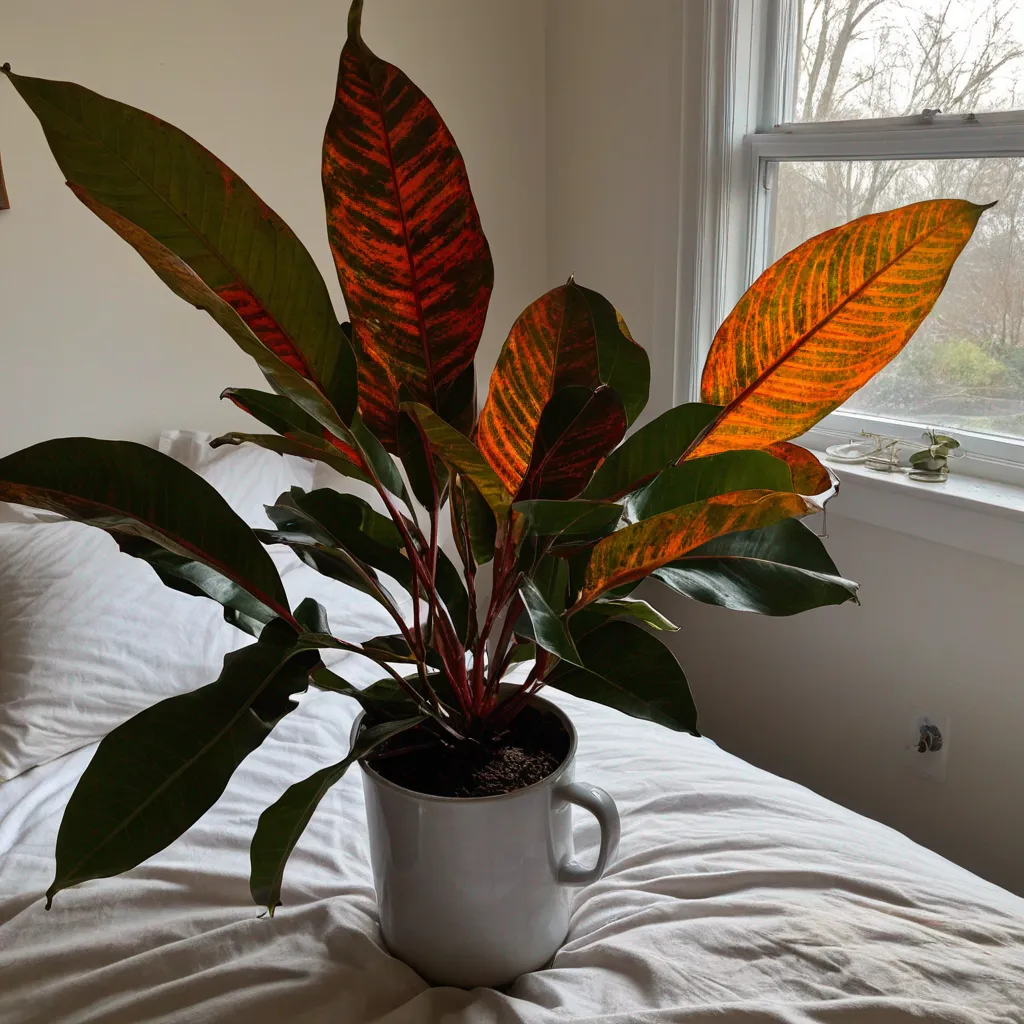
Nature usually saves its brightest colors for flowers, but the Croton breaks that rule with leaves that look like they’ve been painted with fire. Reds, oranges, yellows, and nearly black purples explode from this plant, making it impossible to ignore. But that color comes at a price: this is not a “set it and forget it” plant. It is a light-hungry diva that will drop every single leaf if you move it to the wrong corner. I walked by one in a garden center and fell in love, only to realize my north-facing apartment was basically a death sentence for it.
Crotons are not low-light plants. They are not forgiving plants. They will drop leaves if you look at them wrong. But if you can give them what they need, particularly bright light, they will reward you with some of the most intense color you will ever see on a houseplant. I have been researching these plants obsessively (because I am planning to move to a sunnier place), and I want to share what I have learned about keeping them happy and, more importantly, keeping those colors vibrant.
Why Crotons need direct sun
Section titled “Why Crotons need direct sun”The colors in croton leaves are not just for show. They serve a purpose. Crotons (Codiaeum variegatum) produce pigments like carotenoids and anthocyanins in response to light intensity. According to research from the University of Florida’s IFAS Extension, these pigments develop most strongly when the plant receives high light levels. When a croton does not get enough light, it will still grow, but the new leaves come in mostly green. The reds, oranges, yellows, and purples fade out.
I have seen this happen to a friend’s croton. She bought it in full color and put it on a shelf about six feet from a window. Within two months, the new growth was plain green. The plant was alive, sure, but it looked like a completely different species.
Crotons want direct sun. Not just bright indirect light, not just a spot near a window. They want actual sun hitting their leaves for several hours a day. In their native habitat (tropical regions of Southeast Asia and the Pacific), they grow in full sun or very light shade. Indoors, that translates to a south-facing window or a west-facing window where the plant can soak up afternoon sun.
If you only have east or north windows, a croton is probably not the right choice. I learned this the hard way when I tried to keep a variegated plant (not a croton, but similarly light-hungry) in my living room. It survived, but it looked sad and stretched out. Sometimes it is better to admit your space is not right for a plant than to watch it slowly decline.
One thing to watch for is sunburn. If you bring a croton home from a greenhouse or a garden center where it was kept in lower light, you cannot just throw it into direct sun immediately. The leaves will scorch. You need to acclimate it gradually over a week or two, moving it closer to the sunny window a little bit each day. The University of Georgia’s extension office recommends this gradual introduction to prevent leaf damage.
Why leaves drop when moved
Section titled “Why leaves drop when moved”Crotons hate change. I mean really hate it. You can move most plants from one room to another without much drama, but crotons will punish you for it. They drop leaves when they are moved, when the temperature shifts, when the light changes, or sometimes just because they feel like it.
This happens because crotons are sensitive to environmental stress. According to North Carolina State University’s plant database, even minor changes in light, temperature, or humidity can trigger leaf drop. The plant essentially panics and sheds leaves to conserve energy while it adjusts to the new conditions.
When you first bring a croton home, expect it to drop some leaves. This is normal and does not mean you are killing it. The plant was growing in a greenhouse with controlled conditions, and now it is in your house. That is a big change. Give it time. It will adjust, but it might look rough for a few weeks.
The key is to minimize stress as much as possible. Once you find a good spot for your croton (sunny, warm, away from drafts), leave it there. Do not move it around to redecorate. Do not rotate it every week. Crotons prefer stability.
Temperature swings are another common cause of leaf drop. Crotons like it warm, ideally between 60 and 85 degrees Fahrenheit. They do not tolerate cold drafts from air conditioners or heaters. I learned from a hobbyist blog (by a grower in Florida who keeps over 30 croton varieties) that placing a croton near a vent or a drafty window in winter is a fast way to see a pile of leaves on the floor.
If your croton does drop leaves, do not panic. Keep watering it appropriately (more on that in a bit), keep it in bright light, and wait. As long as the stems are still firm and green, the plant is alive and will likely recover. New leaves will eventually emerge once the plant settles in.
 Above: A closer look at this plant.
Here is the bad news. Crotons are spider mite magnets. I do not know what it is about these plants, but spider mites love them. If you are going to grow a croton, you need to be prepared to deal with mites at some point.
Spider mites are tiny arachnids (not insects) that suck sap from plant leaves. You usually do not see the mites themselves because they are so small. What you see is the damage: tiny yellow or white speckles on the leaves, a dusty or dull appearance to the foliage, and fine webbing between the leaves or on the undersides. If you see webbing, you already have a serious infestation.
Spider mites thrive in dry conditions. This is a problem because most homes have low humidity, especially in winter when the heat is on. According to research published in the Journal of Economic Entomology, spider mites reproduce faster in dry environments. A female mite can lay hundreds of eggs in her short life, and those eggs hatch in just a few days. An infestation can explode quickly.
The best defense is prevention. Keep your croton’s humidity up (I will talk more about this in the humidity section). Wipe down the leaves regularly with a damp cloth. This does two things: it removes dust (which mites like) and it lets you spot mites early before they become a major problem.
If you do find spider mites, act fast. I have read multiple sources that recommend starting with a strong spray of water to knock the mites off the plant. Take the croton to the shower or outside (if it is warm enough) and spray the undersides of the leaves thoroughly. This will not kill all the mites, but it reduces the population.
For a more serious infestation, you will need miticide or insecticidal soap. Neem oil is a popular organic option, but it needs to be applied repeatedly (every few days for a couple of weeks) because it does not kill the eggs. You have to break the reproductive cycle. The University of California’s Integrated Pest Management program has detailed guidelines on treating spider mites if you need more specific instructions.
I have also heard from other plant people that isolating the affected plant is critical. Spider mites spread easily to other plants, so if you spot them on your croton, move it away from your other plants immediately.
Watering when it droops
Section titled “Watering when it droops”Crotons are dramatic about water. They will droop and wilt when they are thirsty, and it looks alarming. The first time I saw a friend’s croton do this, I thought it was dying. She watered it, and within a few hours, it perked back up like nothing had happened.
This drooping is actually a useful signal. The plant is telling you it needs water. But here is the tricky part: crotons do not like to dry out completely, but they also do not like to sit in soggy soil. You have to find the middle ground.
I water my plants (not crotons, but other tropicals with similar needs) when the top inch or two of soil feels dry. For a croton, this usually means watering every few days to once a week, depending on your conditions. If your house is warm and your croton is in bright light, it will dry out faster. If it is cooler or the light is lower, it will need less frequent watering.
The Texas A&M AgriLife Extension recommends watering thoroughly until water runs out of the drainage holes, then letting the excess drain away completely. Never let a croton sit in a saucer of water. This leads to root rot, which is much worse than a little drooping.
One thing I have noticed with my own plants is that watering needs change with the seasons. In summer, when the days are long and the light is strong, plants drink more. In winter, they slow down. Pay attention to how quickly your croton’s soil dries out, and adjust your watering schedule accordingly.
If your croton droops and you water it but it does not perk up, check for other problems. Are the roots rotting (soft, black, smelly)? Is the soil so compacted that water is just running off the surface instead of soaking in? Is the plant root-bound and unable to take up water even though you are watering it? Sometimes drooping is not about the amount of water but about the plant’s ability to access it.
 Above: Getting started with care.
Humidity for colorful leaves
Section titled “Humidity for colorful leaves”Crotons are tropical plants, and they want tropical humidity. Most homes sit around 30 to 40 percent humidity, especially in winter. Crotons prefer 40 to 80 percent. This gap between what they want and what we can easily provide is one reason crotons can be challenging indoors.
Low humidity does a few things to crotons. First, it stresses the plant, which can cause leaf drop and brown, crispy leaf edges. Second, it invites spider mites (as I mentioned earlier). Third, and this is something I only recently learned, low humidity can reduce the intensity of the leaf color. A study in the journal HortScience found that environmental stress, including low humidity, can reduce pigment production in ornamental plants. The colors will not be as bright or as varied if the plant is struggling.
So how do you raise humidity for a croton? There are a few options, and I will be honest about what works and what is mostly a myth.
Misting does almost nothing. I know it feels like you are helping, but the humidity boost from misting lasts only a few minutes. By the time you put the spray bottle down, the air is already dry again. Some sources even suggest that misting can promote fungal problems if water sits on the leaves for too long.
Pebble trays (a tray of water with pebbles or stones, with the plant sitting on top so it is not touching the water) provide a slight humidity boost, but it is minimal. If you have a small plant in a small space, it might help a bit. For a larger croton in a large room, it is not enough.
Grouping plants together helps because plants release moisture through transpiration. When you cluster several plants, they create a slightly more humid microclimate. This is a free and easy option, though it also means you need to watch for pests (since they can spread more easily between plants).
The most effective option is a humidifier. I resisted buying one for a long time because it felt like overkill, but after talking to other plant people and reading about tropical plant care from sources like the Missouri Botanical Garden, I realized it is the only thing that really makes a difference. You do not need a fancy one. A basic cool-mist humidifier near your plants (not blowing directly on them, just in the general area) can raise the humidity enough to keep a croton happy.
Another option, if you have the space, is to keep your croton in a bathroom with a window. Bathrooms tend to be more humid because of showers, and if you have a bright window, it could be the perfect croton spot.
If you are in a very dry climate or you run the heat a lot in winter, you might need to combine strategies. A humidifier plus grouping plants plus keeping the croton away from heating vents. It sounds like a lot of work, and honestly, it is. This is why I have not bought a croton yet. I am waiting until I have a space where I can give it what it needs without fighting my environment.
Crotons are high-maintenance, but they are also stunning. If you have the light and you are willing to stay on top of watering and humidity, they are worth the effort. If you are like me and you are still working with less-than-ideal conditions, it is okay to wait. There are plenty of other plants that will thrive in lower light while you dream about those vibrant croton leaves.
References
Section titled “References”University of Florida IFAS Extension. Codiaeum variegatum: Croton. Retrieved from https://edis.ifas.ufl.edu/
University of Georgia Cooperative Extension. Houseplant Care: Lighting and Acclimation.
North Carolina State University Extension. Codiaeum variegatum (Croton) Plant Profile.
Journal of Economic Entomology. Studies on the Biology and Control of Spider Mites.
University of California Integrated Pest Management. Spider Mites Management Guidelines.
Texas A&M AgriLife Extension. Indoor Plant Care: Watering Practices.
HortScience. Environmental Stress and Pigment Production in Ornamental Foliage.
Missouri Botanical Garden. Tropical Plant Care and Humidity Requirements.