Citrus Trees Indoors (Lemon/Lime)
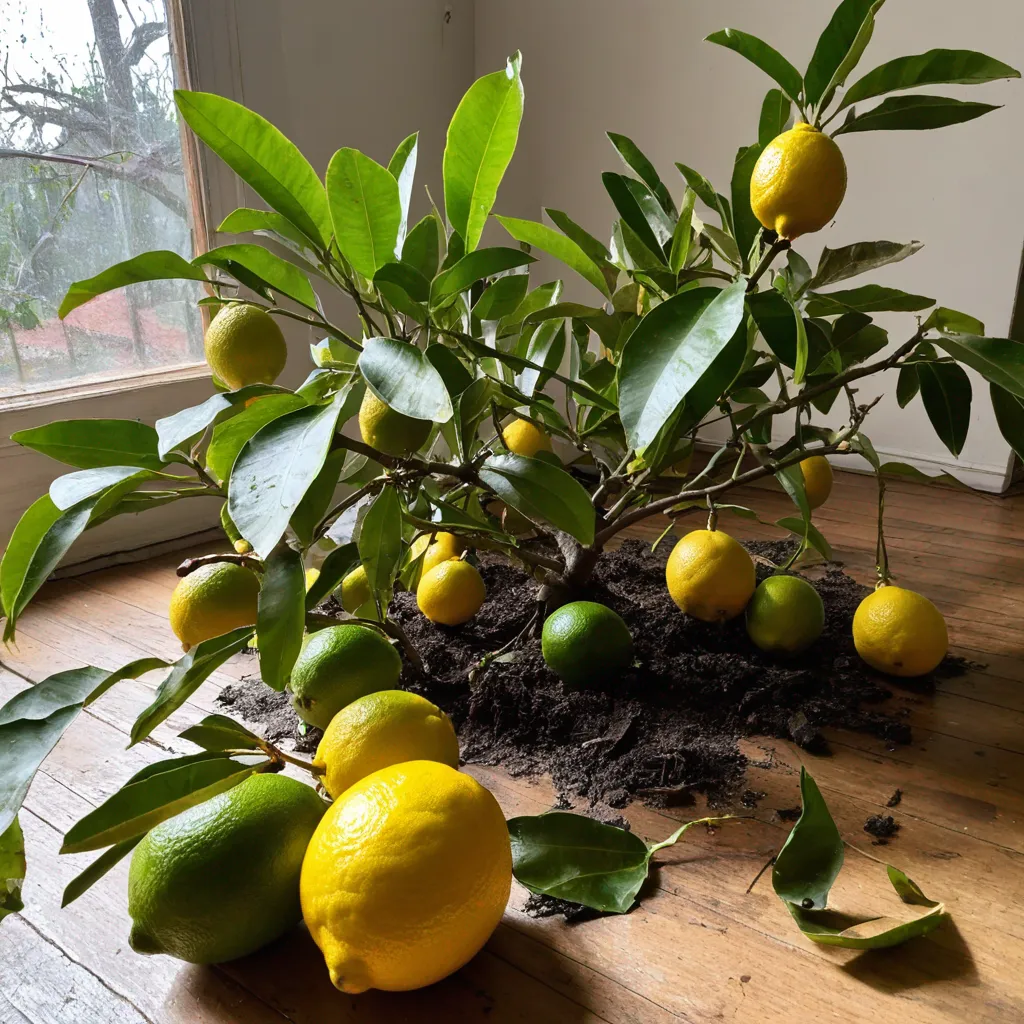
I’ve been staring at dwarf citrus trees online for two years now, and I still haven’t pulled the trigger. Not because I don’t want one (I really, really do), but because my apartment faces north and I know I’d be setting myself up for disappointment. Growing citrus indoors is one of those things that sounds magical until you realize what these plants actually need to thrive.
But here’s the thing: if you have the right conditions, growing a lemon or lime tree indoors is completely doable. I’ve done enough research at this point that I could probably write a manual. My friend Sarah has a Meyer lemon tree that actually produces fruit in her sunroom, and watching her figure it out over the past three years has taught me more than any article ever could.
So let me walk you through what it really takes to keep a citrus tree alive indoors, and more importantly, what it takes to get actual fruit from it.
High light requirements
Section titled “High light requirements”This is the deal breaker for most people, including me. Citrus trees need a stupid amount of light. We’re talking 8 to 12 hours of direct sunlight every single day. Not bright indirect light. Not “pretty sunny.” Actual, unobstructed sun hitting the leaves.
When I say direct sun, I mean the kind of light you get from a south-facing window with nothing blocking it. No sheer curtains, no tree branches outside, no building casting shadows for half the day. If you’re holding your hand up in front of the window and you don’t see a sharp, dark shadow on the wall behind you, that’s not enough light for citrus.
Sarah learned this the hard way. She started her Meyer lemon in her living room, which she thought was bright. The tree didn’t die, but it didn’t do much of anything either. The leaves stayed small, it dropped flowers immediately, and after six months it looked exactly the same as when she bought it. She moved it to her sunroom (which is basically all windows facing south and west), and within a month the tree perked up and started pushing out new growth.
Most university extension offices will tell you that outdoor citrus needs full sun, and indoor citrus needs even more attention to light because glass filters out some of the spectrum. I read a study from the University of California that showed citrus trees grown indoors without supplemental lighting had significantly reduced photosynthesis rates compared to outdoor trees, even when placed in the brightest available window.
If you don’t have a spot with that much natural light, you’ll need grow lights. Not the cheap purple ones from Amazon (those might work, but they’re annoying to look at), but full-spectrum LED lights designed for fruiting plants. You’ll want lights that can deliver at least 2000 to 3000 foot-candles at the canopy level. That usually means hanging a panel-style light about 12 to 18 inches above the tree and running it for 12 to 14 hours a day.
This is expensive and it uses electricity. I ran the numbers, and between the cost of the light fixture and the power consumption, you’re looking at a real investment. It’s why I keep putting off buying my own tree, because I’d need to commit to the lighting setup, and my current apartment just can’t support it without looking like a grow operation.
One more thing: citrus trees don’t like being rotated constantly. If you turn your plant every few days (which I do with most of my plants to keep them growing evenly), citrus will get stressed. They prefer to orient their leaves toward a consistent light source. So pick your spot and leave it there.
Hand pollination for fruit
Section titled “Hand pollination for fruit”Getting flowers is one thing. Getting actual fruit is completely different, and this is where indoor growing gets weird.
Outdoors, bees and other insects handle pollination without you thinking about it. Indoors, you are the bee. If you want fruit, you need to pollinate the flowers yourself, and you need to do it within a pretty short window because citrus flowers only last a few days.
Sarah uses a small paintbrush (like the kind that comes in a kid’s watercolor set) to transfer pollen. When the flowers open, she gently brushes the inside of one flower, picks up the yellow pollen on the bristles, and then brushes the inside of another flower. She does this every morning while the flowers are open, moving from flower to flower. It takes maybe five minutes.
You can also use a cotton swab if you don’t have a brush. The goal is just to get the pollen from the anthers (the parts that produce pollen) onto the stigma (the sticky part in the center). Citrus flowers are perfect flowers, meaning they have both male and female parts, so you’re technically just moving pollen around within the same tree.
Not every flower will set fruit even if you pollinate it correctly. The tree will drop flowers and baby fruits based on how much energy it has. This is normal and not a sign you’re doing something wrong. A healthy indoor citrus tree might set 10 to 20 flowers but only keep 3 to 5 fruits to maturity.
According to research from the University of Florida’s Horticultural Sciences Department, environmental stress (like inconsistent watering or low light) will cause citrus trees to abort developing fruit even after successful pollination. So if your tree drops all its baby fruits, the problem usually isn’t the pollination technique but something else in the care routine.
One encouraging thing: some citrus varieties are more willing to fruit indoors than others. Meyer lemons are famously easier than true lemons. Calamondin oranges and Bearss limes also tend to do well. Persian limes (the ones you buy at the grocery store) are harder to fruit indoors because they’re so light-hungry.
 Above: A closer look at this plant.
Watering consistent moisture
Section titled “Watering consistent moisture”Citrus trees are picky about water in a way that makes my calatheas look easygoing. They want consistent moisture but they absolutely cannot sit in soggy soil. If you’re the type of person who either floods your plants or forgets about them for two weeks, citrus will punish you.
The goal is to keep the soil evenly moist but never wet. I know that sounds vague, but here’s how Sarah does it: she checks the soil every two to three days by sticking her finger about two inches down. If it feels dry at that depth, she waters thoroughly until water runs out the drainage holes. If it still feels slightly damp, she waits another day.
The tricky part is that watering frequency changes with the seasons. In summer, when the tree is actively growing and the light is stronger, you might water every three days. In winter, when growth slows and there’s less light, you might only water once a week. You can’t put citrus on a fixed schedule.
Citrus trees will tell you when they’re unhappy with water. If you let the soil dry out completely, the leaves will start to curl and drop. If you overwater, the leaves turn yellow (starting with the oldest ones) and you risk root rot. Root rot in citrus is basically a death sentence because these trees don’t recover well once the roots are damaged.
I also learned from Sarah’s mistakes that water quality matters. If you have heavily chlorinated tap water, let it sit out overnight before using it, or use filtered water. Citrus trees are sensitive to salts and chemicals building up in the soil. She started getting leaf tip burn and slow growth until she switched to filtered water, and the new growth came in clean.
One last thing: use a pot with really good drainage. Citrus trees should never sit in a saucer of water. If your pot drains into a saucer, dump the excess water out after 15 minutes. This seems obvious, but it’s easy to forget.
Dealing with scale and mites
Section titled “Dealing with scale and mites”If you grow citrus indoors long enough, you will get pests. It’s not an if, it’s a when. The two big ones are scale insects and spider mites, and both of them love citrus trees.
Scale insects look like little brown or tan bumps stuck to the stems and the undersides of leaves. When Sarah first got scale, she thought they were part of the plant. They don’t move (at least not the adult ones), so they just sit there sucking sap and slowly weakening the tree. You’ll notice the leaves getting sticky from the honeydew they excrete, and sometimes you’ll see black sooty mold growing on that sticky residue.
The best way to deal with scale is to scrape them off manually. Sarah uses her fingernail or a soft toothbrush dipped in rubbing alcohol to remove them. You have to be thorough because even a few survivors will repopulate the plant. After removing the visible scale, she sprays the whole tree with insecticidal soap or neem oil to catch any crawlers (the juvenile stage that moves around).
Spider mites are worse because they’re almost invisible until the infestation is bad. The first sign is usually tiny yellow or white speckles on the leaves. If you look closely, you might see fine webbing on the leaf undersides or between stems. Mites thrive in dry air, which is basically every indoor environment in winter.
Sarah’s spider mite outbreak happened in January when her heat was running constantly. She didn’t catch it until the leaves started looking dull and dusty. She treated it by spraying the entire tree with water to knock off the mites, then following up with insecticidal soap every three days for two weeks. She also started misting the tree daily to raise the humidity, which mites hate.
Prevention is honestly easier than treatment. Wipe down the leaves every few weeks with a damp cloth. Inspect the undersides of leaves regularly (this is where both pests hide). Keep the humidity up if you can, either with a humidifier or by grouping plants together. According to the University of California’s Integrated Pest Management program, regular monitoring and early intervention are the most effective pest control strategies for indoor citrus.
If you’re dealing with a bad infestation and the organic methods aren’t working, you can use horticultural oil, but read the label carefully. Some oils can damage citrus leaves if applied in high heat or bright light.
 Above: Getting started with care.
Best fertilizer for citrus
Section titled “Best fertilizer for citrus”Citrus trees are heavy feeders, especially when they’re trying to produce fruit. You can’t just use whatever leftover fertilizer you have sitting around. They need specific nutrients in specific ratios, and if you mess this up, the leaves will let you know.
The best fertilizers for citrus are labeled specifically for citrus or acid-loving plants. Look for something with a ratio like 2-1-1 (nitrogen-phosphorus-potassium) and micronutrients including iron, manganese, and zinc. Citrus trees are prone to micronutrient deficiencies, especially iron deficiency, which shows up as yellowing between the leaf veins while the veins stay green.
Sarah uses a liquid citrus fertilizer diluted to half strength every two weeks during the growing season (spring and summer). In fall and winter, she cuts back to once a month because the tree isn’t actively growing. She learned the hard way not to fertilize a dry plant because it can burn the roots. She always waters first, then fertilizes a day or two later.
Slow-release granular fertilizers also work. If you go that route, apply them every three months during the growing season according to the package directions. The advantage is you don’t have to remember to fertilize as often. The disadvantage is you have less control if something goes wrong.
Watch out for nitrogen deficiency (older leaves turn pale yellow and drop) and magnesium deficiency (yellow blotches between veins on older leaves). Both are common in container-grown citrus. If you see these symptoms, you can supplement with Epsom salt for magnesium (one tablespoon per gallon of water, applied monthly).
Research from Texas A&M’s horticulture program emphasizes that container-grown citrus trees need more frequent fertilization than in-ground trees because nutrients wash out of pots with regular watering. But more isn’t always better. Over-fertilizing causes salt buildup in the soil, which leads to brown leaf tips and edges.
If you see white crust forming on the soil surface or around the drainage holes, that’s salt buildup. Flush the soil by running water through the pot for several minutes (until water runs clear out the bottom) every few months to prevent this.
Growing citrus indoors is a commitment. It’s not a low-maintenance plant you can stick in a corner and forget about. But if you have the light and you’re willing to stay on top of watering and pests, there’s something incredibly satisfying about picking a lemon off a tree in your living room in February. Sarah says her first homegrown lemon tasted better than any store-bought one, and I believe her. Maybe one day I’ll have enough light to find out for myself.
References
Section titled “References”University of California Agriculture and Natural Resources. “Citrus: Integrated Pest Management for Home Gardeners.” UC IPM Online.
University of California, Davis. “Light Requirements for Indoor Citrus Production.” Department of Plant Sciences.
University of Florida, IFAS Extension. “Growing Citrus in Containers.” Horticultural Sciences Department.
Texas A&M AgriLife Extension. “Citrus for the Home Landscape.” Department of Horticultural Sciences.