Pothos Care 101: The Easiest Vine to Grow
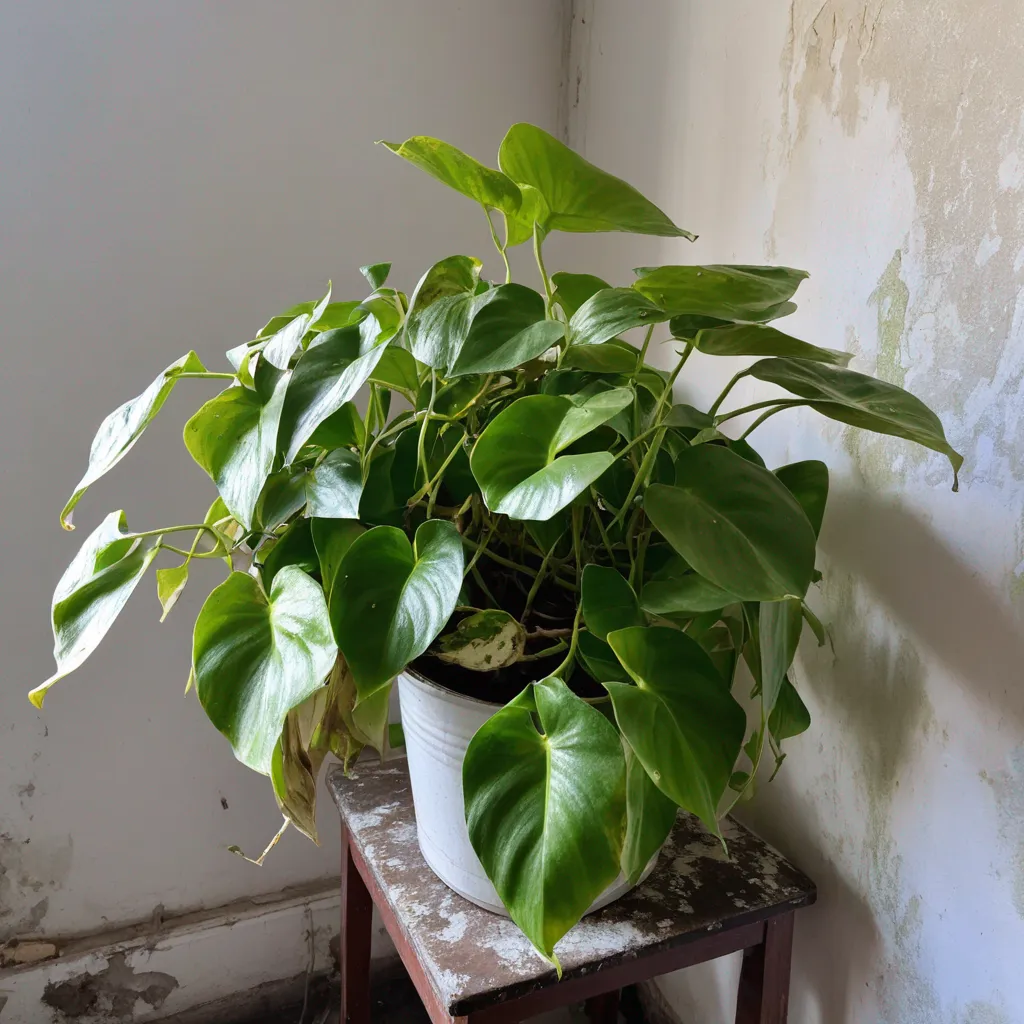
Four dollars at a grocery store, a tiny plastic pot, a somewhat sad-looking vine. Six years later, that same golden pothos has vines trailing eight feet down a bookshelf, plus seven propagated offspring now living with friends who swore they could kill anything green.
Pothos forgives mistakes and still grows like crazy. Forgotten waterings, rooms with almost no natural light, cats chewing on leaves (not recommended, but they’ll survive). This plant keeps going.
This is not a guide written by someone with a greenhouse or a degree in horticulture. This is what I have learned from keeping pothos alive in a regular apartment with regular problems like dust, inconsistent watering, and windows that face the wrong direction.
Golden Pothos light requirements explained
Section titled “Golden Pothos light requirements explained”Here is the thing about pothos and light. Everyone will tell you it tolerates low light, and that is true, but there is a difference between tolerating something and thriving in it.
I keep one pothos in my bathroom. There is one small frosted window that barely lets in any direct sun. The plant survives. It puts out a new leaf maybe once every two months. The leaves are smaller than my palm, and the color is more of a dark green than the bright yellow-green you see in photos online.
Compare that to the pothos I keep on a shelf about six feet away from my south-facing living room window. That one grows so fast I have to trim it back every few months. The leaves are huge, some almost as big as my hand when I spread my fingers wide. The variegation (those yellow and cream streaks) is way more pronounced.
So yes, pothos tolerates low light. But if you want it to actually grow and look good, give it bright indirect light. That means near a window but not right in the path of direct sun. Direct sun will burn the leaves. I learned this the hard way when I put a cutting on my windowsill in summer and came home to crispy brown patches.
If you only have low light like I do in my bathroom, the plant will live. Just do not expect it to perform miracles. According to research from the University of Florida’s Environmental Horticulture Department, pothos can adapt to light levels as low as 10 to 15 foot-candles, but growth slows significantly compared to plants grown in 100 to 200 foot-candles.
One more thing. Variegated pothos (the ones with yellow or white in the leaves) need more light than the all-green varieties. If your variegated pothos starts putting out solid green leaves, it means it is not getting enough light and is compensating by producing more chlorophyll. Move it closer to a window.
When to water your Pothos plant
Section titled “When to water your Pothos plant”I used to overthink watering until I realized pothos basically tells you when it is thirsty. The leaves get a little droopy and soft. Once you see that, you water it, and within a few hours, the leaves perk back up. It is very obvious.
The problem is that most people water too much, not too little. I killed my first pothos that way before I got the four-dollar grocery store one. I thought I was being a good plant parent by watering it every few days. The soil stayed wet, the roots rotted, and the whole thing turned to mush. If you’ve made this mistake, check out my guide on root rot: how to spot and fix it.
Now I wait until the soil is dry about two inches down. I stick my finger in the pot to check. If it feels damp at all, I wait. If it is dry, I water until water runs out of the drainage hole at the bottom. Then I let it sit and do not water again until it dries out.
In my apartment, that means I water my pothos maybe once a week in summer and once every ten days or two weeks in winter. Your schedule will be different depending on your temperature, humidity, and pot size. Do not follow a strict calendar. Follow the soil.
Some people say to water when the leaves droop, and I do that sometimes, but I try not to let it get that far every time. Repeatedly stressing the plant is not great for it, even though pothos can handle it.
One thing I wish I had known earlier is that pothos likes to dry out between waterings but hates being bone dry for a long time. There is a sweet spot. If you let it go too long (like I did once when I went on vacation for three weeks), the oldest leaves at the base of the vines will turn yellow and fall off. The plant survives, but it looks scraggly.
Also, use a pot with drainage. I cannot stress this enough. I have tried keeping pothos in decorative pots without holes, and it always ends badly. If you love a pot that does not have drainage, put the pothos in a plastic nursery pot inside the decorative one, and take it out to water it in the sink.
 Above: A closer look at this plant.
Fertilizing for faster growth
Section titled “Fertilizing for faster growth”I did not fertilize my pothos for the first two years I owned it, and it still grew. That is how easygoing this plant is. But once I started fertilizing, the growth sped up noticeably.
I use a regular liquid houseplant fertilizer diluted to half strength. The bottle says to use it every two weeks, but I do it about once a month during spring and summer. In fall and winter, I stop fertilizing completely because the plant is not actively growing as much and does not need it.
The half-strength thing is important. I burned the tips of my pothos leaves once by using full-strength fertilizer because I thought more food would equal more growth. It does not work that way. The tips turned brown and crispy, and I had to cut them off. Plants are not like us. They cannot just handle extra nutrients. It builds up in the soil and causes damage.
Some people use slow-release fertilizer pellets instead of liquid, and that works too. I prefer liquid because I can control exactly when and how much I am giving.
Here is something I learned from a Michigan State University Extension article. Pothos does not need a ton of nutrients to grow. In fact, too much nitrogen (the first number on fertilizer labels) can cause the variegation to fade. If you want to keep those yellow streaks bright, go easy on the fertilizer.
If you forget to fertilize for a few months, your pothos will not die. It will just grow a bit slower. This is not a plant that punishes you for not being perfect.
Trailing vs. Climbing: Which is better?
Section titled “Trailing vs. Climbing: Which is better?”Most people let their pothos trail down from a shelf or a hanging planter, and that is how I have always kept mine. But pothos is actually a climbing plant in the wild. In its natural habitat in Southeast Asia, it climbs up trees using aerial roots, and the leaves can grow absolutely massive, like bigger than a dinner plate.
I have never tried to make mine climb because I do not have the space, but I have seen pictures online of people who train their pothos up a moss pole or a wooden plank, and the difference is wild. The leaves get bigger, the variegation gets more dramatic, and the whole plant looks more mature.
If you want your pothos to climb, you need to give it something to grab onto. Moss poles are popular because the aerial roots can dig into the moist moss. You have to keep the moss damp by misting it, which is more maintenance than I personally want to deal with. Some people use coir poles or even just a piece of wood.
You will also need to attach the vines to the support with soft ties or clips until the aerial roots take hold. It is more work than just letting it trail, but the payoff is bigger leaves.
For me, trailing works better. I like the look of long vines draping down, and I do not have to do anything special. I just let it grow. When the vines get too long or start looking sparse, I trim them back and propagate the cuttings.
There is no wrong way to grow pothos. It depends on what you want it to look like and how much effort you want to put in. Both methods work.
 Above: Getting started with care.
How fast does a Pothos actually grow?
Section titled “How fast does a Pothos actually grow?”This depends so much on your conditions that I hesitate to give a number, but I will try.
In my living room with decent light and monthly fertilizing during the growing season, my pothos puts out a new leaf every week or two in spring and summer. Each new leaf unfurls from the vine tip, and the vine extends by a few inches. Over the course of a year, I would say my longest vines grow about three to four feet.
In my bathroom with low light and no fertilizer, the same plant grows maybe a foot in a year. The difference is huge.
Temperature matters too. Pothos grows fastest in temps between 70 and 90 degrees Fahrenheit, according to research from the University of Georgia. In winter, when my apartment drops to the low 60s at night, growth basically stops until spring.
If your pothos seems to be growing slowly, check your light first. That is usually the limiting factor. Then make sure you are watering correctly and fertilizing during the growing season. If you are doing all that and it is still slow, it might just be winter, and you need to wait for spring.
One last thing. Pothos grows in spurts. Sometimes I will see no new growth for a few weeks, and then suddenly three new leaves will come out in quick succession. Do not panic if it seems like nothing is happening. The plant is probably working on roots underground.
I have grown a lot of houseplants over the years, and pothos is still the one I recommend to everyone. It is cheap, it is forgiving, and it grows fast enough that you actually see results. If you are new to plants or if you have killed everything you have ever touched, start here. You will probably be surprised at how easy it is.
References
Section titled “References”University of Florida Environmental Horticulture Department. “Foliage Plant Research Notes: Epipremnum aureum (Pothos).” Mid-Florida Research and Education Center.
Michigan State University Extension. “Houseplant Care: Fertilizing Indoor Plants.”
University of Georgia Cooperative Extension. “Growing Indoor Plants with Success.”