Peperomia Care Guide
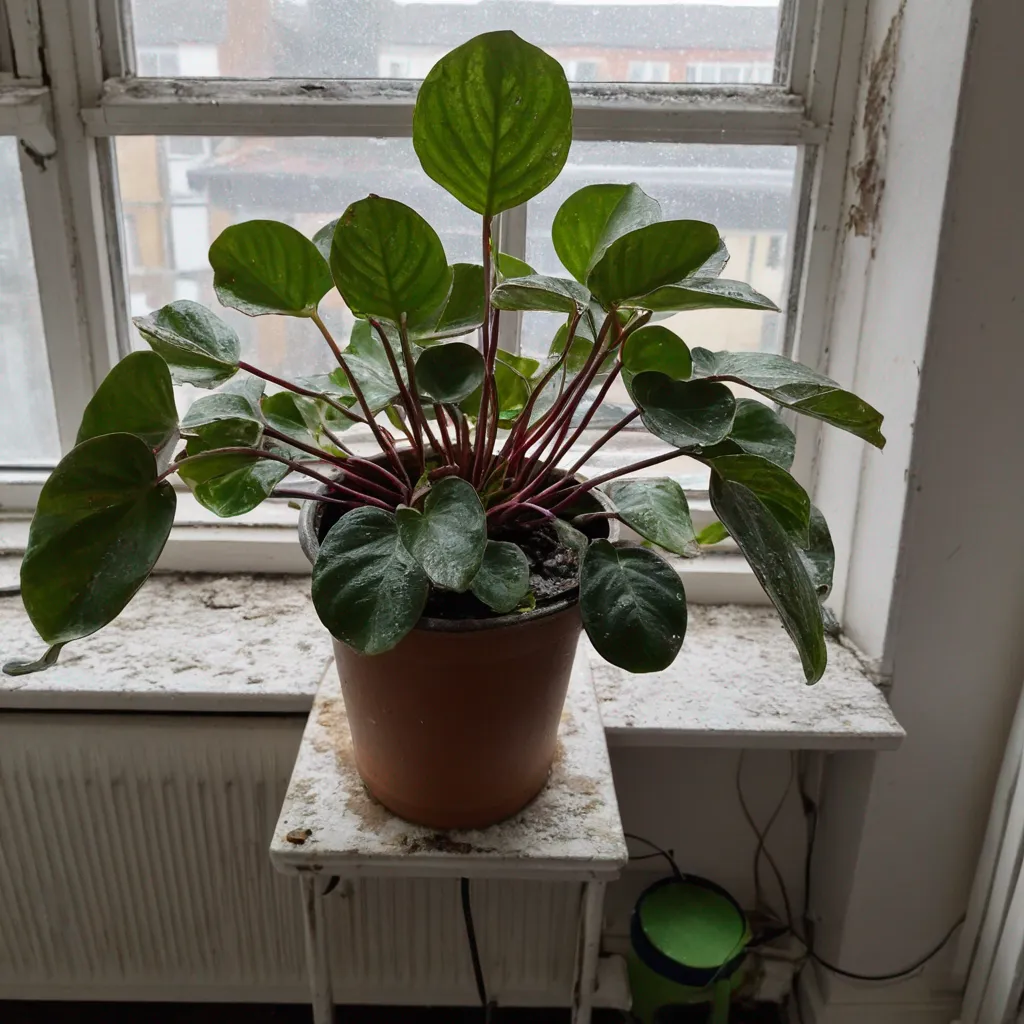
Peperomias are the “Goldilocks” of the houseplant world. They don’t want to be soaked like a fern, but they don’t want to dry out completely like a cactus. They sit in a tricky middle ground that confuses many beginners—often leading to mushy stems and heartbreak. I lost my first one to overwatering because I treated it like a Pothos, but once you understand their semi-succulent nature, they are some of the most rewarding desk plants you can own.
If you’re here because your Peperomia looks sad or you just brought one home and want to avoid my mistakes, this guide will help. I’m not a botanist, just someone who has learned through trial and error (mostly error) how to keep these plants happy.
Watering: Treat them like succulents
Section titled “Watering: Treat them like succulents”This is the single most important thing I wish someone had told me on day one. Peperomias have thick, fleshy leaves that store water. They’re not technically succulents, but they behave like them when it comes to watering needs.
I water mine about once every two weeks in summer and sometimes only once a month in winter. The key is to let the soil dry out almost completely between waterings. When I say almost completely, I mean stick your finger down about two inches into the soil. If it feels even slightly damp, wait a few more days.
The reason this matters so much is that Peperomias are incredibly prone to root rot. Their roots are delicate and will literally rot away if they sit in wet soil for too long. I learned this the hard way with my first plant. The leaves started looking droopy and translucent, and when I pulled it out of the pot, the roots were brown mush. There was nothing to save.
Now I use the “lift test” method that I picked up from a university extension guide on houseplants. Before you water your Peperomia for the first time, lift the pot and feel how heavy it is when the soil is completely dry. Then water it thoroughly and lift it again. You’ll notice a big difference in weight. After a while, you can just lift the pot to know if it needs water. If it feels light, water it. If it still has some heft, leave it alone.
When you do water, water thoroughly. I take mine to the sink and let water run through the drainage holes for about 30 seconds. Then I let it drain completely before putting it back on its saucer. Never let your Peperomia sit in standing water. I made that mistake with my Peperomia obtusifolia and noticed the lower leaves turning yellow within a week.
One more thing about watering that nobody talks about: these plants can handle being underwatered way better than being overwatered. If you forget to water for three weeks and the leaves start looking a bit wrinkled, just give it a drink and it will perk up within a day or two. But if you overwater, you might lose the whole plant.
Watermelon Peperomia specific care
Section titled “Watermelon Peperomia specific care”I don’t own a Watermelon Peperomia (Peperomia argyreia) yet because my apartment doesn’t get enough bright indirect light, but I’ve done a lot of research on this one because it’s gorgeous and I’m planning to get one when I move next year.
The Watermelon Peperomia has those beautiful silver stripes on the leaves that look like watermelon rinds. From what I’ve learned from both hobbyist growers and university extension resources, this variety is a bit more particular about light than other Peperomias.
It needs bright indirect light to maintain those striking patterns. Too little light and the leaves will lose their contrast and look washed out. But direct sun will scorch the leaves, leaving brown patches. A spot near an east-facing window seems to be ideal, or a few feet back from a south or west window. Some growers I follow online use sheer curtains to filter the light, which seems to work well.
The watering schedule for Watermelon Peperomia is the same as other varieties (let it dry out between waterings), but this one seems to be even more sensitive to overwatering. According to research from the University of Florida’s horticulture department, Peperomia argyreia is particularly susceptible to Pythium root rot when kept too wet.
Humidity is another factor. While most Peperomias do fine in average household humidity, the Watermelon variety seems to appreciate a bit more. I’ve read that 40 to 50 percent humidity is ideal. You don’t need to go crazy with a humidifier, but if your home is really dry (especially in winter), grouping it with other plants or putting it on a pebble tray with water can help.
One thing that surprised me in my research is that Watermelon Peperomias tend to go dormant in winter. Growth slows way down, and they need even less water during this period. Cut back to watering maybe once a month or even less, depending on how dry your soil gets.
 Above: A closer look at this plant.
Best soil mix for Peperomias
Section titled “Best soil mix for Peperomias”Regular potting soil is too heavy for Peperomias. It holds too much moisture and doesn’t drain fast enough, which brings us back to the root rot problem.
I make my own mix now, and it takes about five minutes. I use two parts regular potting soil, one part perlite, and one part orchid bark. The perlite and bark create air pockets in the soil and help water drain through quickly. You can also use coarse sand instead of perlite if that’s what you have on hand.
Some people add a bit of peat moss or coco coir to help with moisture retention, but honestly, I’ve found that Peperomias do better when the soil is on the drier side. If anything, I’d rather have soil that drains too quickly than too slowly.
If you don’t want to mix your own soil, look for a succulent and cactus mix at the store. These are usually well-draining enough for Peperomias. Just make sure the bag doesn’t feel heavy and waterlogged when you buy it (I’ve gotten bags that were practically soaking wet, which is useless).
The pot you use matters too. Always use a pot with drainage holes. I cannot stress this enough. I tried once to use a cute ceramic pot without drainage because it matched my bookshelf, and I killed a perfectly healthy Peperomia rosso within a month. No amount of careful watering can compensate for a pot that doesn’t drain.
Terracotta pots are actually great for Peperomias because they’re porous and allow the soil to dry out faster. I use them for all my Peperomias now. Plastic pots work too, but you’ll need to be a bit more careful about watering frequency since they don’t breathe like terracotta.
Propagating from a leaf cutting
Section titled “Propagating from a leaf cutting”This is one of the coolest things about Peperomias. You can grow a whole new plant from a single leaf. I’ve done this successfully with my Peperomia caperata and Peperomia obtusifolia.
The process is simple. Cut a healthy leaf from your plant, making sure to include the petiole (that’s the little stem that attaches the leaf to the main plant). I use clean scissors or a knife, and I usually take the cutting from the bottom of the plant where the leaves are more mature.
You have two options for rooting: water or soil. I’ve tried both, and honestly, water is easier because you can see what’s happening.
For water propagation, just stick the petiole in a small glass or jar with about an inch of water. Make sure the leaf itself stays above the water line or it will rot. Place it in bright indirect light and change the water every few days to keep it fresh.
It takes patience. Roots can take anywhere from four to eight weeks to appear, depending on the variety and time of year. I’ve found that propagations started in spring or summer root faster than ones started in fall or winter.
Once the roots are about an inch long, you can plant the cutting in soil. I use the same well-draining mix I described earlier. Water it lightly at first and gradually increase as the plant establishes itself.
Soil propagation works too. Stick the cutting directly into moist (not wet) soil and keep it in a warm spot with bright indirect light. The trick here is to keep the soil barely moist until roots form, which is harder to gauge than water propagation because you can’t see what’s happening underground.
Not every cutting will succeed. I’d say my success rate is about 70 percent. Sometimes a cutting just sits there for weeks and then turns brown. It happens. Just try again with a fresh cutting.
 Above: Getting started with care.
Why leaves split and crack
Section titled “Why leaves split and crack”This drove me crazy when I first noticed it on my Peperomia obtusifolia. The leaves developed these weird horizontal cracks, almost like someone had scored them with a knife. I thought it was a pest or a disease.
Turns out, leaf splitting in Peperomias is usually caused by irregular watering. When the plant gets bone-dry and then receives a big drink all at once, the cells in the leaves expand rapidly. The leaf tissue can’t keep up with this sudden change, so it splits.
The solution is to water more consistently. I know I said earlier to let the soil dry out between waterings, and that’s still true. But there’s a difference between dry and desert-dry. If you let your Peperomia get so thirsty that the leaves start to wrinkle and curl, and then you drench it, you’re setting it up for splitting.
I’ve found that watering on a more regular schedule helps. I check my Peperomias every Sunday. If the soil is dry two inches down, I water. If not, I check again in a few days. This prevents the extreme wet-dry cycles that cause cracking.
Low humidity can also contribute to leaf splitting, according to information I found from a study on ornamental houseplant care. When the air is very dry, the leaves lose moisture faster, making them more brittle and prone to cracking. This is more of an issue in winter when indoor heating dries out the air.
Physical damage is another cause. Peperomia leaves are surprisingly fragile despite being thick. If you bump them or your cat decides to take a bite (mine loves to chew on plant leaves), they can crack. There’s not much you can do about this except keep them away from high-traffic areas and curious pets.
Once a leaf is split, it won’t heal. The crack will remain. But it won’t harm the plant. I usually just leave split leaves alone unless they’re really ugly or taking up space that new growth needs.
If you’re seeing a lot of splitting on new growth, reassess your watering routine. It’s almost always the culprit. Make your watering more consistent, and the new leaves should come in without cracks.
References
Section titled “References”University of Florida IFAS Extension. “Peperomia Production Guide.” Environmental Horticulture Department.
Colorado State University Extension. “Houseplant Care.” Department of Horticulture and Landscape Architecture.
Royal Horticultural Society. “Peperomia: Growing Guide.” RHS Advisory Service.
North Carolina State University. “Peperomia.” NC State Extension Horticulture Information.