Turning One Pothos Into Ten Free Plants
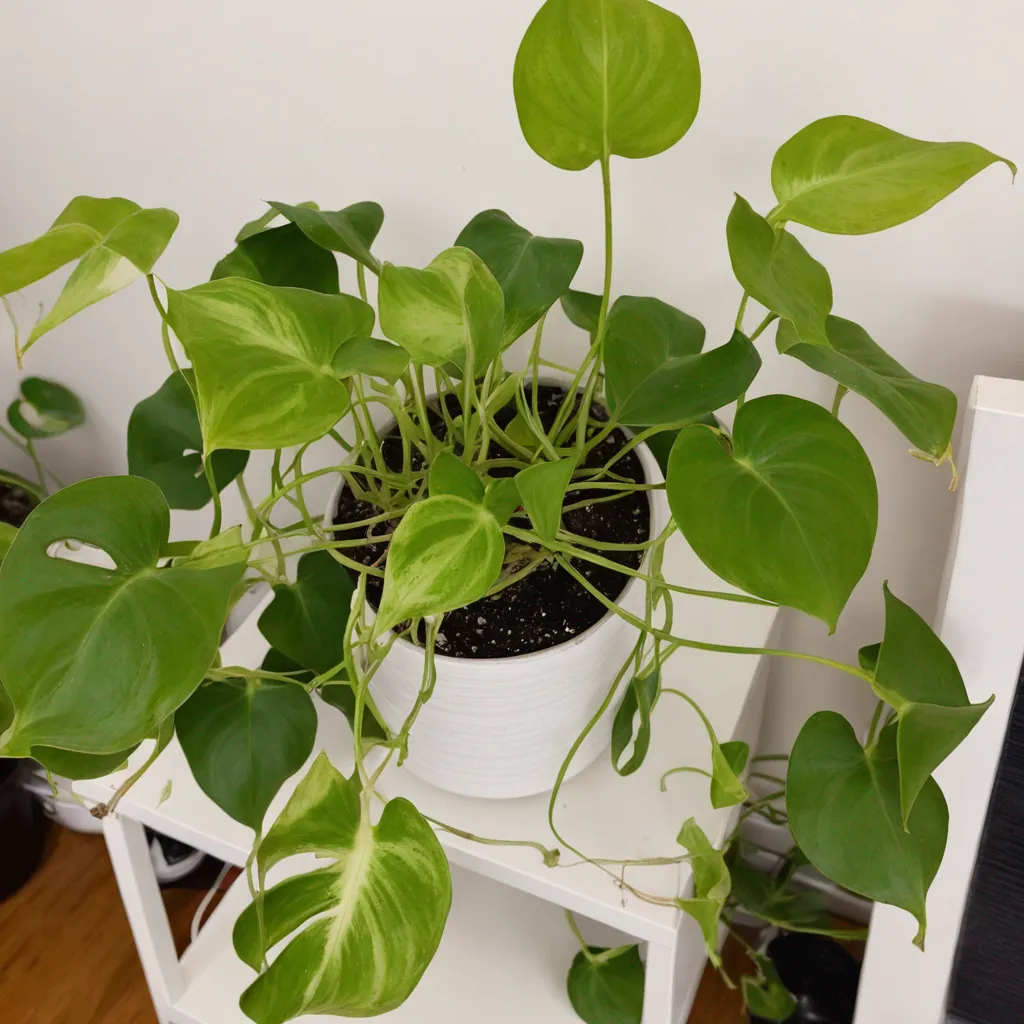
I’ve been propagating pothos for about three years now, and honestly, it’s become a bit of an addiction. What started as a way to save money on plants turned into me having cuttings in jars all over my apartment and giving away baby pothos to anyone who will take them. My neighbor now has four.
The thing about pothos is that they want to multiply. In the wild, they’re climbing up trees and sending out roots everywhere they can. When you cut a vine, you’re not hurting the plant. You’re just helping it do what it naturally wants to do anyway.
I’m going to walk you through exactly how I turn one pothos into ten separate plants. This works whether you have a golden pothos, a marble queen, or one of those fancy varieties. The process is the same.
Taking the perfect vine cutting
Section titled “Taking the perfect vine cutting”The first time I tried to propagate a pothos, I just grabbed scissors and cut wherever. Half of those cuttings died. I learned the hard way that where you cut actually matters.
Here’s what you need to know. Look at your pothos vine and find the nodes. These are the brown bumps on the stem where leaves grow out. Sometimes you’ll see little brown nubs there, which are aerial roots trying to form. Each cutting needs at least one node, but I usually go for two or three nodes per cutting because it gives me better success.
I use clean scissors or pruning shears. You don’t need to sterilize them with alcohol or anything fancy. I just make sure they’re not covered in dirt from the last thing I cut. Make your cut about a quarter inch below a node. The roots will grow from the node itself, so you want to give it some stem to work with.
Each cutting should have at least two or three leaves on it. I’ve successfully propagated single-node cuttings with just one leaf, but they take longer and sometimes they just sit there doing nothing for weeks. The more leaves you have, the more energy the cutting has to put toward making roots.
One mistake I made early on was taking cuttings from the newest growth at the end of the vine. Those baby leaves are pretty, but they’re not mature enough to handle propagation well. I aim for the middle section of the vine where the leaves are full-sized and healthy. The older, woodier parts at the base of the plant can work too, but they’re slower to root.
According to research from the University of Florida’s Environmental Horticulture Department, stem cuttings root best when they’re taken from healthy, actively growing parts of the plant. This matches what I’ve seen in my own propagation experiments.
If your plant has any yellow or damaged leaves, just remove those before you put the cutting in water. They’ll rot and make the water gross.
Water propagation: Watching roots grow
Section titled “Water propagation: Watching roots grow”I use glass jars for propagating because I like watching the roots grow. It’s weirdly satisfying. You can use any container, but clear glass lets you see what’s happening and know when to change the water.
Fill your jar with room temperature tap water. I used to overthink this and use filtered water, but honestly, my tap water works fine. If your tap water is heavily chlorinated, you can let it sit out overnight before using it, but I’ve never bothered and my cuttings are doing okay.
Strip off any leaves that would sit below the water line. This is important. Leaves underwater will rot, and rotting leaves make the water turn into a bacterial soup that kills your cuttings. I learned this the hard way when I came home to a jar of brown, slimy water and dead cuttings.
Place your cuttings in the jar so the nodes are underwater but most of the leaves are above. I usually put three to five cuttings in one jar, depending on the size of the jar.
Put the jar somewhere with bright, indirect light. I keep mine on my desk near a north-facing window. Direct sun will heat up the water and cook the cuttings. I found this out when I left a jar on my south-facing windowsill in summer and came back to find the water was actually warm to the touch.
Now here’s the part that requires patience. You won’t see roots immediately. For the first week, maybe two weeks, it looks like nothing is happening. Then suddenly you’ll notice tiny white bumps forming at the nodes. These turn into roots over the next few days.
Change the water once a week. I just dump out the old water and refill with fresh tap water. Some people get fancy with this, but I keep it simple.
The roots will start out white and delicate. They’ll grow longer and might turn slightly brown or tan as they mature. This is normal. You want to wait until the roots are at least two inches long before you move the cuttings to soil. I usually wait until they’re three or four inches because I’ve had better success with longer roots.
This whole process takes about three to six weeks depending on the time of year, the temperature in your house, and just the mood of the plant. I’ve had cuttings root in two weeks during summer and others that took two months in winter.
 Above: A closer look at the process.
Transitioning water roots to soil
Section titled “Transitioning water roots to soil”This is where people lose cuttings, and I’ve definitely killed my share during this step. Water roots are different from soil roots. They’re adapted to being constantly wet, so when you suddenly put them in soil, they can go into shock.
I don’t jump straight from water to regular potting soil. Instead, I keep the soil really damp for the first week or two. Not soggy, not waterlogged, but damp like a wrung-out sponge.
I use regular potting mix. Nothing special. Some people mix in perlite for better drainage, and that’s fine, but I’ve had success with basic potting soil from the hardware store.
When I’m ready to plant, I gently remove the cutting from the water jar. Those roots are fragile, so I’m careful not to break them. I make a hole in the soil with my finger, place the roots in, and gently cover them with soil.
For the first two weeks, I check the soil every couple of days. If the top inch feels dry, I water it. After those first two weeks, I start treating it like a regular pothos and let the soil dry out more between waterings.
The cutting might look sad for a few days. Some of the leaves might droop or even turn yellow. This is the plant adjusting. As long as the stems stay green and firm, it’s probably fine. I usually lose one lower leaf during this transition, but the rest of the plant survives.
Keep the newly planted cutting in the same bright, indirect light you used for propagation. Don’t fertilize it yet. Wait at least a month before you add any fertilizer because the plant needs time to establish itself.
Planting multiple cuttings for a full pot
Section titled “Planting multiple cuttings for a full pot”Here’s my favorite trick. Instead of planting one sad little cutting per pot, I plant five or six cuttings together in one pot. This gives you a full, lush-looking plant right away instead of waiting months for a single cutting to fill out.
I use a pot that’s about six inches in diameter for five cuttings. Make sure it has drainage holes. I cannot stress this enough. Pots without drainage holes are a recipe for root rot, especially with newly transitioned cuttings.
I arrange the cuttings around the edge of the pot, evenly spaced. Sometimes I’ll put one in the center too if I have enough cuttings. Plant them at the same depth they were sitting in the water, with the nodes covered by soil.
Water the whole pot thoroughly until water drains out the bottom. Then I follow the same care routine I mentioned before, keeping it consistently damp for the first two weeks.
Within a month or two, those individual cuttings will start growing new leaves and the pot will look like a real plant instead of a collection of cuttings. By six months, you can’t even tell it started as separate pieces.
I’ve made probably fifteen pots this way, and it’s how I give plants as gifts. A store-bought pothos might cost fifteen or twenty dollars, but I can make the same thing for free with cuttings from my original plant.
 Above: The supplies you will need.
Why your cuttings might be rotting
Section titled “Why your cuttings might be rotting”Let’s talk about failure because I’ve had plenty of it. I’ve had entire jars of cuttings turn to mush, and I’ve had cuttings that just never grew roots and eventually died.
The most common problem is rot. You’ll know it’s happening because the stem turns brown and mushy, usually starting at the cut end. The leaves might turn yellow or black. Eventually, the whole cutting falls apart in the water.
This happens when bacteria take over. Dirty water is usually the culprit. If you’re not changing the water regularly, or if you left leaves underwater, bacteria multiply and attack the cut stem. The fix is simple: change the water more often and make sure no leaves are submerged.
Sometimes cuttings rot even with clean water. This can happen if the cut end was damaged or crushed when you made the cutting. A clean, sharp cut heals better than a ragged one. It can also happen if the cutting was already weak or diseased before you took it.
Another issue is cuttings that just sit in water forever without rooting. I’ve had this happen with cuttings taken from really old, woody stems. They don’t rot, but they don’t root either. After about two months, I usually give up on these and toss them.
Temperature matters too. Pothos root faster in warm conditions. In winter, when my apartment is cooler, propagation takes longer and I have a slightly higher failure rate. There’s not much you can do about this except be patient or use a heat mat if you really want to speed things up.
According to the Missouri Botanical Garden, pothos prefer temperatures between 65 and 85 degrees Fahrenheit for optimal growth and propagation. My apartment drops to about 62 degrees in winter, which is probably why my winter propagation is slower.
If you see rot starting, remove that cutting immediately. If you have other cuttings in the same jar, change the water right away and check them for signs of rot. Sometimes you can save the jar by catching it early.
One last thing: not every cutting will make it, and that’s okay. I’ve accepted that I’ll lose maybe 10 to 20 percent of my cuttings. That’s why I always take more cuttings than I think I need. If I want to make two pots with five cuttings each, I’ll actually propagate twelve or fifteen cuttings to account for losses.
The beauty of pothos is that even if half your cuttings fail, you still end up with free plants. And your original plant doesn’t care. It’ll keep growing and giving you more vines to experiment with.
I’ve turned my one original pothos (which I bought for twelve dollars three years ago) into probably thirty plants at this point. Some are in my apartment, some are at my office, and a bunch are living with friends and family. It’s honestly one of the most rewarding parts of having houseplants.
References
Section titled “References”University of Florida Environmental Horticulture Department. “Vegetative Propagation of Houseplants.” EDIS Publication.
Missouri Botanical Garden. “Epipremnum aureum (Golden Pothos).” Plant Finder Database.