Anthurium Care: Flowers and Foliage
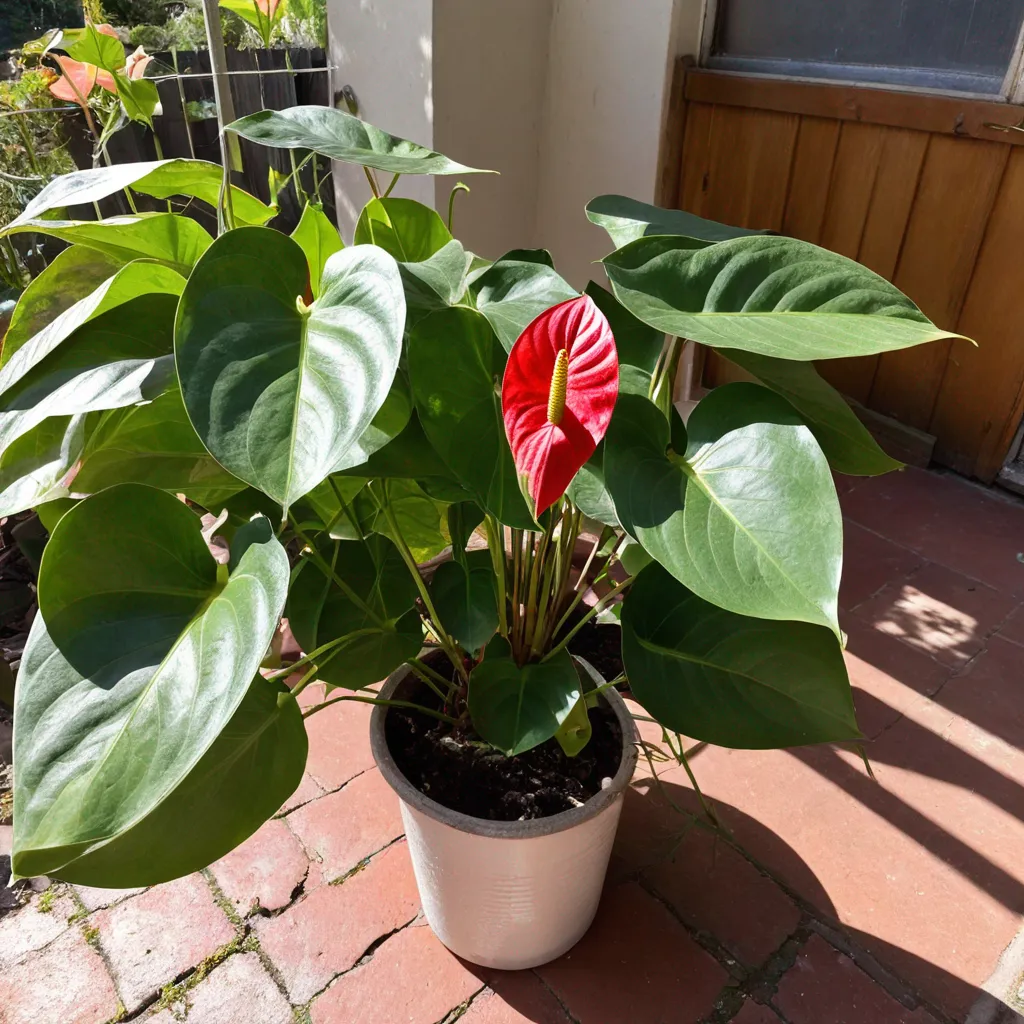
The first time I saw an Anthurium was at a friend’s birthday party. That glossy red spathe (the heart-shaped part we call a flower) looked almost fake, like it was made of plastic. I was obsessed. I bought one the next day, convinced it would look that perfect forever. Three months later, the flowers faded, no new ones appeared, and I realized I had no idea how to actually make this plant bloom again.
Anthuriums are native to Central and South American rainforests, where they grow as epiphytes on trees. That means they’re not rooted in regular soil like a tomato plant. They grab onto bark and get their nutrients from decomposing organic matter that collects around their roots. Understanding this completely changed how I care for mine, and it’s probably the most important thing you need to know if you want yours to thrive.
The two most common types you’ll find at the store are Anthurium andreanum (the one with the big red or pink spathes) and Anthurium clarinervium (which has those incredible dark green leaves with white veins). I have both now, and they require similar care, though the clarinervium is all about the foliage.
Getting your Anthurium to bloom
Section titled “Getting your Anthurium to bloom”My first Anthurium didn’t bloom for eight months after I brought it home. I was frustrated because the care tag said it would “bloom year-round with proper care.” Turns out I was making two big mistakes: not enough light and inconsistent watering.
Anthuriums need bright, indirect light to produce flowers. I had mine sitting on a shelf about eight feet from a north-facing window, which wasn’t cutting it. When I moved it to a spot three feet from an east-facing window where it gets gentle morning sun, new blooms started appearing within six weeks. The key is bright but not direct. Direct sun will scorch those leaves fast. I learned that the hard way when I put one on my south-facing windowsill for a week in July and ended up with brown patches.
According to research from the University of Florida’s IFAS Extension, Anthuriums perform best with light levels between 1,500 to 2,500 foot-candles. I don’t measure foot-candles because I’m not running a greenhouse, but the practical version is this: put your hand between the plant and the light source. If you see a soft shadow, that’s about right. No shadow means not enough light. Sharp, dark shadow means too much.
Temperature also matters for flowering. These plants like it between 65 and 80 degrees Fahrenheit during the day, with a slight drop at night. My apartment hovers around 72 degrees year-round, which works perfectly. If your house gets cold at night in winter (below 60 degrees), you’ll probably notice blooming slows way down or stops.
The other piece is fertilizer. I use a balanced liquid fertilizer diluted to half strength once a month during spring and summer. Some sources recommend weekly feeding at quarter strength, but I’m not that organized. Once a month works for me, and my plants bloom regularly. I use a 20-20-20 formula, though anything close to equal numbers will work. In fall and winter, I cut back to every six to eight weeks because growth naturally slows.
One more thing about blooms: be patient. Each flower can last two to three months, which is amazing compared to most houseplants. But after it fades, it might take another month or two before the next one appears. That’s normal. If you haven’t seen a bloom in six months and the light and temperature are good, try the fertilizer trick.
Humidity requirements
Section titled “Humidity requirements”This is where a lot of people struggle, especially if you live somewhere with dry winters. Anthuriums come from tropical rainforests where humidity stays between 70 and 80 percent. My apartment in winter drops to about 35 percent, which is rough on these plants.
You’ll know your humidity is too low if you see brown, crispy tips on the leaves or if new leaves come in smaller than the old ones. I had both problems my first winter with Anthuriums before I figured out what was happening.
I’ve tried three different approaches to humidity. First, I did the pebble tray thing where you put stones in a shallow tray, add water just below the top of the stones, and set the pot on top. It helps a tiny bit but didn’t solve my brown tips problem. The water evaporates and creates a slightly more humid microclimate, but the effect is pretty minimal unless you have several plants grouped together.
What actually worked was getting a small humidifier. I run it near my plant shelf from November through March, and it keeps the humidity around 50 to 55 percent in that area. That’s not rainforest level, but it’s enough. My Anthuriums stopped getting crispy edges and started pushing out healthier new growth. You don’t need an expensive one. I got mine for thirty dollars, and it runs for about eight hours before needing a refill.
The third option, which I use in summer when my apartment is naturally more humid, is just misting the leaves every few days. Some people say misting doesn’t help, and there’s debate about this in the plant community. Research from the University of Georgia suggests that misting provides only temporary humidity relief, but I still do it because I think it helps keep the leaves clean and it definitely doesn’t hurt.
If you have a bathroom with a window, that’s honestly the ideal spot for an Anthurium. Shower steam creates natural humidity spikes, and most bathrooms stay a bit more humid than the rest of the house. Mine won’t fit on my bathroom windowsill, but if yours will, try it.
 Above: A closer look at this plant.
Chunky soil for epiphytes
Section titled “Chunky soil for epiphytes”This is the thing that changed everything for me. Regular potting soil is too dense for Anthuriums. Remember, these plants grow on trees in nature. Their roots need air flow, and they rot easily if they sit in compacted, soggy soil.
I killed my first Anthurium by planting it in standard Miracle-Gro potting mix. The roots rotted within four months. When I pulled it out of the pot, the root ball smelled sour and the roots were brown and mushy instead of white and firm. I didn’t know any better at the time.
Now I make my own chunky mix. I combine regular potting soil with orchid bark, perlite, and a little bit of charcoal. My ratio is roughly one part potting soil, one part orchid bark, one part perlite, and a handful of horticultural charcoal thrown in. This creates a mix that holds some moisture but drains fast and has tons of air pockets.
You can also buy pre-made aroid mixes online, which work great if you don’t want to mix your own. They usually contain similar ingredients: bark, perlite, coco coir, and sometimes sphagnum moss.
The chunky mix means you’ll water more often than you would with regular soil because it drains so fast, but that’s actually what you want. I water my Anthuriums about once a week in summer and every ten days in winter. I check by sticking my finger two inches into the mix. If it feels dry, I water. If it’s still damp, I wait.
According to a study published in the journal HortScience, Anthurium root health directly correlates with substrate aeration. Plants grown in well-aerated mixes showed significantly better root development and fewer instances of root rot compared to those in dense substrates. That matches what I’ve seen in my own plants.
Make sure your pot has drainage holes. I cannot stress this enough. No drainage means water sits at the bottom, and even chunky soil won’t save you from root rot if excess water has nowhere to go.
Why leaves turn yellow
Section titled “Why leaves turn yellow”Yellow leaves on Anthuriums usually mean one of three things: overwatering, underwatering, or natural aging. The trick is figuring out which one you’re dealing with.
If the leaf is old (one of the bottom leaves that’s been around for a while) and it’s the only yellow leaf on the plant, it’s probably just aging out. Anthuriums naturally shed their oldest leaves as they grow new ones. I get one yellow leaf every couple of months on my bigger plant, and it’s nothing to worry about. I just cut it off at the base with clean scissors.
If multiple leaves are turning yellow at once, especially if they feel soft or mushy, you’re overwatering. Check the roots. If they’re brown and smell bad, you’ve got root rot. At that point, you need to cut away the rotted roots, repot in fresh chunky mix, and water less frequently going forward. I’ve saved one plant this way, but I’ve also lost one where the rot had spread too far.
Yellow leaves that feel dry and crispy, especially if they’re newer leaves or all over the plant, usually mean underwatering or low humidity. If you’ve been forgetting to water and the soil is bone dry, that’s your answer. Give it a good soak and get on a more regular schedule.
Sometimes yellow leaves come from nutrient deficiency, particularly nitrogen. If your plant hasn’t been fertilized in six months and the yellow leaves are pale all over (not just the tips or edges), try feeding it. I had this happen once, and the plant perked up after two rounds of fertilizer spaced three weeks apart.
One other cause I’ve dealt with: chlorine in tap water. Some Anthuriums are sensitive to it. If you’re in a city with heavily chlorinated water and you’re seeing slow yellowing over time despite correct watering and humidity, try switching to filtered water or letting your tap water sit out overnight before using it. The chlorine will evaporate. I started doing this after reading about it on a reputable houseplant blog, and I do think my plants look healthier, though it’s hard to say for sure if the water was the issue.
 Above: Getting started with care.
Cleaning the waxy leaves
Section titled “Cleaning the waxy leaves”Those glossy Anthurium leaves look amazing when they’re clean, but they’re dust magnets. Dust blocks light absorption and makes the plant less efficient at photosynthesis. Plus, dusty leaves just look sad.
I clean my Anthurium leaves about once a month. I used to use leaf shine products, but I stopped after learning that they can clog the stomata (tiny pores on the leaf surface that the plant uses to breathe). Now I just use a damp cloth with plain water.
Here’s my process: I support the leaf from underneath with one hand and gently wipe the top surface with a soft, damp microfiber cloth. I do both sides of each leaf because dust settles on the underside too, even though you don’t see it as much. The whole process takes maybe five minutes for my plant that has about twelve leaves.
For my clarinervium with the textured, velvety leaves, I’m more careful. Those leaves are more delicate and can tear if you’re rough. I use an even softer cloth and barely any pressure. Some people use a soft paintbrush to clean textured leaves, which also works.
If you have hard water, you might notice white mineral deposits building up on the leaves over time. I get this because my tap water is pretty hard. When that happens, I wipe the leaves with a cloth dampened with a solution of one part white vinegar to four parts water. It dissolves the minerals without hurting the plant. I only do this every few months when the buildup is noticeable.
Some people recommend showering their Anthuriums to clean them, and I’ve done this a few times in summer. I put the plant in the shower and give it a gentle rinse with lukewarm water. It does clean the leaves nicely, but make sure you let the pot drain completely before putting it back in its spot. Standing water in the saucer is asking for trouble.
Taking care of an Anthurium isn’t hard once you understand that it’s not a regular houseplant. It needs air around its roots, consistent moisture without being soggy, and enough light to fuel those incredible blooms. My plants have taught me to slow down and pay attention. I check them when I water, wipe the leaves when I notice dust, and adjust things when something seems off. That’s really all it takes.
References
Section titled “References”University of Florida IFAS Extension. “Anthurium Production Guide.” Environmental Horticulture Department. https://edis.ifas.ufl.edu/publication/EP349
University of Georgia Cooperative Extension. “Humidity and Indoor Plants.” College of Agricultural and Environmental Sciences.
Henny, R. J., Chen, J., and Mellich, T. A. “Influence of Substrate Aeration on Root Development and Plant Growth in Anthurium.” HortScience, Vol. 23, Issue 4, 1988.