Why Your Calathea Has Crispy Brown Edges
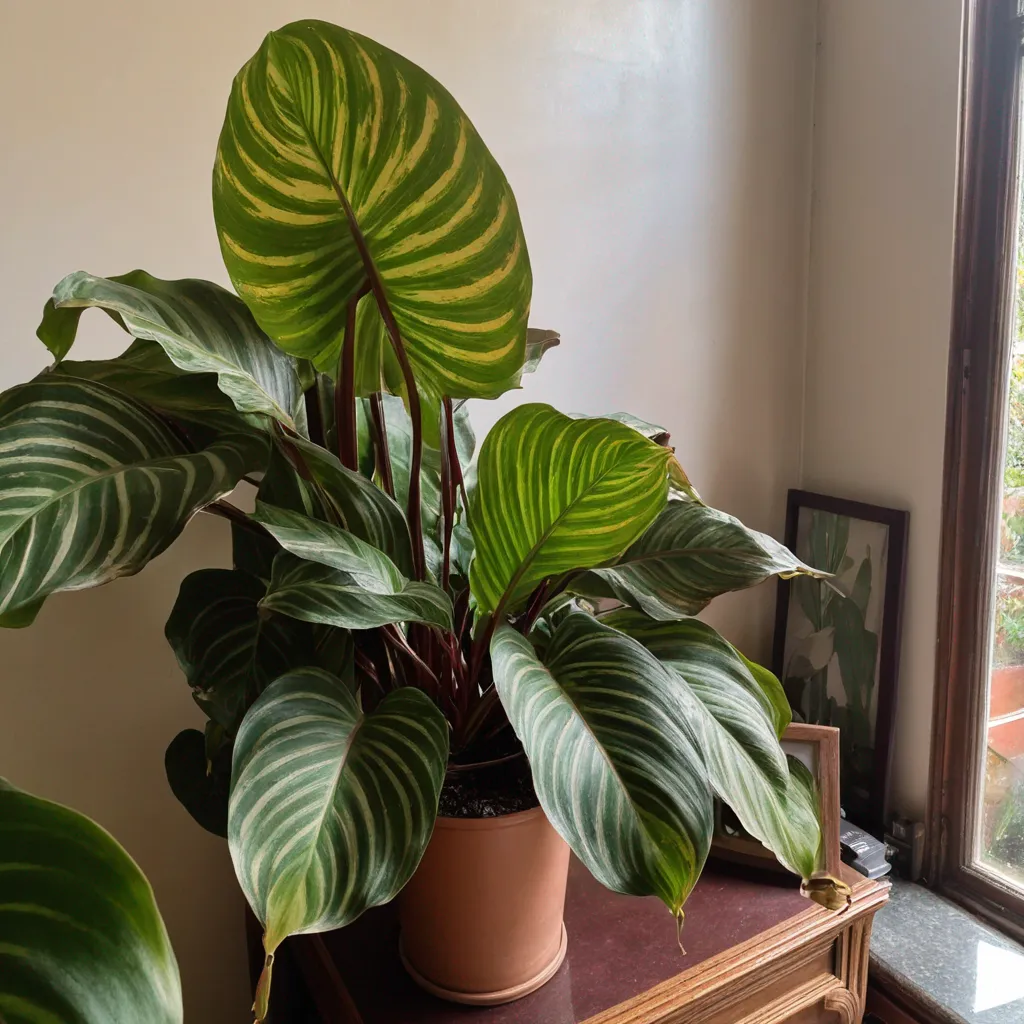
The pristine, painterly leaves of a Calathea are unmatched, which makes it all the more frustrating when the edges start to turn crispy and brown. It often feels like no matter how much you mist or water, the browning creeps in, ruining the plant’s perfect aesthetic.
Crispy edges are rarely a sign of a dying plant, but they are a clear message that your environment isn’t quite matching the rainforest conditions your Calathea craves. Whether it’s the chemistry of your tap water or the humidity levels in your room, pinpointing the cause is the only way to stop the crunch.
The humidity crisis explained
Section titled “The humidity crisis explained”Here is the thing about Calatheas that nobody tells you at the store: they come from the floor of Brazilian rainforests. I am talking about places where the air is so thick with moisture you could practically drink it. Your living room is not that place.
Most homes sit somewhere between 30 and 50 percent humidity. Calatheas want 60 percent or higher. That gap is usually the main reason for those crispy edges.
When the air is too dry, water evaporates from the leaf edges faster than the plant can replace it. The cells at the tips and margins literally dry out and die. It is not pretty, and once a leaf edge goes brown, it stays brown. You cannot reverse the damage, but you can stop it from getting worse.
I learned this the hard way in my first apartment. The radiator heat in winter dropped my humidity to around 25 percent. My Calathea looked like it had been through a fire. I tried misting it every day, which is what every care guide seemed to recommend, but that did basically nothing. Misting gives you maybe 10 minutes of higher humidity before it evaporates. The plant needs consistent moisture in the air, not a quick spritz.
What actually worked for me was grouping my plants together on a tray filled with pebbles and water. The water sits below the pot (you do not want the roots sitting in water), and as it evaporates, it creates a little humid microclimate around the plants. I also moved my Calathea to the bathroom, where the shower creates natural humidity spikes. According to research from the University of Georgia Extension, grouping plants and using pebble trays can raise local humidity by 10 to 15 percent.
If you have the budget, a small humidifier is honestly the best solution. I run mine for a few hours in the evening near my plants. You do not need anything fancy. A basic cool mist humidifier from any big box store works fine.
Mineral buildup from tap water
Section titled “Mineral buildup from tap water”This one surprised me because I thought I was doing everything right. I was watering consistently, the soil was draining well, but my Calathea still had brown edges. Turns out, the water itself was the problem.
Tap water contains minerals like calcium, magnesium, fluoride, and chlorine. Over time, these minerals accumulate in the soil and in the leaf tissue. Calatheas are particularly sensitive to fluoride, which causes leaf tip burn that looks a lot like drought stress.
You can actually see the buildup sometimes. Check the top of your soil or the edges of the pot. If you see a white, crusty residue, that is mineral salts. That same stuff is building up inside your plant.
I switched to filtered water about a year ago, and the difference was noticeable. New growth came in without the brown edges I had been dealing with. If you do not have a filter, you can leave tap water out overnight in an open container. The chlorine will evaporate, though the fluoride and other minerals will stay put. Rainwater is even better if you can collect it, but I live in an apartment, so that is not really an option for me.
According to the University of Florida IFAS Extension, fluoride toxicity in sensitive plants like Calatheas happens even at low concentrations found in typical municipal water. The damage shows up as brown tips and margins that start yellow before turning brown.
If your soil already has mineral buildup, you can flush it. I do this every few months by taking the plant to the sink and running water through the pot for a few minutes, letting it drain completely. This washes out the accumulated salts. Just make sure you are using filtered or distilled water for the flush, or you are just adding more minerals back in.
 Above: A close up look at the symptoms.
Is it spider mites or dry air?
Section titled “Is it spider mites or dry air?”Brown edges and dry air usually go hand in hand with spider mites. I hate these things. They are tiny, almost invisible, and they love Calatheas.
Here is how you tell the difference between mite damage and regular dry air damage. With low humidity alone, you will see browning along the edges and tips, but the rest of the leaf stays relatively normal. With spider mites, you will also notice tiny yellow or white speckles on the leaves, usually starting on the undersides. If you look really close, or use your phone camera to zoom in, you might see fine webbing between the leaves and stems.
I missed a spider mite infestation once because I assumed the brown edges were just from dry air. By the time I caught it, the webbing was obvious and the plant looked terrible. Mites suck the sap out of the leaves, which causes that speckled appearance. They also love dry conditions, which is why they often show up on Calatheas that are already stressed from low humidity.
If you suspect mites, isolate the plant immediately. I learned that lesson after mites spread from one Calathea to three other plants on the same shelf. For treatment, I wash the leaves with room temperature water, getting into all the crevices. Then I spray the whole plant, top and bottom of every leaf, with a mix of water and a few drops of dish soap. Neem oil works too, though it smells pretty strong and can be messy.
You have to repeat the treatment every few days for at least two weeks because the eggs hatch on a cycle. I usually do three or four treatments to make sure I get everything. It is tedious, but it works. Research from Colorado State University Extension confirms that repeated applications are necessary to break the mite life cycle.
Prevention is easier than treatment. I wipe down my Calathea leaves with a damp cloth every couple of weeks. It removes dust and also lets me check for early signs of pests. Keeping the humidity up also helps since mites struggle in moist environments.
Why the leaves are curling tight
Section titled “Why the leaves are curling tight”If your Calathea is not just getting brown edges but also curling its leaves into tight tubes, the plant is basically trying to save itself. Curling reduces the surface area exposed to the air, which slows down water loss.
This usually means the plant is either underwater or the air is extremely dry. Sometimes it is both. I have also seen it happen when the roots are damaged or if the plant is rootbound.
Check your soil first. Stick your finger about two inches down. If it is bone dry, that is your answer. Calatheas like their soil consistently moist but not soggy. I water mine when the top inch or so feels dry, which is usually every five to seven days in summer and every ten days in winter. Your schedule might be different depending on your home conditions.
If the soil is moist but the leaves are still curling, the problem might be the roots. Take the plant out of the pot and look. Healthy roots are white or light tan and firm. If they are brown, black, or mushy, you are dealing with root rot, usually from overwatering or poor drainage. If the roots are circling the pot in a thick mass, the plant is rootbound and cannot take up water efficiently even if the soil is wet.
I had a Calathea that curled and crisped no matter how much I watered it. When I finally checked the roots, the whole thing was rootbound. I repotted it into a container one size up with fresh soil, and within two weeks the new growth came in flat and healthy.
According to Penn State Extension, curling leaves in tropical plants often indicate a water stress response, which can be triggered by actual drought or by the plant’s inability to move water from roots to leaves due to damage or constriction.
Temperature stress can also cause curling. Calatheas do not like cold drafts or sudden temperature swings. I keep mine away from windows in winter and away from air conditioning vents in summer. They are happiest between 65 and 80 degrees Fahrenheit.
 Above: The tools you need to fix this.
Reviving a dried-out Calathea
Section titled “Reviving a dried-out Calathea”So your Calathea looks rough. The edges are crispy, the leaves are curling, maybe some of them have gone completely brown. Can you save it? Probably, yeah. I have brought back plants that looked like they belonged in the compost bin.
First, accept that the damaged leaves will not heal. Those brown edges are permanent. Your goal is to stop the damage and encourage new, healthy growth. I usually trim off the worst leaves entirely, cutting them at the base. If a leaf is only partially damaged, I leave it unless it is more than half brown. The plant can still photosynthesize with the green parts.
When you do cut, use clean scissors or pruning shears. I wipe mine with rubbing alcohol between cuts to avoid spreading any potential disease.
Next, check the roots. If you have not repotted in over a year, or if water is draining really slowly, it might be time for fresh soil. I use a mix that is about equal parts potting soil, perlite, and peat moss or coco coir. The goal is something that holds moisture but also drains well. Calatheas hate sitting in waterlogged soil, but they also hate drying out completely.
If the plant is severely dehydrated and the soil has pulled away from the sides of the pot, bottom watering can help. I set the pot in a container of room temperature water and let it soak for about 30 minutes. The soil absorbs water from the bottom up, which rehydrates everything evenly. Then I let it drain completely.
Now address the humidity. This is not optional if you want the new growth to come in clean. Get that humidity up using whatever method works for you. Pebble tray, humidifier, bathroom placement, grouping plants, whatever. Consistency matters more than the specific method.
Switch to filtered or distilled water if you have not already. If you have mineral buildup in the soil, flush it out with a good soak and drain using clean water.
Put the plant somewhere with bright, indirect light. Not direct sun, which will scorch the leaves, but not a dark corner either. I keep mine a few feet back from an east facing window. It gets gentle morning light and bright indirect light the rest of the day.
Then you wait. I know that is frustrating, but plants do not heal overnight. It might take a few weeks before you see new growth, and that new growth is what you are watching for. If it comes in with clean edges and good color, you have fixed the problem. If it still has brown edges, you need to troubleshoot further.
I have a Calathea that I almost threw out two years ago. It had maybe three sad leaves left, all of them half brown. I repotted it, moved it to the bathroom, started using filtered water, and just left it alone. Six months later it had a dozen new leaves. It is still not the fullest plant I own, but it is healthy, and the new growth is perfect.
Calatheas are dramatic, and they will let you know when they are unhappy. But once you dial in their care, they are actually pretty rewarding. You just have to accept that most homes are not rainforests, and you need to bridge that gap somehow.
References
Section titled “References”University of Georgia Extension. “Houseplants: Environmental Factors Affecting Growth.” Accessed via UGA Extension publications on indoor plant care and humidity management.
University of Florida IFAS Extension. “Fluoride Toxicity in Foliage Plants.” Publication ENH1212, detailing the effects of fluoride in irrigation water on sensitive ornamental plants.
Colorado State University Extension. “Spider Mites: Management and Control.” Fact sheet 5.507, discussing spider mite biology and integrated pest management strategies.
Penn State Extension. “Environmental Stress in Houseplants.” Article on how water stress and environmental factors affect indoor tropical plants.