Philodendron Birkin: Care and Reversion
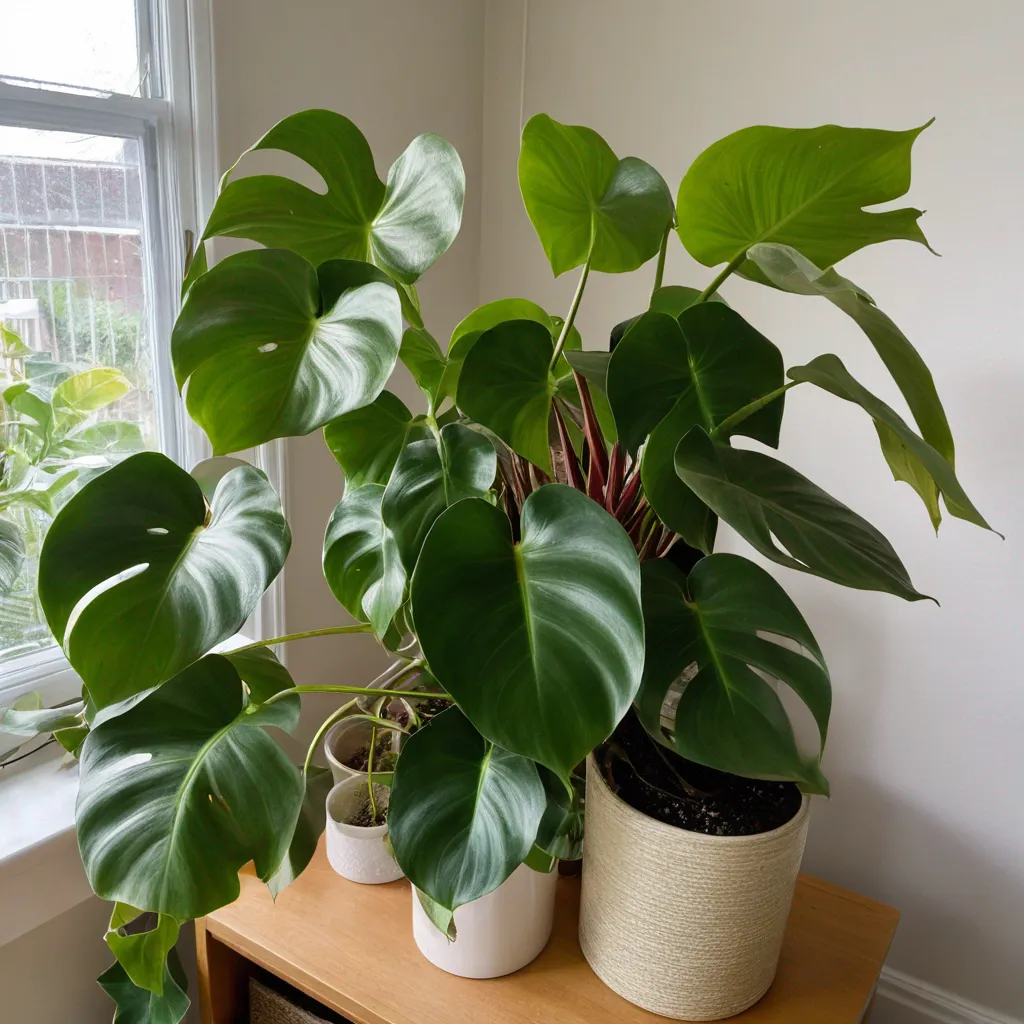
The Philodendron Birkin is famous for its stunning white pinstripes against dark green leaves. It looks like a painting. But it has a secret: it is biologically unstable. That beautiful variegation is a genetic mutation that the plant is constantly trying to undo, leading to one of the most common panic moments for owners: the sudden appearance of a plain green leaf. When I first saw my Birkin reverting, I thought I had broken it, but I learned that this is just part of the plant’s fascinating biology.
The Birkin is a cultivar that showed up in the houseplant world fairly recently. It’s not found in nature like that. Instead, it’s a mutation of Philodendron ‘Rojo Congo’ that someone spotted and decided to propagate. That’s important to know because it explains a lot about why these plants act the way they do.
Why your Birkin is losing its stripes
Section titled “Why your Birkin is losing its stripes”Here’s the thing about the Birkin: it’s what plant people call genetically unstable. The white variegation is caused by a spontaneous mutation, and the plant doesn’t always want to keep it. Sometimes it decides to go back to being a plain green philodendron because, from the plant’s perspective, that’s easier. Green leaves can photosynthesize better than leaves with white stripes, which means more energy for the plant.
When my Birkin started throwing out greener leaves, I did some digging. According to research from the University of Florida’s Environmental Horticulture Department, variegated plants often revert when they’re stressed or when growing conditions aren’t ideal. But here’s the frustrating part: sometimes they revert even when everything seems perfect. It’s just in their nature.
The most common trigger is low light. If your Birkin isn’t getting enough brightness, it might produce more green leaves to compensate. The plant needs that extra chlorophyll to make food. I moved mine closer to an east-facing window after noticing this, and the next few leaves came in with better variegation. Not perfect, but better.
Temperature stress can also cause reversion. If your plant gets too cold (below 60°F) or experiences sudden temperature swings, it might react by producing plain green growth. I learned this the hard way when I left mine too close to a drafty window last winter.
If you notice a completely green leaf growing, you have two choices. You can leave it (the plant will be fine), or you can cut it off at the base. Some people cut reverted growth to encourage the plant to put energy into variegated leaves instead. I’ve tried both approaches. Cutting them off doesn’t guarantee the next leaf will be striped, but it does keep the plant looking more uniform if that matters to you.
One more thing: sometimes Birkins produce leaves that are more red or bronze than white-striped. This is technically also reversion, but back to the Rojo Congo parent rather than to a plain green philodendron. I’ll talk more about that later.
Light needs for high-contrast leaves
Section titled “Light needs for high-contrast leaves”Getting the light right is probably the single most important factor for keeping those stripes bold and white. Too little light and you get reversion. Too much direct sun and you get crispy, burned leaves. It’s a balance.
I keep my Birkin about four feet from an east window. It gets bright indirect light for most of the day, with maybe an hour of very gentle morning sun. This seems to be the sweet spot. The leaves that have grown in this location have the best contrast I’ve seen on this plant.
According to studies on variegated plants published in the Journal of Horticultural Science, white or light-colored sections of leaves are more susceptible to sun damage because they lack the protective chlorophyll that absorbs excess light energy. This means your Birkin needs brightness but not harsh direct sun, especially during the middle of the day.
If you’re working with a north-facing window, you might struggle to get good variegation unless the window is large and unobstructed. I tried growing a cutting in my bathroom with only north light, and every leaf came in almost entirely green. South and west windows can work, but you’ll need to filter the light with a sheer curtain or position the plant further back from the glass.
One trick I’ve found helpful: rotate your plant every week or so. Philodendrons naturally grow toward the light, and rotating keeps the growth even and ensures all sides get adequate exposure. Plus, it’s a good reminder to actually look at your plant and check for issues.
If you don’t have great natural light, a grow light can work. I haven’t personally tried this with my Birkin because my apartment gets decent light, but from what I’ve read on forums and hobbyist blogs, full-spectrum LED grow lights positioned about 12 to 18 inches above the plant can encourage good variegation. Just make sure the light is on for 12 to 14 hours a day to mimic natural conditions.
 Above: A closer look at this plant.
Watering the Birkin without rot
Section titled “Watering the Birkin without rot”Root rot is probably the number one killer of Philodendron Birkins, and I say this as someone who has definitely overwatered plants before. These are aroids, which means they like moisture but they absolutely need their roots to breathe. Soggy soil for extended periods equals dead roots equals dead plant.
I water mine when the top two inches of soil feel dry. I stick my finger in the pot (yes, actually into the soil) to check. If it feels damp, I wait. If it feels dry, I water thoroughly until water runs out the drainage holes. Then I let it drain completely before putting it back on its saucer.
The frequency changes with the seasons. In summer, I’m watering roughly once a week. In winter, it’s more like every 10 to 14 days because the plant isn’t actively growing as much and the soil stays moist longer. There’s no set schedule that works year-round, which is why the finger test is your friend.
According to Clemson University’s Home and Garden Information Center, philodendrons prefer soil that stays lightly moist but never waterlogged. They recommend allowing the top portion of soil to dry between waterings, which matches what I’ve found through trial and error.
The potting mix matters a lot here. I use a mixture that’s roughly 60% regular potting soil, 30% orchid bark, and 10% perlite. This combination holds some moisture but also drains quickly and allows air to reach the roots. Straight potting soil from a bag is usually too dense for aroids.
Make absolutely sure your pot has drainage holes. I know those decorative pots without holes are tempting, but they’re a recipe for disaster with these plants. Use them as cache pots (outer decorative pots) with a nursery pot inside if you want the aesthetic.
One thing I’ve noticed: if my Birkin starts getting yellow leaves, it’s usually overwatering. If the leaves droop and the soil is bone dry, it’s underwatering. The plant does communicate, you just have to pay attention.
Why does it sometimes grow red leaves?
Section titled “Why does it sometimes grow red leaves?”The first time my Birkin put out a leaf with red and bronze tones instead of white stripes, I thought something was wrong. Turns out, this is actually the plant showing its true colors, literally.
Remember how I mentioned the Birkin is a mutation of Philodendron Rojo Congo? Well, Rojo Congo has gorgeous dark green leaves with red undersides and red new growth. Sometimes the Birkin remembers it used to be a Rojo Congo and produces leaves that look more like its parent.
This isn’t harmful to the plant. It’s just another form of reversion, similar to the all-green leaves. Some people actually like the red leaves because they add interest and prove the plant’s lineage. I’ve kept the one red leaf on mine because it looks kind of cool next to the striped ones.
From what I’ve gathered through research and talking to other plant people online, there’s not much you can do to prevent red growth specifically. It’s genetic. The same factors that cause green reversion (low light, temperature stress, general instability) might contribute, but sometimes it just happens.
If you really don’t want the red leaves, you can cut them off just like you would with all-green growth. But honestly, I think they’re part of what makes each Birkin unique. No two plants seem to revert in exactly the same way.
 Above: Getting started with care.
Common pests on Philodendron Birkin
Section titled “Common pests on Philodendron Birkin”I’ve been lucky with my Birkin and haven’t dealt with major pest issues, but I’ve had enough problems with other houseplants to know what to watch for. The most common pests on these plants are spider mites, thrips, and mealybugs.
Spider mites are tiny and hard to see, but you’ll notice the damage. Look for tiny yellow or white speckles on the leaves and fine webbing between the stems. They love dry conditions, which is why they’re more common in winter when indoor heating drops the humidity. According to Iowa State University’s Extension and Outreach, regular misting or wiping leaves with a damp cloth can help prevent spider mites, though I’ve found that just keeping humidity reasonable (around 40 to 60%) works better.
I check my plants every week or so by looking at the undersides of leaves. That’s where pests usually hide. If I spot anything suspicious, I wipe the leaves down with a cloth dampened with water and a tiny drop of dish soap. For a serious infestation, I’d use insecticidal soap or neem oil, following the product instructions.
Mealybugs look like tiny cotton balls stuck to the stems and leaf joints. They’re easier to spot than spider mites but equally annoying. I’ve dealt with these on other plants (my pothos got them once), and the best approach I’ve found is to dab them with rubbing alcohol on a cotton swab. It kills them on contact. For larger infestations, the soap and water spray or neem oil works here too.
Thrips are small, fast-moving insects that cause silvery streaks and distorted new growth. I haven’t personally had thrips on my Birkin, but they’re apparently common on philodendrons according to plant forums I follow. They’re harder to control than mites or mealybugs because they reproduce quickly. If you catch them early, insecticidal soap can work, but severe cases might need systemic insecticide.
The best defense is prevention. Keep your plant healthy, don’t overwater (stressed plants attract pests), and quarantine new plants for a few weeks before putting them near your other houseplants. I learned that last one the hard way after bringing home an infested plant from a big box store.
If you do treat for pests, you’ll need to repeat the treatment every few days for a couple of weeks to catch new hatchlings. Pests have life cycles, and one treatment rarely gets everything.
Taking care of a Philodendron Birkin has taught me that sometimes the “flaws” in a plant are just part of its character. The reversion, the occasional red leaf, even the pest challenges are all part of the process of keeping a living thing in your home. My Birkin isn’t perfect, but it’s healthy and growing, and honestly, that’s what matters most.
References
Section titled “References”Clemson University Cooperative Extension Service. Home and Garden Information Center. “Philodendron.” Clemson University.
Iowa State University Extension and Outreach. “Spider Mites.” Horticulture and Home Pest News.
Journal of Horticultural Science. Research on variegated plant photosynthesis and light sensitivity.
University of Florida Environmental Horticulture Department. Research on variegated plant cultivation and reversion patterns.