Money Tree Care (Pachira Aquatica)
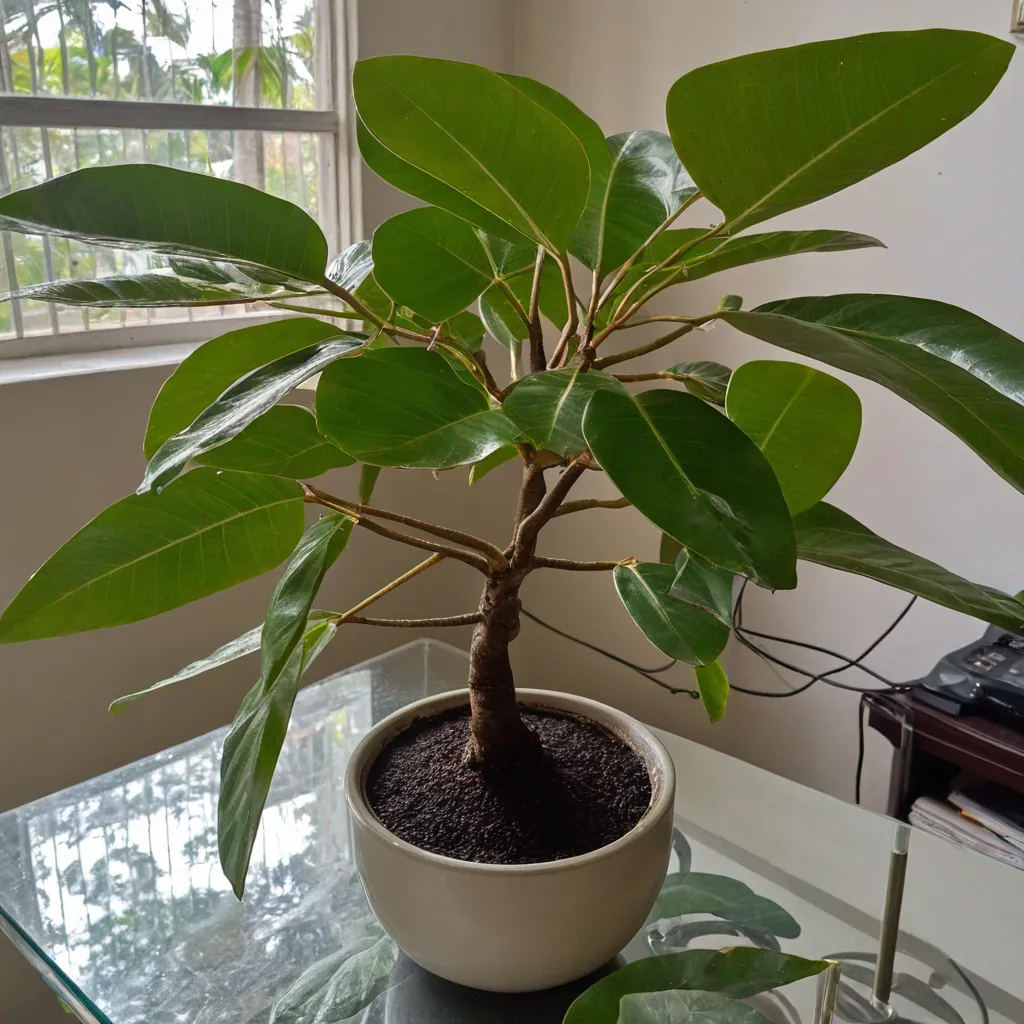
The braided trunk is what hooks everyone. Those intertwined stems look like living art, and when the nursery lady said my Money Tree was “practically indestructible,” I believed her. Three years later, I know that’s only half true. The plant survived my learning curve, but not without a few yellow leaves and one near-death experience with root rot.
If you are reading this, you probably just brought one home, or yours is looking sad and you are trying to figure out what went wrong. I have been there. Let me walk you through what actually works based on my experience and a lot of trial and error.
Care for the braided trunk
Section titled “Care for the braided trunk”When you buy a Money Tree, it usually comes with three or more stems twisted together. This is not how the plant grows naturally. Growers braid young, flexible stems together and let them grow that way. Over time, the stems thicken and fuse at the contact points. It looks cool, but it does require a bit of attention.
The main thing I learned is to leave the braid alone. Do not try to tighten it or add new twists. The stems are already set in their pattern, and messing with them can damage the bark or stress the plant. I made this mistake early on. I thought I was being helpful by “fixing” a loose section, and I ended up scraping the bark. The plant recovered, but it was not a smart move.
Check the base of the trunk every few months. Sometimes one of the braided stems will die, and you will notice it turning brown or feeling hollow. This happened to me about a year in. One of the three stems just gave up. I was worried the whole plant would collapse, but it did not. The other two stems kept growing. According to horticulturists at the University of Florida IFAS Extension, this is normal. Money Trees are surprisingly resilient, and losing one stem in a braid does not usually kill the others.
If you do lose a stem, you can cut it back to the base with clean pruning shears. Do not yank it out. Just trim it flush and let the remaining stems keep doing their thing. The plant will look a little lopsided for a while, but it will fill out as it grows.
One more thing about the trunk: it can store water. This is because Money Trees are semi-aquatic in their native habitat, which is wetlands in Central and South America. The thick trunk acts like a reservoir. This is great for surviving short dry spells, but it also means the plant does not need constant watering. More on that in a second.
Watering to prevent rot
Section titled “Watering to prevent rot”Root rot is the number one killer of Money Trees. I know this firsthand because I almost lost mine by watering it like I water my pothos. Big mistake.
The trick with Money Trees is to let the top two inches of soil dry out before you water again. I test this by sticking my finger into the soil up to my second knuckle. If it feels damp, I wait. If it feels dry, I water. I know this sounds basic, but it works way better than watering on a schedule.
When you do water, water thoroughly. I take my plant to the sink and let water run through the pot until it drains out the bottom. Then I let it sit in the sink for about ten minutes to make sure all the excess water drains away. This is important. If the pot sits in standing water, the roots will rot.
I use a pot with drainage holes. This is non-negotiable for me now. My first Money Tree was in a decorative pot with no drainage, and I had to be super careful not to overwater. Eventually, I got lazy, the soil stayed too wet, and the roots started to rot. I caught it just in time and repotted the plant, but it was a close call.
Some people use a moisture meter, and I think that is a good idea if you are not confident about the finger test. Just make sure you are checking the soil a few inches down, not just at the surface.
One thing I learned from reading research published by the American Society for Horticultural Science is that Pachira aquatica can tolerate short periods of drought better than it can tolerate overwatering. So if you are unsure whether to water, wait another day or two. The plant will forgive you for underwatering. It will not forgive you for overwatering.
During winter, I cut back on watering even more. The plant is not actively growing, so it uses less water. I check the soil less frequently, maybe once a week instead of every few days. This has kept my plant healthy through three winters now.
 Above: A closer look at this plant.
Why leaves turn yellow and drop
Section titled “Why leaves turn yellow and drop”Yellow leaves are frustrating because they can mean a bunch of different things. I have dealt with this problem more than once, and I have learned to look at the whole picture instead of panicking.
The most common cause is overwatering. If the leaves are turning yellow and the soil feels wet, you are watering too much. The roots are sitting in soggy soil and cannot breathe. This is what happened to me the first time. I cut back on watering, let the soil dry out more between waterings, and the plant stopped losing leaves.
But yellow leaves can also mean underwatering. If the soil is bone dry and the leaves are yellowing and crispy, you are not watering enough. This is less common with Money Trees because most people overwater, but it can happen if you forget about the plant for a few weeks. I did this once when I went on vacation and forgot to ask my neighbor to water it. The plant looked rough when I got back, but it bounced back after I gave it a good soak.
Sometimes yellow leaves are just old leaves. Money Trees naturally shed their lower leaves as they grow. If one or two leaves at the bottom of the plant turn yellow and fall off, and the rest of the plant looks healthy, do not worry about it. This is normal.
Nutrient deficiency can also cause yellowing, but this is usually a slow process. If your plant has been in the same soil for years and has not been fertilized, it might be running out of nutrients. I fertilize mine once a month during the growing season (spring and summer) with a balanced liquid fertilizer diluted to half strength. I use a standard 10-10-10 formula. Nothing fancy. This seems to keep the leaves green and the plant happy.
One last thing: if a lot of leaves are turning yellow and dropping all at once, the plant is stressed. This can happen after repotting, moving the plant to a new location, or a sudden change in temperature. My Money Tree dropped about a third of its leaves after I moved it from a bright room to a dimmer one. It freaked me out, but the plant eventually adjusted and started growing new leaves. Just give it time and try not to change anything else while it recovers.
Light requirements for growth
Section titled “Light requirements for growth”Money Trees are sold as low-light plants, but that is misleading. They can survive in low light, but they will not thrive. I keep mine in bright, indirect light, and it grows way better than it did when I had it in a dim corner.
The best spot in my apartment is about six feet from an east-facing window. The plant gets a few hours of gentle morning sun and bright indirect light for the rest of the day. This setup has worked really well. The leaves are dark green, and the plant puts out new growth regularly.
Direct sun is a problem. I tried putting my Money Tree on a south-facing windowsill once, and the leaves got sunburned within a week. They turned brown and crispy at the edges. I moved the plant back to indirect light, and it recovered, but I learned my lesson. According to guidance from the University of Georgia Extension, Money Trees prefer filtered light and can get leaf scorch from too much direct sun.
If you only have low light, the plant will survive, but it will grow slowly and might get leggy. Leggy means the stems stretch out toward the light and the leaves get spaced farther apart. It is not the end of the world, but the plant will not look as full and compact.
I have read that some people use grow lights for their Money Trees, and I think that is a solid option if you do not have good natural light. I have not tried it myself because my apartment gets decent light, but it makes sense based on what I know about the plant’s needs.
One more thing: rotate your plant every few weeks. Money Trees grow toward the light, so if you do not rotate them, one side will get fuller than the other. I turn mine a quarter turn every time I water. It keeps the growth even and the plant looking balanced.
 Above: Getting started with care.
Repotting a Money Tree
Section titled “Repotting a Money Tree”I repot my Money Tree about every two years. You will know it is time when the roots start coming out of the drainage holes or when the plant becomes root-bound. A root-bound plant has roots that circle around the inside of the pot with no room to grow. When you pull the plant out, the roots form a tight mass that holds the shape of the pot.
I use a pot that is only one or two inches larger in diameter than the old pot. Going too big is a mistake I made once. I thought I was giving the plant more room to grow, but all I did was create a pot full of wet soil that took forever to dry out. The plant did not like it, and I had to repot again.
For soil, I use a well-draining potting mix. I add a little perlite or coarse sand to help with drainage. Money Trees do not like heavy, compacted soil. The mix needs to hold some moisture but also drain quickly. I have used standard indoor potting soil mixed with about 20 percent perlite, and it has worked fine.
When I repot, I gently loosen the roots. If the plant is really root-bound, I tease the roots apart with my fingers. This encourages them to grow outward into the new soil instead of continuing to circle. Some sources, including the University of Florida IFAS Extension, recommend trimming back some of the roots if the plant is severely root-bound, but I have never had to do that. My plant has not gotten that out of control.
After repotting, I water the plant thoroughly and put it back in its usual spot. The plant might look a little droopy for a few days, but it usually perks up within a week. I do not fertilize for about a month after repotting because the fresh soil already has nutrients.
One mistake I see people make is repotting too often. Unless the plant is root-bound or the soil has broken down, you do not need to repot every year. Money Trees do not mind being slightly root-bound. In fact, some growers say it can encourage more compact growth. I only repot when I see clear signs that the plant has outgrown its pot.
If you are dealing with root rot, repotting is more urgent. You need to get the plant out of the wet soil, trim away any black or mushy roots, and replant in fresh, dry soil. I had to do this once, and it was stressful, but the plant survived. Just make sure you use clean tools and do not reuse the old soil.
Money Trees are forgiving plants if you get the basics right. They do not need constant fussing, but they do need consistent care. Water when the soil is dry, give them decent light, and do not mess with the braid. That is pretty much it. My plant is still going strong after three years, and I have learned more from the mistakes than from doing everything perfectly the first time.
References
Section titled “References”University of Florida IFAS Extension. “Pachira aquatica: Money Tree.” Environmental Horticulture Department.
American Society for Horticultural Science. “Water Requirements for Tropical Houseplants.” HortScience Journal.
University of Georgia Extension. “Indoor Plant Care: Light and Water Requirements.” Horticulture Publications.